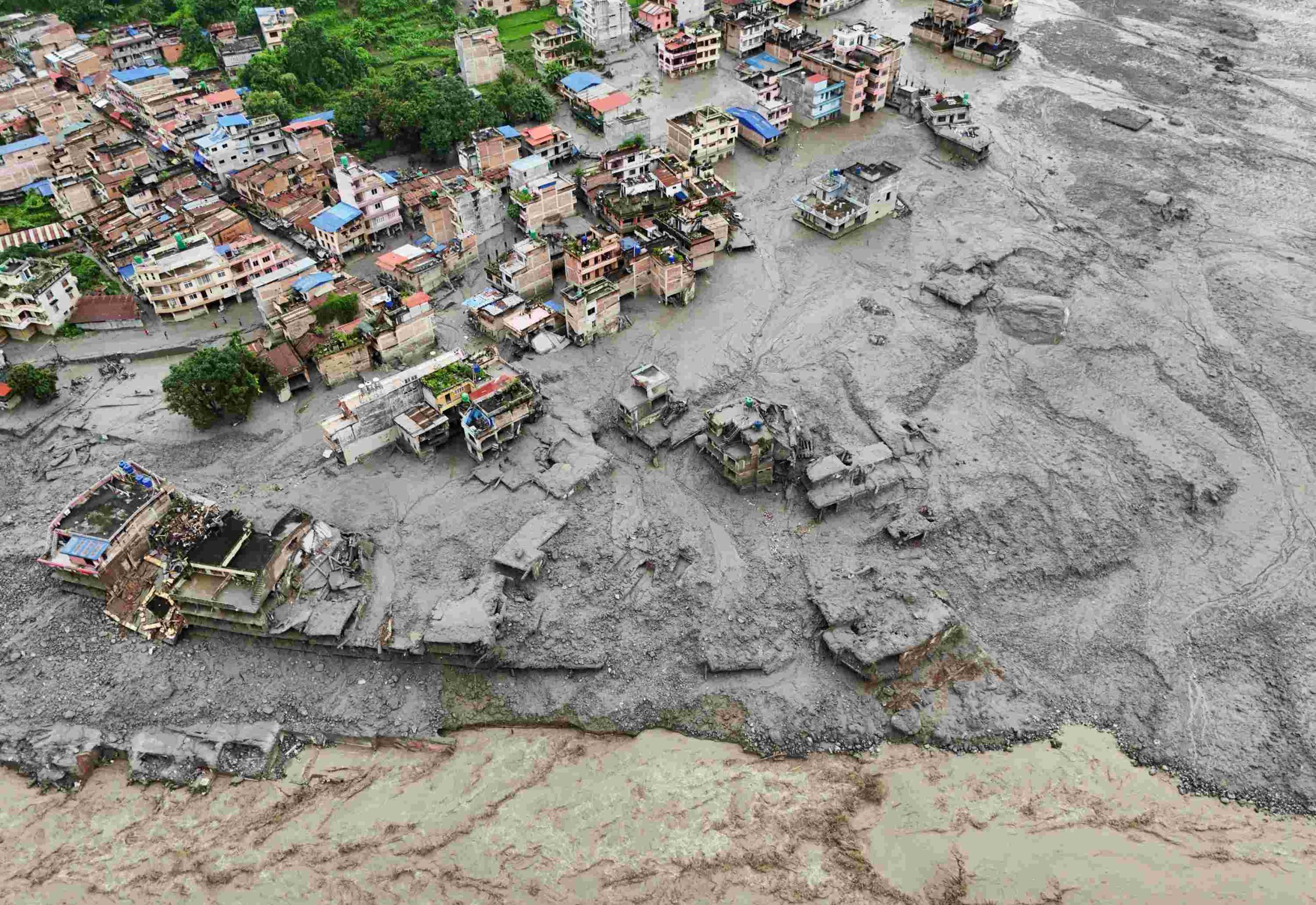
Overview: The Nepal Floods 2026 began on August 26, when a partial collapse of the Langtang Lirung glacier sent rock, ice, and meltwater surging into the Lhende Khola, Bhote Koshi, and Trishuli rivers, tearing through Nepal’s Rasuwa, Nuwakot, and Dhading districts before reaching the China border at Gyirong. It is now Nepal’s deadliest disaster since
Overview:
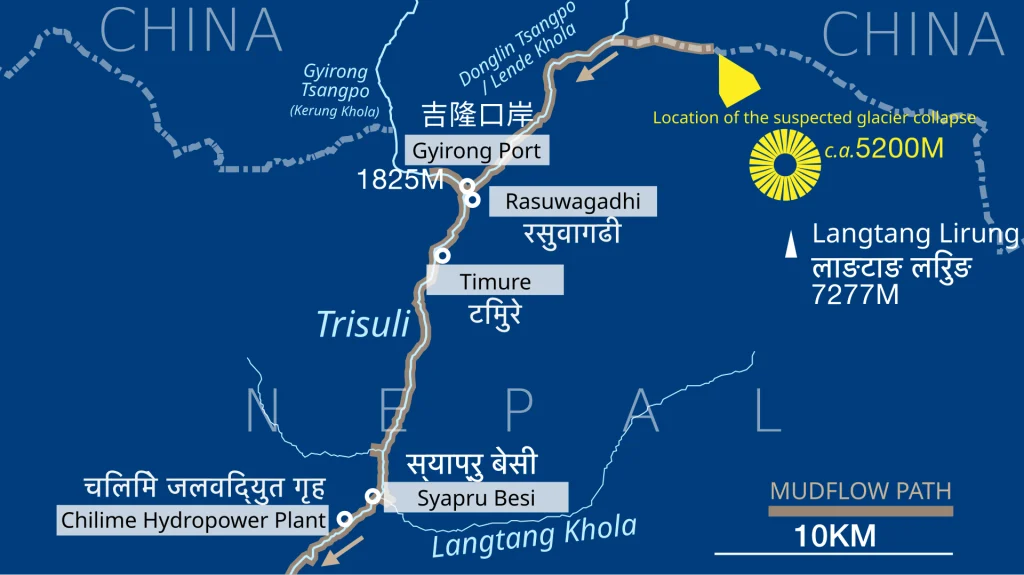
The Nepal Floods 2026 began on August 26, when a partial collapse of the Langtang Lirung glacier sent rock, ice, and meltwater surging into the Lhende Khola, Bhote Koshi, and Trishuli rivers, tearing through Nepal’s Rasuwa, Nuwakot, and Dhading districts before reaching the China border at Gyirong. It is now Nepal’s deadliest disaster since the 2015 earthquake.
The corridor hit Syabrubesi, Timure, and the Rasuwagadhi crossing, which is also the gateway to the Langtang trekking region and the overland route used by Kailash Mansarovar pilgrims, so alongside the immediate humanitarian emergency, this has real implications for travelers and the tourism communities connected to it.
As a company operating across Nepal’s travel industry, we’re tracking developments from official, verified sources and updating this page as the situation evolves. We’re avoiding speculation, unverified claims, and graphic imagery out of respect for those affected.
What This Means If You’re Traveling to Nepal?
Affected: the Rasuwa–Bhote Koshi–Trishuli corridor, including Syabrubesi (gateway to Langtang National Park), Timure, Rasuwagadhi, and the overland Nepal–Tibet border crossing (the Kailash Mansarovar overland route is currently suspended).
Unaffected: Everest, Annapurna, Manaslu, Kanchenjunga, and Makalu flights, trails, teahouses, and permits in these regions continue operating normally.
If you have a booking for Langtang, Gosaikunda, Ruby Valley, or a Tibet overland route, talk to your operator about postponing or rerouting. There is no confirmed reopening timeline for the Rasuwa corridor yet.
Where the Disaster Hit Hardest?
The flood began at the very top of the watershed and carried its impact a long way downstream:
Rasuwa district ground zero. The Langtang Lirung glacier collapse originated here, and the towns of Syabrubesi, Timure, and the Rasuwagadhi border crossing took the initial, most direct hit.
Nuwakot and Dhading districts were next in the flood’s path, with Trishuli Bazaar and Devighat among the hardest-hit towns as the surge continued downstream.
Chitwan, Nawalparasi East, and Nawalparasi West, further downstream, have recorded the highest numbers of recovered bodies, showing just how far the floodwaters carried people and debris.
Gyirong, on the China side of the border, the crossing point itself was largely destroyed, and China has reported its own, smaller toll of dead and missing.
September 3, 2026, Toll Rises to 1,252 as 4,216 Remain Unaccounted For
NDRRMA’s Thursday-noon figures put Nepal’s confirmed death toll at 1,252, with at least 4,216 people still unaccounted for. Chitwan has recorded the most deaths (355), followed by Nawalparasi East (218), Nawalparasi West (208), and Nuwakot (177); Rasuwa, where the disaster began, has recorded 127.
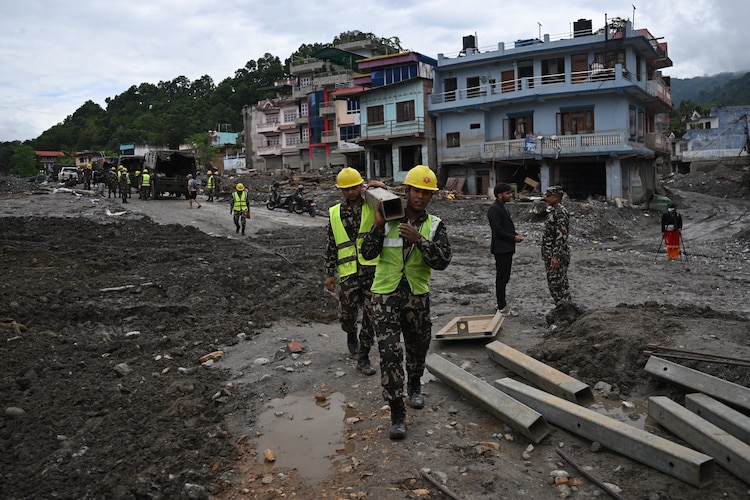
More than 21,000 security personnel are now deployed for search, rescue, and relief work, with 11,900+ people rescued so far. The Nepali Army has airlifted over 4,300 people across 700+ helicopter flights, including hundreds of foreign nationals. Telecommunications are largely restored — nearly all damaged towers across the disaster zone are back in operation.
September 2, 2026, One Week On: Toll at 1,114, PM Gives Parliament a Full Account
A week after the disaster began, NDRRMA placed the confirmed toll at 1,114, with roughly 4,500 people still missing across Nepal and China combined. Scientists flagged that glaciers near the original collapse site may still be unstable, keeping authorities on alert.
Prime Minister Balendra “Balen” Shah gave Parliament a detailed, minute-by-minute account of the government’s response on the day of the disaster, while also publicly thanking India and China for their swift aid. Nepal signaled it wants India, China, and the US, as major greenhouse-gas emitters, to contribute compensation for what it considers a climate-induced disaster, and has approached the UNFCCC’s Fund for Responding to Loss and Damage for support.
September 1, 2026, Death Toll Crosses 1,000, Pulling 279 Workers from Tunnels Alive
NDRRMA’s toll reached 1,003 (1,019 combined with China’s count of 16), with 3,916 people still missing in Nepal, including 583 foreign nationals from 38 countries. A mass burial was held for unidentified victims, and a preliminary report noted that warning signs of the glacier’s instability had reportedly been visible before the collapse.
On a more hopeful note, Prime Minister Balen Shah announced that 279 workers had been rescued alive from hydropower tunnels where more than 900 had initially been feared trapped, pushing Nepal’s total rescues past 11,800.
Among those leading the air rescue effort was Captain Priya Adhikari, Nepal’s first female helicopter captain, who by this point had flown close to 100 missions through unstable mountain valleys to bring survivors to safety. International funding pledges also grew, with the World Bank, India, China, and the US signaling up to US$229 million combined toward Nepal’s relief fund.
August 31, 2026, Toll Passes 900 as Rescues Pass 10,000, Qatar Sends Emergency Airlift
Nepal’s confirmed death toll rose to 903, with more than 4,200 still missing — officially making this Nepal’s deadliest disaster since the 2015 earthquake, which killed around 9,000 people.
Engineers carried out a technically difficult controlled explosion at a hydropower tunnel to reach hundreds of trapped workers, part of an effort that had now rescued more than 10,000 people in total, including 252 foreign nationals. Qatar dispatched an Emiri Air Force aircraft carrying emergency relief supplies expected to benefit roughly 52,000 flood-affected people, alongside a search-and-rescue team to help distribute the aid.
August 30, 2026, Flood Warning Across Much of the Country
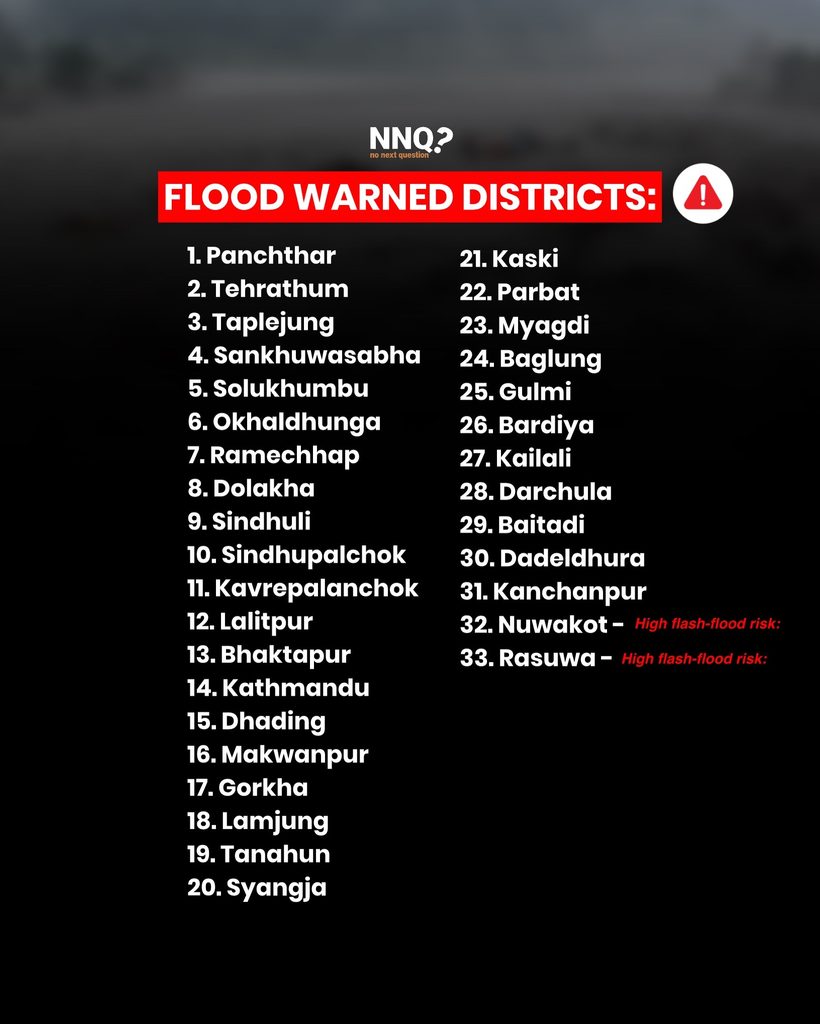
With a newly formed glacial lake near the border still considered unstable, authorities issued a fresh warning flagging Nuwakot and Rasuwa for a high risk of flash flooding, plus a moderate risk across nearly 30 districts spanning the country’s east, center, and west. It was a stark reminder of how widely the monsoon and the disaster’s aftershocks were straining Nepal’s rivers, well beyond the original flood zone.
Communities had already begun their own cleanup alongside government-led recovery work. By day’s end, no major secondary flood had struck, and the warning gave downstream communities valuable time to prepare.
August 29, 2026, Toll Reaches 734 as PM Shah Marks a Rescue Milestone
Addressing the country on the Raksha Bandhan holiday, PM Balen Shah detailed a major scale-up in the response: more than 15,400 security personnel now deployed, over 4,400 people rescued to date (including 191 pulled from hydropower tunnels), and 129 foreign tourists rescued and formally identified. Alternate light-vehicle routes had reconnected Rasuwa to Kathmandu, and Nepal’s Prime Minister’s Relief Fund passed NPR 5.44 billion in public donations, with Shah and his full cabinet pledging to donate a month’s salary.
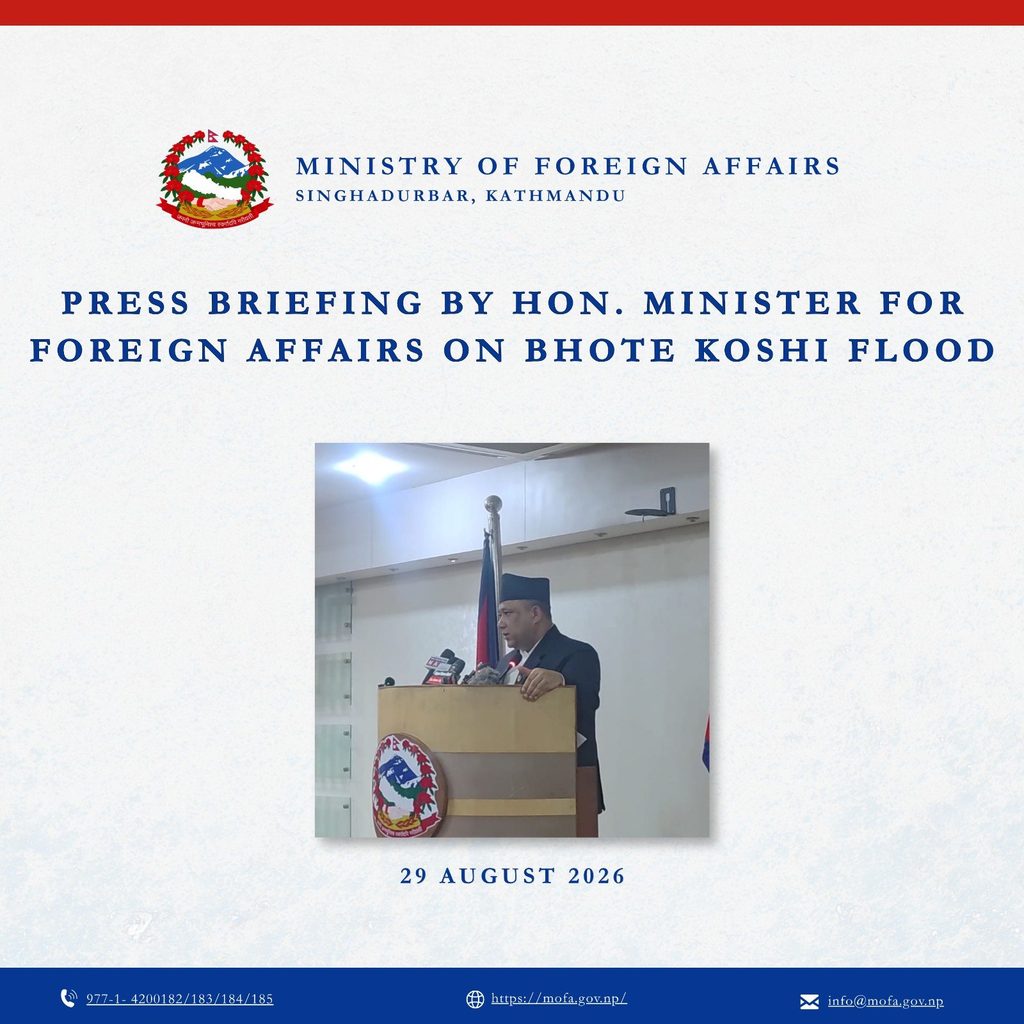
Nepal’s death toll rose to 734, with close to 2,500 people still missing, and rescue crews pushed into some of the hardest-to-reach corners of Rasuwa for the first time since the disaster, delivering food, medical supplies, and aid to villages cut off for days.
August 28, 2026, A Second Flood Scare at the Border, and Nepal Opens the Door to Foreign Rescue Teams
Chinese authorities reported a newly formed glacial lake near the collapse site, raising fears of a secondary flood; rescue operations on the China side paused briefly as a precaution before resuming once the risk eased. A 21-member Chinese rescue team, with a search-and-rescue dog, reached the badly damaged Gyirong crossing on foot after flooding destroyed the access road. Nepal’s death toll climbed to 616–626, with roughly 2,500 still missing on the Nepali side.
Nepal reversed its earlier position and formally accepted specialized international search-and-rescue support, including tunnel rescue, medical, and forensic teams from India, China, Australia, and South Korea, with Ireland, Israel, Singapore, and Pakistan also announcing humanitarian assistance.
August 27, 2026, Nepal Police Confirms Rising Toll as the Nation Mobilizes
By Thursday morning, Nepal Police confirmed 389 dead, with 466 injured and more than 1,300 people unaccounted for. More than 13,000 security personnel from the Nepal Police, Army, and Armed Police Force were engaged in search and rescue, with 14 helicopters flying continuous sorties.

International support began arriving quickly: India dispatched nearly 50 metric tonnes of relief supplies via air force aircraft, South Korea pledged US$1 million and a response team, and Australia announced an AU$5 million assistance package. The World Bank signaled up to US$163.5 million in potential emergency funding, and the UN released US$2.5 million from its Central Emergency Response Fund.
August 26, 2026, The Flood Hits Rasuwa
At around 8:30–9:15 a.m., a section of the Langtang Lirung glacier collapsed, sending an estimated 1,200-metre avalanche of ice and rock into the Lhende Khola. The impact generated a magnitude-5.2 tremor and triggered a glacial outburst flood — water levels in the Trishuli River rose by as much as 9 metres in 30 minutes.
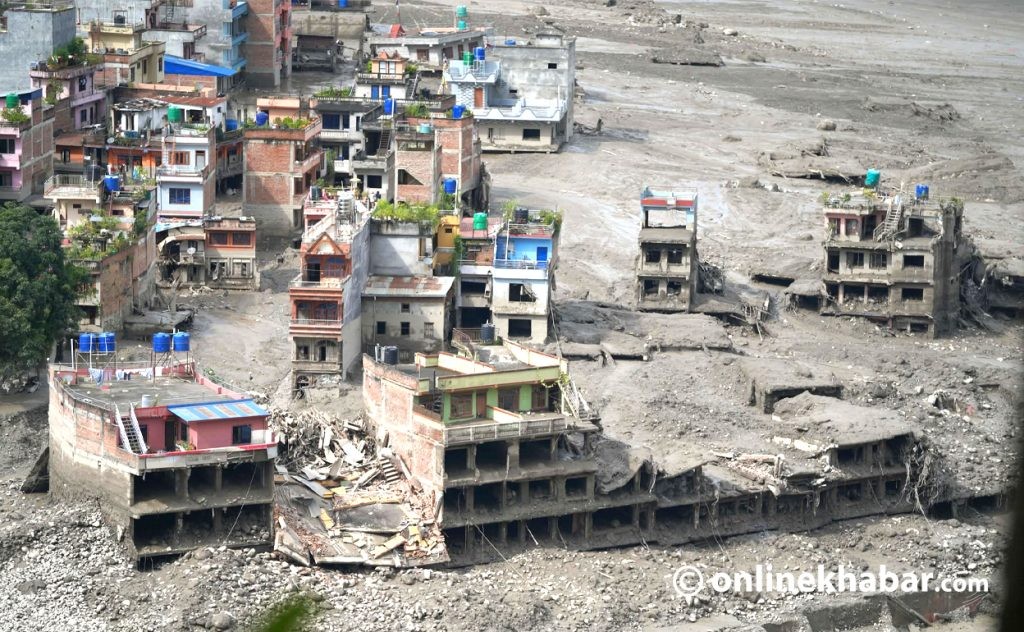
The flood destroyed the Gyirong border checkpoint and tore through Timure and Syabrubesi, the main gateway to Langtang National Park, before continuing through Rasuwagadhi, Trishuli Bazaar, and Devighat. Roughly 60 houses and multiple bridges were swept away, and public transport between Kathmandu and seven districts was suspended. Nepal’s Army and Police mobilized within the hour, launching search and rescue around Bidur and evacuating riverside villages before water levels could rise further downstream a rapid first response that likely saved many lives in the disaster’s earliest, most chaotic hours. By nightfall, Nepal’s death toll stood at 165, with around 910 people missing or unaccounted for.
Sources & References
Nepal’s National Disaster Risk Reduction and Management Authority (NDRRMA), Nepal Police, Ministry of Foreign Affairs, and Office of the Prime Minister, with reporting from BBC News, CNN, Reuters, Associated Press, Al Jazeera, The Guardian, and UN News.
Standing With Nepal
Nepal has been through a disaster that has taken lives, homes, and dreams that will never fully come back. But the damage that’s been done can be rebuilt, and for those who survived, even a small part from each of us can make a difference. Whatever you’re able to give, big or small, here’s where you can help:

Escrito por
TravelNepalNepal travel writer & trekking enthusiast. Covering the best of Himalayan adventures since 2019.