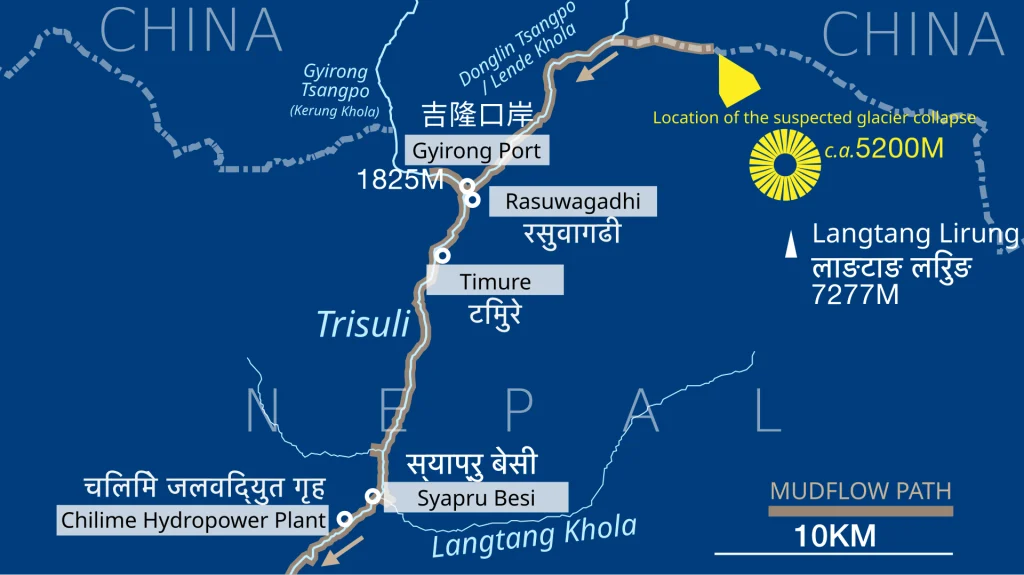
The Nepal Floods 2026 began on August 26, when a partial collapse of the Langtang Lirung glacier sent rock, ice, and meltwater surging into the Lhende Khola, Bhote Koshi, and Trishuli rivers, tearing through Nepal’s Rasuwa, Nuwakot, and Dhading districts before reaching the China border at Gyirong. It is now Nepal’s deadliest disaster since the 2015 earthquake.
The corridor hit Syabrubesi, Timure, and the Rasuwagadhi crossing, which is also the gateway to the Langtang trekking region and the overland route used by Kailash Mansarovar pilgrims, so alongside the immediate humanitarian emergency, this has real implications for travelers and the tourism communities connected to it.
As a company operating across Nepal’s travel industry, we’re tracking developments from official, verified sources and updating this page as the situation evolves. We’re avoiding speculation, unverified claims, and graphic imagery out of respect for those affected.
What This Means If You’re Traveling to Nepal?
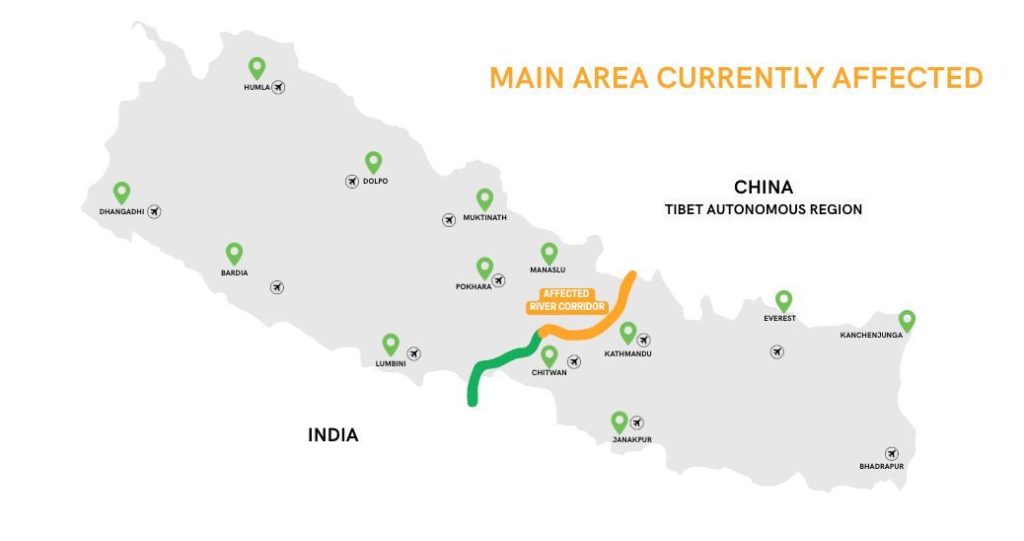
Currently affected main areas, Image Source: Nepalnow
Affected: the Rasuwa–Bhote Koshi–Trishuli corridor, including Syabrubesi (gateway to Langtang National Park), Timure, Rasuwagadhi, and the overland Nepal–Tibet border crossing (the Kailash Mansarovar overland route is currently suspended).
Unaffected: Everest, Annapurna, Manaslu, Kanchenjunga, and Makalu flights, trails, teahouses, and permits in these regions continue operating normally.
If you have a booking for Langtang, Gosaikunda, Ruby Valley, or a Tibet overland route, talk to your operator about postponing or rerouting. No confirmed reopening timeline for the Rasuwa corridor yet.
Where the Disaster Hit Hardest?
The flood began at the very top of the watershed and carried its impact a long way downstream:
Rasuwa district ground zero. The Langtang Lirung glacier collapse originated here, and the towns of Syabrubesi, Timure, and the Rasuwagadhi border crossing took the initial, most direct hit.
Nuwakot and Dhading districts were next in the flood’s path, with Trishuli Bazaar and Devighat among the hardest-hit towns as the surge continued downstream.
Chitwan, Nawalparasi East, and Nawalparasi West, further downstream, have recorded the highest numbers of recovered bodies, showing just how far the floodwaters carried people and debris.
Gyirong, on the China side of the border, the crossing point itself was largely destroyed, and China has reported its own, smaller toll of dead and missing.
September 30, 2026: Prithvi Highway Set to Fully Reopen as Flood Damage Put at Rs 390 Billion
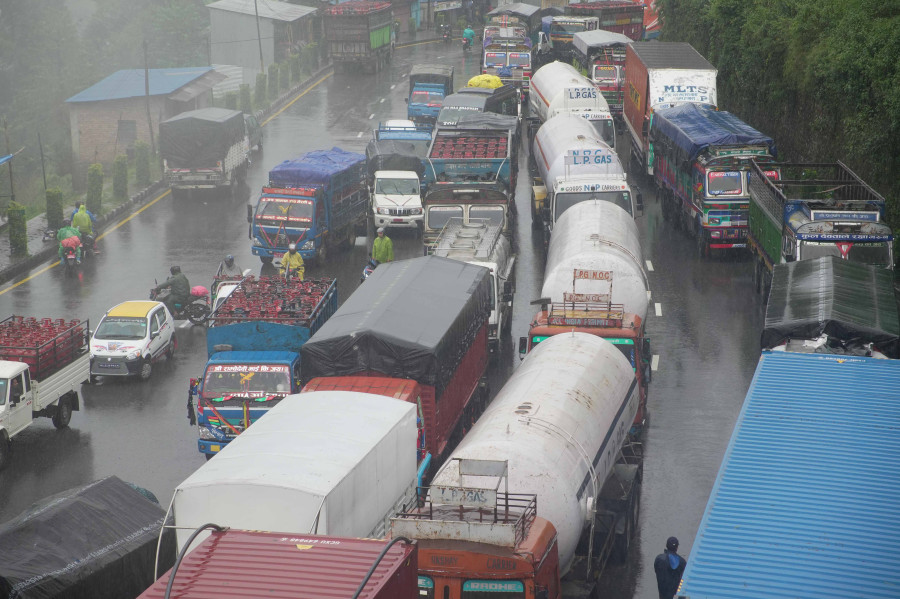
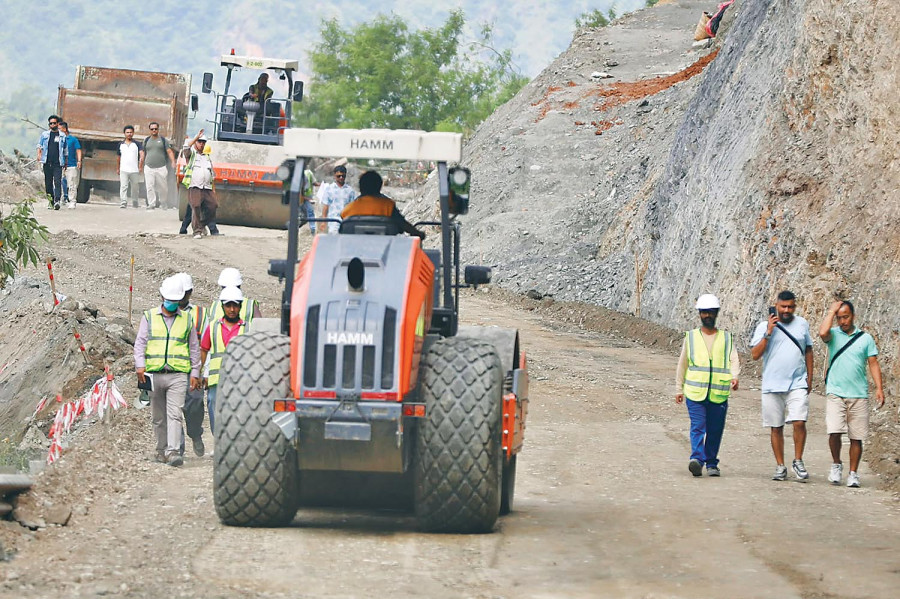
Dhading’s administration said the landslide-hit Prithvi Highway would fully reopen to all vehicles from 1 p.m. Wednesday, though it warned the risk of fresh landslides remained at several points and urged caution. Separately, Nepal Oil Corporation said LPG supply to Kathmandu Valley, disrupted for three to four days by the highway blockages, should stabilize within a week; about 100,000 cylinders had already reached the valley after the highway reopened on September 28, with 150,000 more in transit.
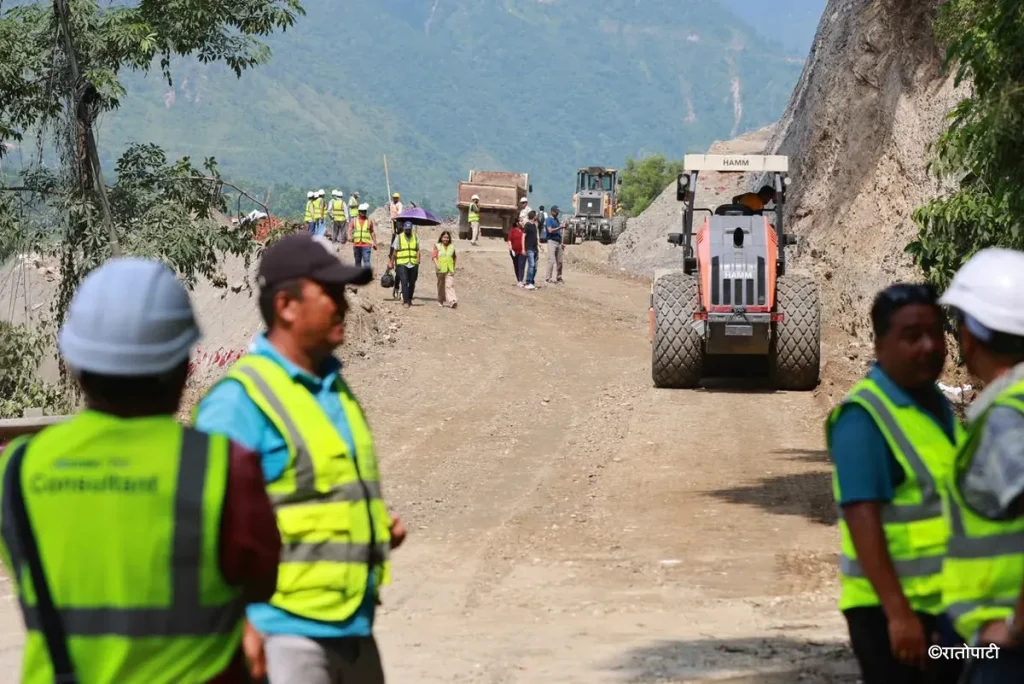
Prithvi Highway to Fully Reopened After Landslide, Image Source: Hamro Patro
The evening economic brief also put combined damage from the Bhotekoshi and Trishuli floods at an estimated Rs 390 billion. All three of Nepal’s major road crossings with China remained disrupted, including the Korala crossing in Mustang, hit by rain and landslides from September 24–27, raising concern ahead of the Dashain, Tihar and Chhath festival season.
September 29, 2026: BP Highway Reopens After Five-Day Closure as Six Highways Clear Nationwide
The BP Highway reopened via a temporary inner-track diversion at Chaukidanda after a five-day closure caused by flood damage at eight locations between Bhakundebesi and Sindhuli; small vehicles were allowed first, with full traffic expected by afternoon. The Department of Roads said the BP, Prithvi, Kanti, Araniko and Balkhu–Kulekhani–Bhimfedi–Hetauda highways had all reopened as rain eased, though sections remained one-way. Landslides had hit 46 locations along the Kaligandaki Corridor alone during the four-day spell. Work on a permanent riverbank diversion along BP Highway was on hold until water levels dropped further.
BP Highway reopens via temporary diversion, Image Source: Nepal News
September 28, 2026: Fresh Landslides and Floods Kill at Least 20–21 Nationwide, Avalanche Buries Himlung Base Camp
Nepal’s disaster authority reported 20–21 deaths from a new spell of landslides and windstorms, with over 300 landslides recorded in a single week as a tropical storm system moved through. Dramatic video showed a large landslide crashing into the Kali Gandaki River near Lete in Mustang district. Separately, an avalanche buried the base camp of 7,126-meter Himlung Himal in Manang district, leaving 10 Nepali workers missing; they had been setting up tents for foreign climbers who were not yet on site. The fresh toll came exactly one month after the August 26 disaster that killed more than 1,400 and left nearly 6,000 missing.
September 27, 2026: Fresh Floods Kill 12 in Nepal as Authorities Warn of Flash Floods in 49 Districts
A new wave of flooding and landslides, separate from the August disaster, killed at least 12 people in Nepal since Thursday, with several more missing. In Baglung district’s Nishi Khola village, a landslide buried a house overnight, killing four people, including three children. Ten workers were reported missing after an avalanche hit the base camp of Himlung Himal in Manang while they prepared for foreign climbers. Authorities warned of possible flash floods in 49 of Nepal’s 77 districts, with more than half facing high risk as major rivers rose. Landslides and flooding also damaged optical fibre and power lines, disrupting telecommunications in parts of the country.
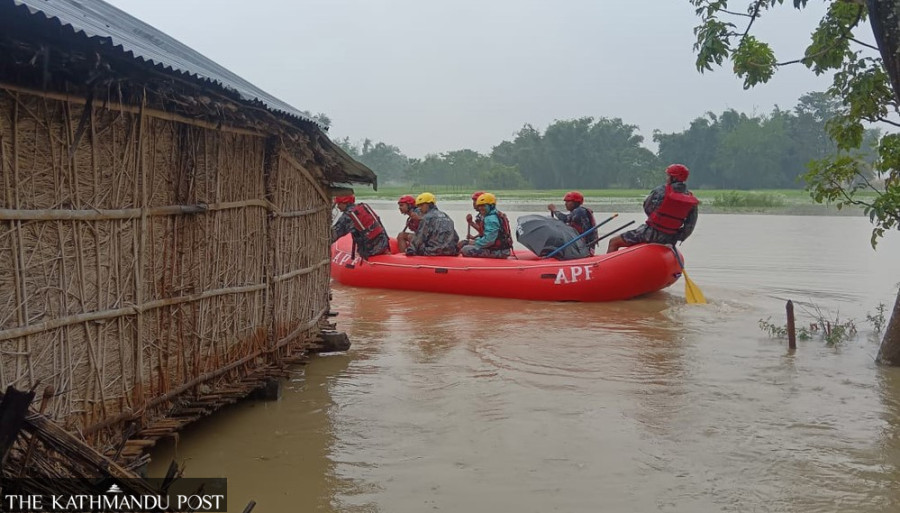
A settlement in Saptari’s Hanumannagar Kankalini inundated by the flooding of the Koshi River. Image Source: The Kathmandu Post
September 26, 2026: Landslides Cut the Jomsom–Korala Road as Gandak Barrage Flow Nears Danger Level
Continuous rain triggered landslides at three points along the Jomsom–Korala highway, cutting cross-border trade and transport with China through that route. Elsewhere, sections of major highways and strategic roads stayed blocked by floods, landslides and rain; some cleared stretches reopened only to be hit again, and public vehicles to and from Kathmandu remained affected. Several districts stayed on high alert.
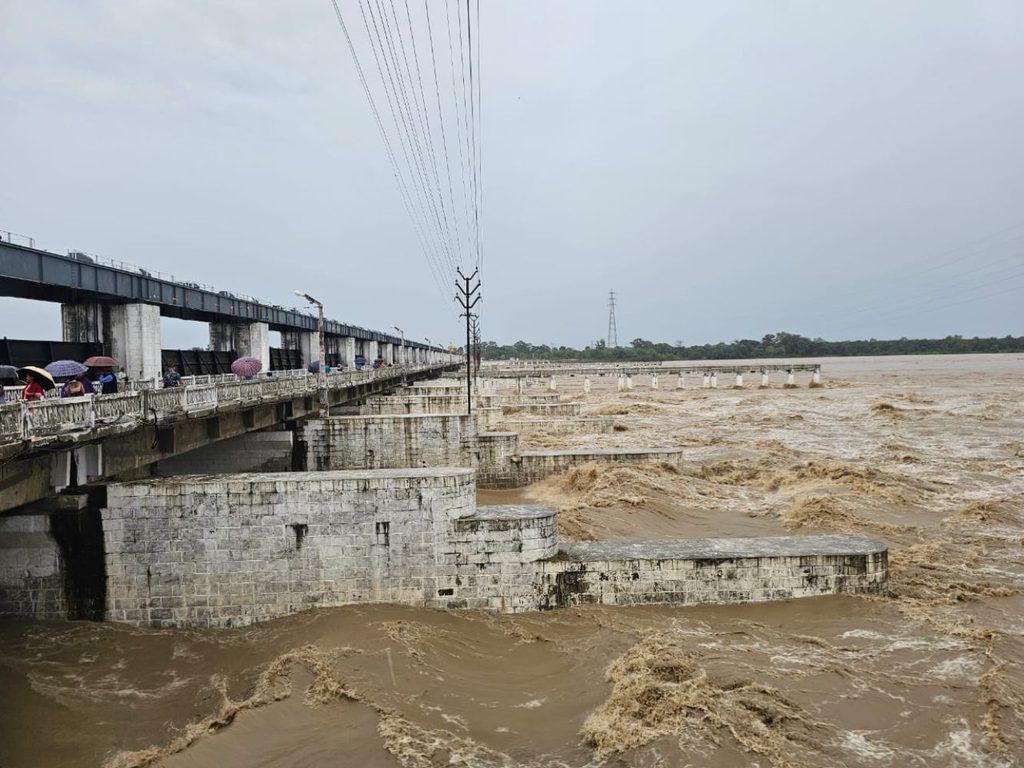
All gates of Gandak barrage open as Narayani River flood approaches danger level, Image Source: The Rising Nepal
On the India border, water at the Gandak Barrage reached 267,000 cusecs by 7 a.m., putting over 150 houses at risk. Authorities evacuated residents as floodwater submerged homes, farmland and crops, and a local campaigner said the river had eroded land after shifting course toward the village. All border points between India and China were shut because of the weather.
September 25, 2026: Landslides Shut the BP Highway as Roads Close in 26 Districts
Heavy rain since Thursday blocked the BP Highway at Charsayabensi and Gimdi in Kavrepalanchok’s Roshi Rural Municipality, with the Roshi River crossing the warning level at Panuti. The Prithvi Highway was also disrupted, and two mud-and-brick houses collapsed in Panauti. NDRRMA reported road closures or restrictions in 26 districts across the country, including Sindhupalchok, Nuwakot, Dhading, Rasuwa and Chitwan. The Flood Forecasting Division separately flagged a high-to-moderate flash-flood risk on small rivers running through more than two dozen districts, from Gorkha and Kaski to Kailali and Kanchanpur. Authorities urged people to avoid river corridors and postpone long-distance travel through September 27.
Vehicles leaving Kathmandu are stopped at Nagdhunga due to heavy rain and road hazards. Image Source: The Kathmandu Post
September 24, 2026: PM Shah Tells the UN the Bhotekoshi Disaster Was “a Warning to the World”
Addressing the 81st UN General Assembly, Prime Minister Balendra Shah described the August 26 disaster as a “Himalayan Tsunami” that killed at least 1,400 people and left more than 6,000 missing, at a cost of roughly 10% of Nepal’s GDP. He said Nepal produced less than a tenth of one percent of global heat-trapping emissions yet was paying a heavy price, and pressed the Assembly on “relief, rehabilitation, reconstruction” as well as “responsibility, reparation, resilience.” He proposed a Himalaya Climate Resilience Mechanism with India and China to share satellite data, monitor glacial lakes and strengthen cross-border early-warning systems. UN Secretary-General António Guterres met Shah separately and had already referenced Nepal’s floods in his own opening remarks.
September 23, 2026: Met Office Urges Trekkers to Head Down and Travelers to Avoid Long Drives From September 25 to 27
The Department of Hydrology and Meteorology’s forecasting division asked all trekkers to suspend Himalayan treks and those already on the trails to return to safer, lower elevations, citing heavy rain and snow. It also advised the public to avoid long-distance road travel from September 25 to 27. A deep depression over the Bay of Bengal is expected to bring rain to every province from Friday to Sunday. Extremely heavy rainfall and snowfall are possible in Gandaki and Lumbini, home to the Annapurna Circuit, Manaslu Circuit, Annapurna Base Camp, Mardi Himal and Tilicho Lake. Forecasters said there is no need to panic, but people should stay alert. The system is separate from the August disaster.
On the ground, Kavrepalanchok authorities will bar vehicles from the BP Highway section between 5 p.m. and 5 a.m. from September 24 to 28, citing flood and landslide risk. Separately, the Asian Development Bank trimmed its FY2026/27 growth forecast for Nepal by 0.4 percentage points to 4.1%, largely because of the floods. Prime Minister Balendra Shah reached New York ahead of his September 24 address to the UN General Assembly.
September 22, 2026: PM Shah Leaves for the UN General Assembly as Guterres Recalls His Himalayan Warning
Prime Minister Balendra Shah left Kathmandu for New York to lead Nepal’s delegation to the 81st UN General Assembly. He is due to address the General Debate on September 24 and to raise the Bhotekoshi floods and Nepal’s call for climate justice and compensation. Foreign Minister Shisir Khanal was meeting India’s External Affairs Minister and a senior US State Department official on the sidelines. The Post reported that additional US recovery assistance is likely to be announced.
Opening the general debate, UN Secretary-General António Guterres recalled his 2023 warning from the mountains of Nepal about accelerating glacier melt. He said climate impacts are now arriving sooner and hitting harder than many expected. He did not specifically name the August 26 disaster.
September 21, 2026: Home Secretary Briefs Parliament as Holding Centers Fall From 34 to 20
Home Secretary Kedarnath Sharma told a parliamentary committee that rescue and relief work is continuing. He said Rs 135 million has been dispatched from the Prime Minister’s Disaster Relief Fund to Rasuwa, Nuwakot, Dhading, Chitwan and other affected districts. He also said Nepal would need to seek around Rs 723 billion from the international community under the principle of climate justice.
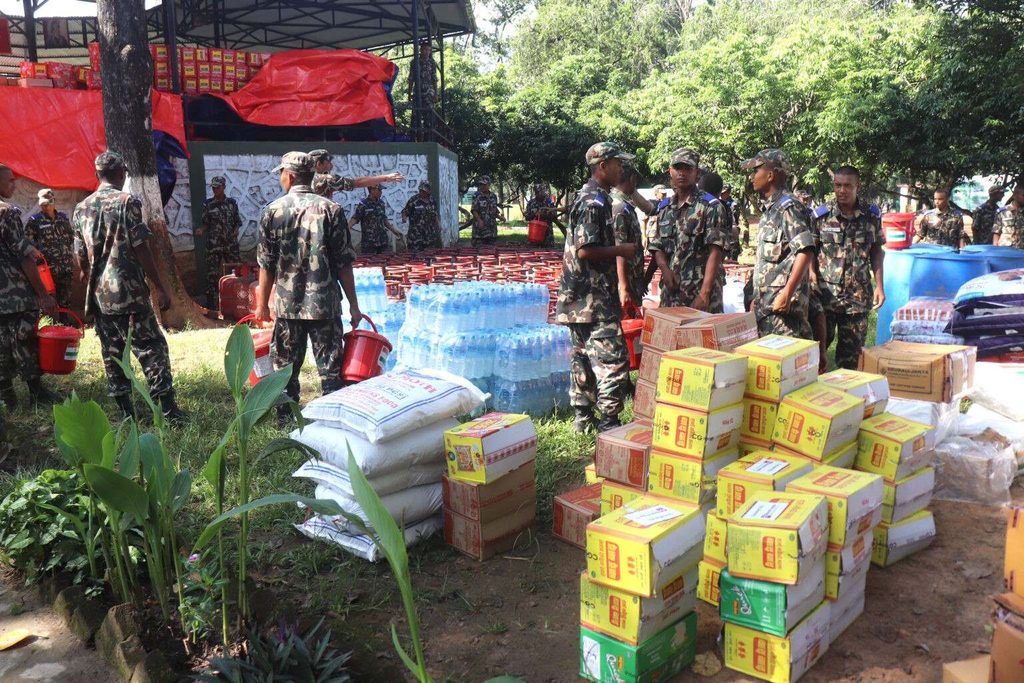
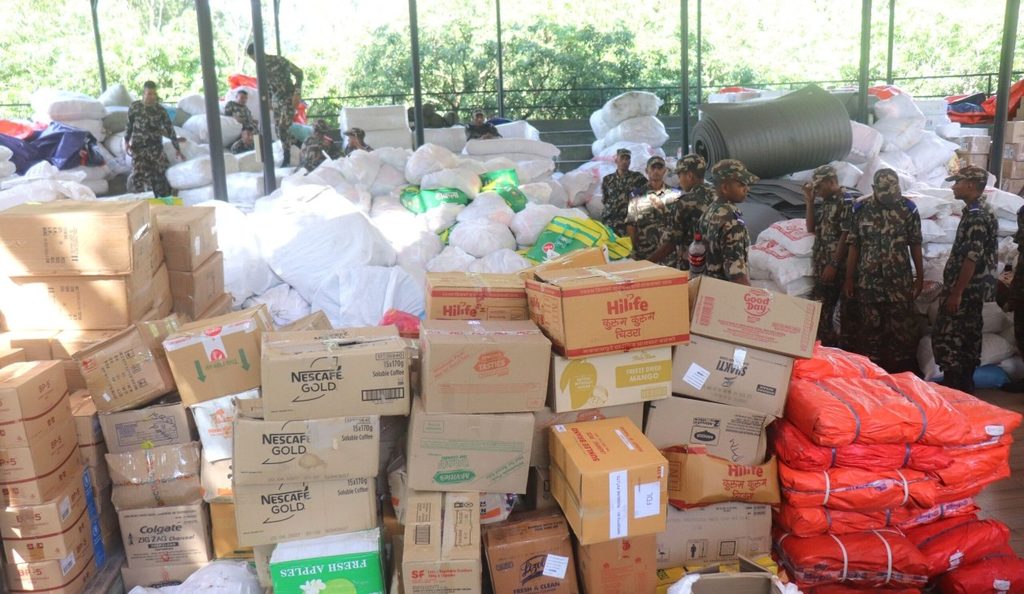
Relief materials collected for distribution to flood-affected residents, Image Source: Nepal News
NDRRMA chief Dharmaraj Upreti put the count at 1,451 bodies recovered and 5,786 people still missing. Another 1,292 bodies have been buried after DNA sampling, and 111 have been identified and handed to families. The number of holding centers has dropped from 34 to 20 as the focus shifts to survivors’ needs. The government is running temporary learning centers for children and offering psychosocial counseling.
September 20, 2026: Toll Crosses 1,450 Four Weeks On, With Identification Still the Hardest Task
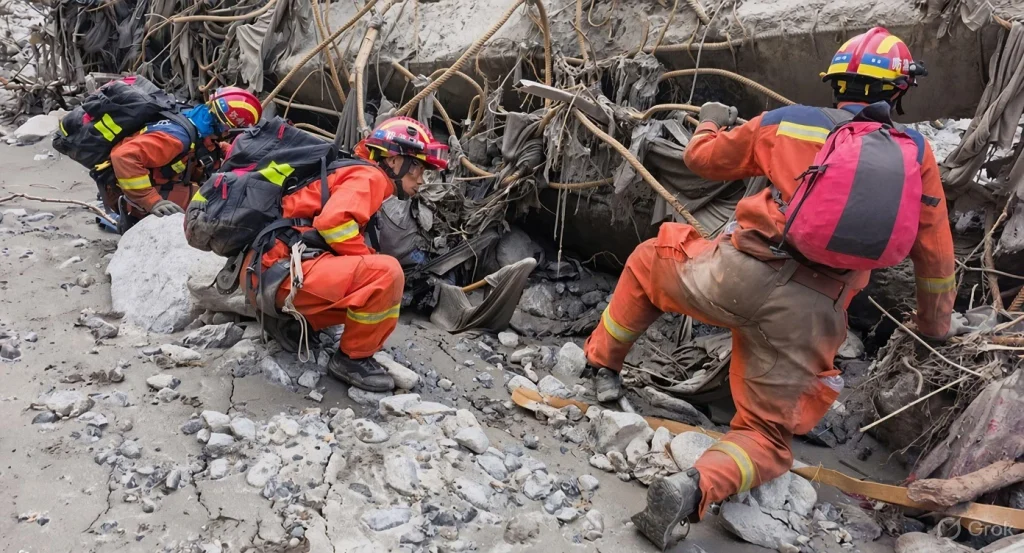
Nepal Police put the confirmed toll at 1,451, four weeks after the flood. Chitwan has the most recovered bodies (367), followed by Rasuwa (236), Nawalparasi East (232), and Nawalparasi West (222). Nuwakot recorded 203, Gorkha 79, Dhading 72, and Tanahu 38, and two people died in Kathmandu hospitals while undergoing treatment. A total of 13,784 people have been rescued. On the Chinese side, 43 people have died, and more than 500 remain missing, according to Chinese media. Nepal floods: Death toll crosses 1,450, search continues for 6,000 missing +3
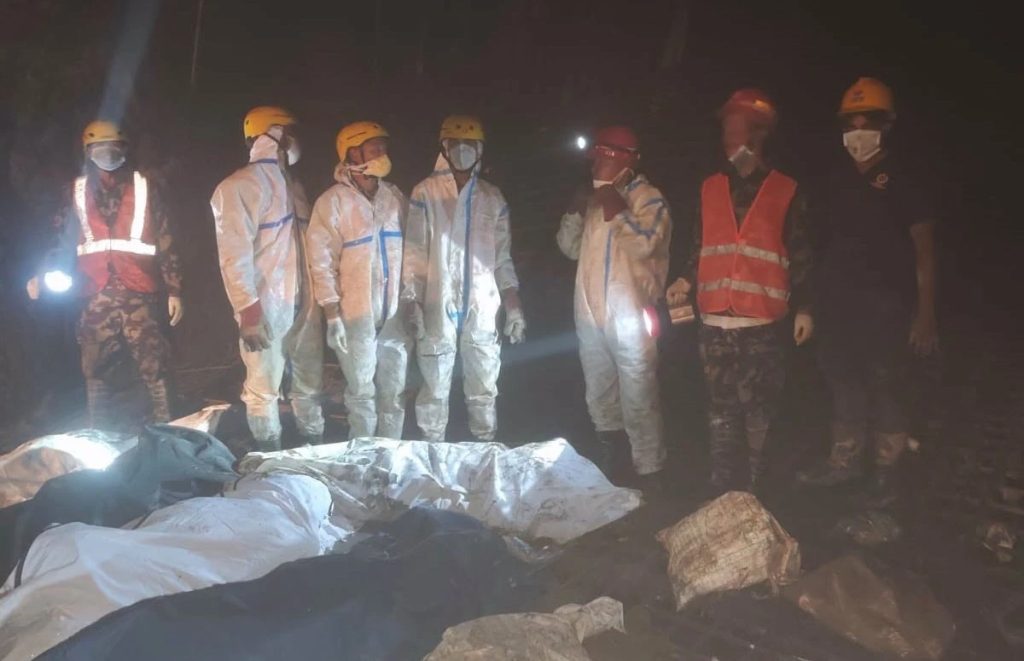
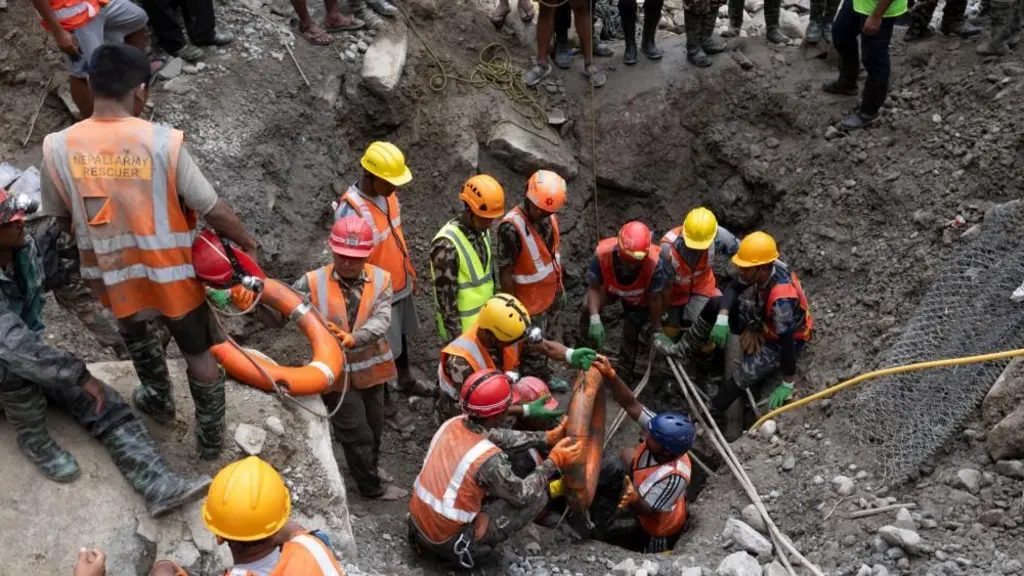
Rescue workers search through debris at a Nepal flood site, Image Source: Express Post
Only 110 bodies had been identified and returned to families, since many were decomposed or recovered only in parts. Nearly 1,300 have been temporarily buried after DNA collection. An army field commander said earlier this month that clearing some tunnels could take three to four months because of the volume of debris. Meanwhile, the government has begun repairing suspension bridges along the Trishuli corridor.
September 19, 2026: Government Launches a Scientific Probe Into What Triggered the Disaster
Nepal has commissioned a seven-member expert panel to investigate how the August 26 disaster unfolded and whether climate change played a role. It brings together experts in hydrology, glaciology, geology, remote sensing, hydropower infrastructure and disaster risk reduction, and will run field studies from the source to the downstream areas. This follows a preliminary assessment that found too little verified evidence to establish where the disaster began or what physical process set it off.
The Ministry of Energy, Water Resources and Irrigation formed the panel on Wednesday, and it is expected to run for two months. Once it submits its findings, the ministry plans to decide on an appropriate scientific classification for the event.
September 18, 2026: Six More Bodies Recovered From the Upper Trishuli-1 Tunnel as Toll Stands at 1,410
NDRRMA figures as of Thursday evening put the death toll at 1,410, with 6,145 people still missing, including 587 foreign nationals. The missing figure was revised after 110 bodies were identified. A total of 13,756 people have been rescued.
Six More Bodies Recovered From the Upper Trishuli-1 Tunnel, Image Source: Nepal Views
On Friday, a joint security team recovered six bodies from the Audit-3 tunnel of the Upper Trishuli-1 project in Nuwakot. They were found entangled in reinforcement mesh, and crews used cutting equipment to free them. Rescuers suspect more may lie under mud, and searches continue at several other projects, including Chilime, where five bodies had been recovered two days earlier.
September 17, 2026: Prithvi Highway Reopens After 18 Days, Restoring a Key Route to Western Nepal
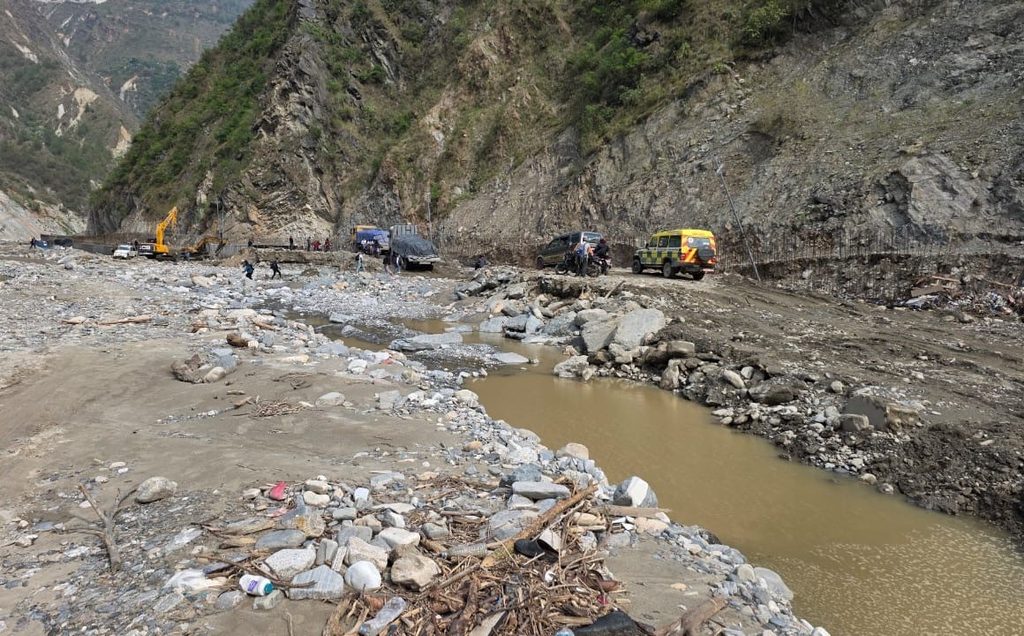
Nepal Police confirmed the full reopening of the Prithvi Highway at Krishna Bhir in Dhading, with two-way traffic resuming from 6 a.m. Thursday, 18 days after a landslide triggered by the Rasuwa flood tore out roughly 100 meters of road and cut the route entirely. Crews built a new 270-meter track above the collapsed section, working 12 to 16 hours a day to gravel and compact it in time.
While the highway is officially open, some engagement remains: several stretches between Nagdhunga and Mugling are still narrowed to a single lane from flood and landslide damage, and other routes in the region, including parts of the Pasang Lhamu Highway near Khalte and Betrawati, washed out by the Trishuli River remain closed, with traffic to Syabrubesi still detouring along a single-lane dirt track. Transport operators, who lost tens of millions of rupees in revenue during the closure, welcomed the reopening as a major step for connectivity between Kathmandu and western Nepal.
September 16, 2026: Toll Surpasses 1,400 as Rasuwa Forms a Committee to Tally the Damage
NDRRMA figures as of Wednesday evening put the confirmed toll at 1,403, with more than 6,000 people still reported missing. Chitwan again recorded the most deaths (364), followed by Nawalparasi East (232), Nawalparasi West (222), Nuwakot (202), Rasuwa (193), Gorkha (78), Dhading (72), and Tanahun (38); two more people died while undergoing treatment. Also, three bodies have been recovered during a search operation at the Chilime Hydropower Project.
Rasuwa formed a 25-member data evaluation committee, chaired by the District Coordination Officer, to compile a full loss-of-life and property assessment within a month; with local municipal offices themselves destroyed, operations have shifted to vacant buildings while new facilities are built. Separately, Rasuwa’s civil society called for the swift installation of Bailey bridges over the Phalaku, Bhote Koshi, and Ronga rivers to restore connectivity, and lawmakers pressed the government in Parliament on the pace of tracing missing citizens and distributing relief.
September 15, 2026: 607 Foreign Tourists Still Missing as Rescue Teams Keep Tracing Trekkers and Pilgrims
The Department of Tourism confirmed that 607 foreign tourists from 34 countries remain unaccounted for nearly three weeks. Information officer Suraj Ghimire told RSS that most were traveling toward Kailash Mansarovar in Tibet or heading to Gosaikunda and Mustang over the Janai Purnima festival. A reminder of just how many visitors were moving through the Rasuwa corridor on the day the flood struck.
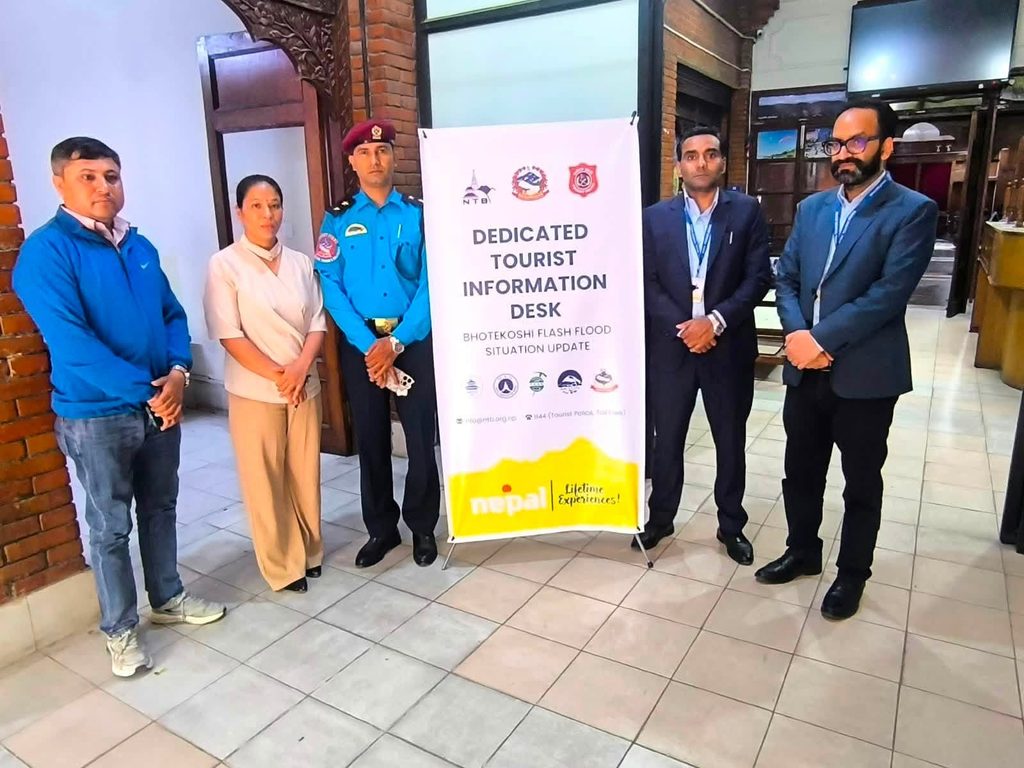
Tourism Board sets up flood help desks at NTB, Image Source: The Tourism Times
The figure reflects the difficulty of accounting for independent trekkers and pilgrims, many of whom were traveling without fixed itineraries or local operators when communications went down.
September 14, 2026: Toll Reaches 1,390 as Search Teams Work Through 1,230 Identified Bodies and Thousands of Records
Nepal Police figures as of 5 a.m. Monday put the toll at 1,390, with 4,089 people still missing. Bodies recovered by district: Chitwan (364), Nawalparasi East (230), Nawalparasi West (222), Nuwakot (202), Rasuwa (186), Gorkha (77), Dhading (71), and Tanahun (38). Authorities have completed formal identification of 1,230 bodies, with 3,132 DNA samples collected from the deceased and their relatives; details of unidentified remains have been published on Nepal Police’s website to help families still searching for missing loved ones, including foreign travelers.
Prime Minister Balendra Shah assured there would be no shortage of financial or material resources for rehabilitation along the Bhote Koshi–Trishuli–Narayani corridor. A total of 7,975 police personnel remain deployed for search, relief distribution, and body management.
September 13, 2026: Recovery and Search Efforts Continue Despite Festivals
President Ram Chandra Paudel extended greetings to Nepali women on Teej and to children on National Children’s Day, stressing the importance of protecting children’s rights and ensuring access to education and healthcare, words that carried added weight as schools across Rasuwa, Nuwakot, and Dhading remain damaged or destroyed. Families of missing tourists and trekkers are still waiting for news.
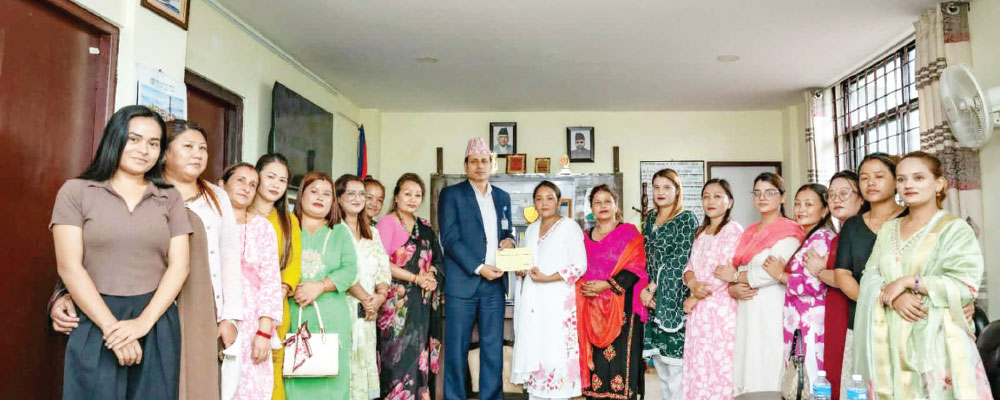
Teej Celebration Money Donated to Relief Fund, Image Source: The Rising Nepal
Search and relief work along the Bhote Koshi–Trishuli corridor continued through the holiday without pause. The confirmed toll held close to the 1,386 figure recorded the previous day.
September 12, 2026: Toll Reaches 1,386 as the Missing Count Holds Steady at 5,130
NDRRMA’s update for the day put the confirmed toll at 1,386, with 6,827 people injured and 5,130 still missing, including 587 foreign nationals from 39 countries. The missing figure has held roughly flat over the past couple of days, suggesting the search is now moving through its slower, harder phase rather than the rapid swings seen in the first two weeks.
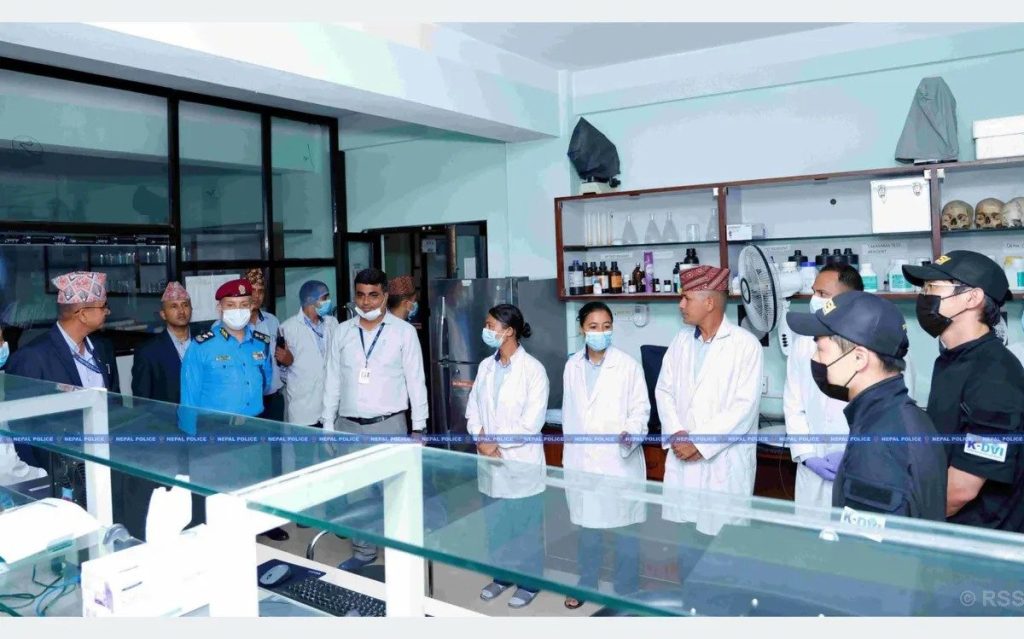
DNA identification center, Kathmandu, Image Source: Hamro Patra
With the death toll’s pace of increase slowing, attention is shifting further toward recovery, identification of remains, support for displaced families, and the reconstruction planning Nepal outlined a day earlier with its $4.78 billion damage assessment.
September 11, 2026: Toll Reaches 1,385 as Nepal Puts a $4.78 Billion Price Tag on Recovery
NDRRMA’s update put the toll at 1,385, with 5,130 still missing and 13,676 rescued. The highest death counts remain in Chitwan (364), Nawalparasi East (228), Nawalparasi West (222), Nuwakot (199), and Rasuwa (185). A reminder of how far the flood carried people downstream from where it started. More than 21,000 security personnel remain deployed, supported by over 1,700 helicopter flights, while 3,685 displaced people are being sheltered across 37 holding centers.
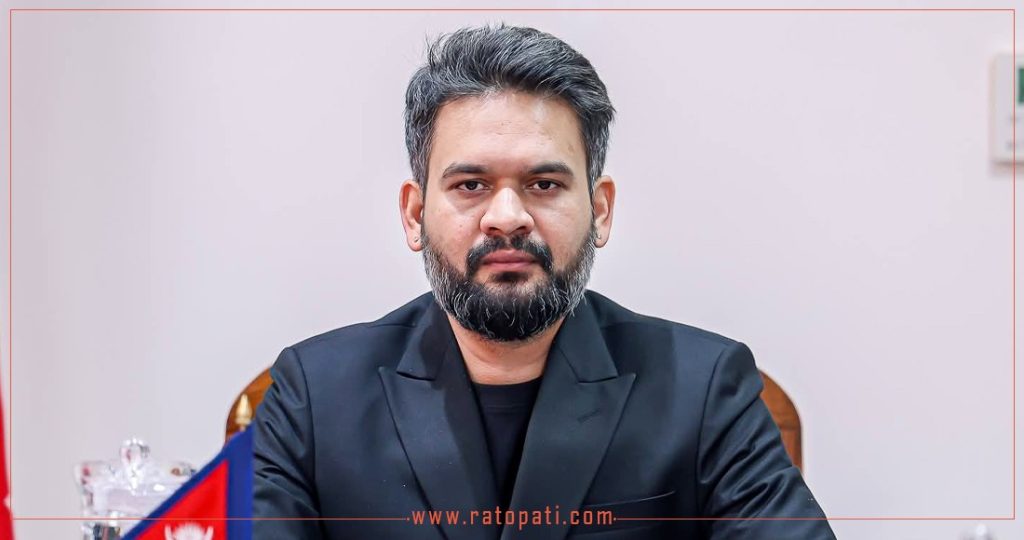
Prime Minister Balen Shah to Address UN General Assembly, Image Source: Rato Pati
Nepal’s government put a first hard number on the road ahead: its Rapid Damage and Needs Assessment estimates $1.8 billion in physical damage and $883 million in economic losses, with $4.78 billion needed for full reconstruction. Prime Minister Balendra Shah is set to raise the case for climate compensation at the UN General Assembly’s High-Level Debate on September 24, seeking climate finance and support from the UN’s Fund for Responding to Loss and Damage.
September 10, 2026: Toll Reaches 1,377 as Nepal’s Parliament Debates the Road Ahead
The government’s update issued at 11 a.m. on Thursday put the toll at 1,377, with 5,130 people still missing, including 587 foreign nationals. Officials noted the missing figure was revised down after 104 bodies were formally identified. A total of 13,656 people have now been rescued, with 21,063 security personnel still mobilized; the Army and Armed Police Force have flown 1,348 and 272 helicopter sorties, respectively.
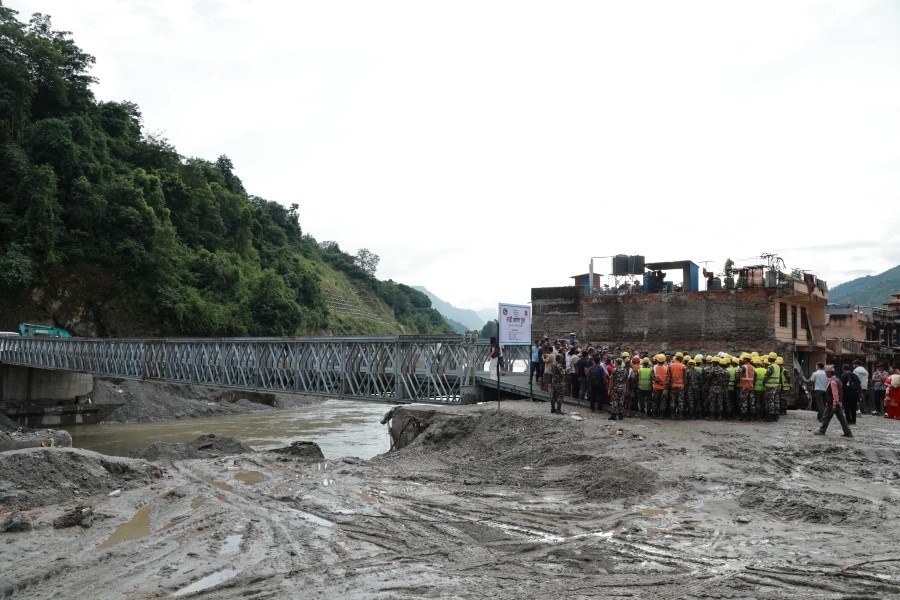
Acrow Bridge at Devighat, newly reopened, Image Source: My Republica
In Parliament, lawmakers pressed the government on several fronts: the pace of post-disaster reconstruction, the need for more advanced technology in the ongoing search around Rasuwa, and the government’s response to the recent Mustang earthquake. The Cabinet also formally approved Prime Minister Balendra “Balen” Shah’s upcoming visit to the UN General Assembly in the US, where Nepal is expected to press its case for climate compensation. On the ground, Chinese drone teams continued playing a significant role in the recovery effort, helping airlift bodies and supplies into hard-to-reach parts of the corridor.
September 9, 2026: Recovery Continues in Rasuwa as PATA Urges the Industry to Keep Nepal’s Story in Perspective
Sixteen days on, the response along the Bhote Koshi–Upper Trishuli corridor has shifted from primarily search and rescue toward relief and recovery. Government agencies, security forces, local governments, and numerous citizen-led groups are working to get food, medicine, and essential supplies to affected people. However, access remains difficult in several places. The scale of destruction in the corridor is significant, and rebuilding will take time, but as before, it remains concentrated in this one river corridor, not a nationwide event.
Relief materials collected for distribution to flood victims, Image Source: Nepal News
Good news came from the Manaslu Circuit, where two bridges near Namrung, washed out earlier this week by the Budi Gandaki River, were rebuilt by local communities within two days, using traditional timber construction. Nepal’s trekking trails are also the everyday lifelines connecting mountain villages to homes, farms, schools, and markets. And that same traditional knowledge is now being put to direct use in recovery.
Separately, a 5.3-magnitude earthquake struck near Lo Manthang in Upper Mustang on the evening of September 8. Access to the region hasn’t been disrupted; Jomsom, Kagbeni, and Muktinath continue functioning normally, and the route toward Lo Manthang remains open, but the quake has cracked and damaged some of the area’s older mud-and-stone buildings and monasteries, many of which were already vulnerable due to age, changing rainfall patterns, and limited maintenance.
Industry response
The Pacific Asia Travel Association issued an open letter urging travel businesses and media worldwide to rely on verified sources rather than blanket cancellations, noting that Kathmandu Valley, Pokhara, Annapurna, Everest, Chitwan, and Nepal’s airports all remain fully open. PATA is also launching a Nepal Tourism Recovery Fund to support guides, drivers, porters, and homestay and lodge owners who lost income and property in the affected corridor.
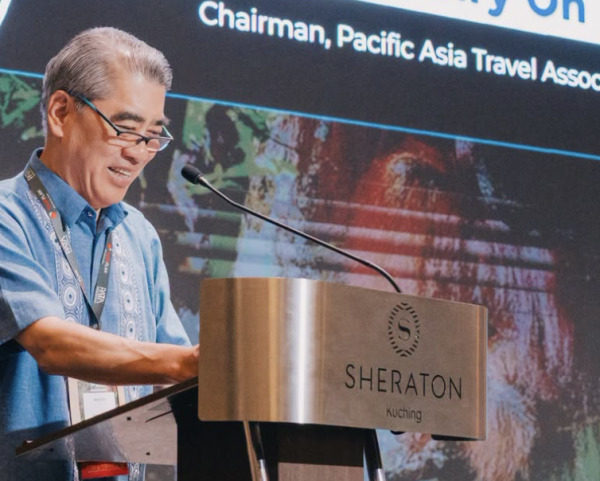
PATA Chair Henry Oh at the recent PTM event in Kuching, Sarawak. Image Source: TTR Weekly
Climate compensation
Nepal’s Foreign Minister, Shisir Khanal, told The Guardian that Nepal has formally requested $20 million in climate-related damages from the UN’s loss and damage fund, arguing that Nepal contributes under 0.1% of global emissions while the Himalayas warm roughly 50% faster than the global average. He noted the request covers only a fraction of the estimated $5 billion-plus total damage, and said neither Nepali nor Chinese scientists had seen clear signs the glacier collapse was imminent, despite the glacier’s known fragility.
September 8, 2026: Nepal Marks a Day of Mourning for the Gen Z Martyrs along with the Rescues Going on
The Government’s update for the 14th day put recovered bodies at 1,357, with around 5,300 still missing (roughly 600 foreign nationals from 35 countries) and 13,583 people rescued in total.
September 8 was separately observed as Nepal’s national day of mourning for the Gen Z Martyrs, marking one year since the protests that brought the current government to power, with Nepal holding space for two griefs at once, even as search and relief work continued without pause. Dedicated help desks remain open at Tribhuvan International Airport and the Nepal Tourism Board for families still searching for loved ones.
September 7, 2026: Nepal Observes a National Day of Mourning for Flood Victims
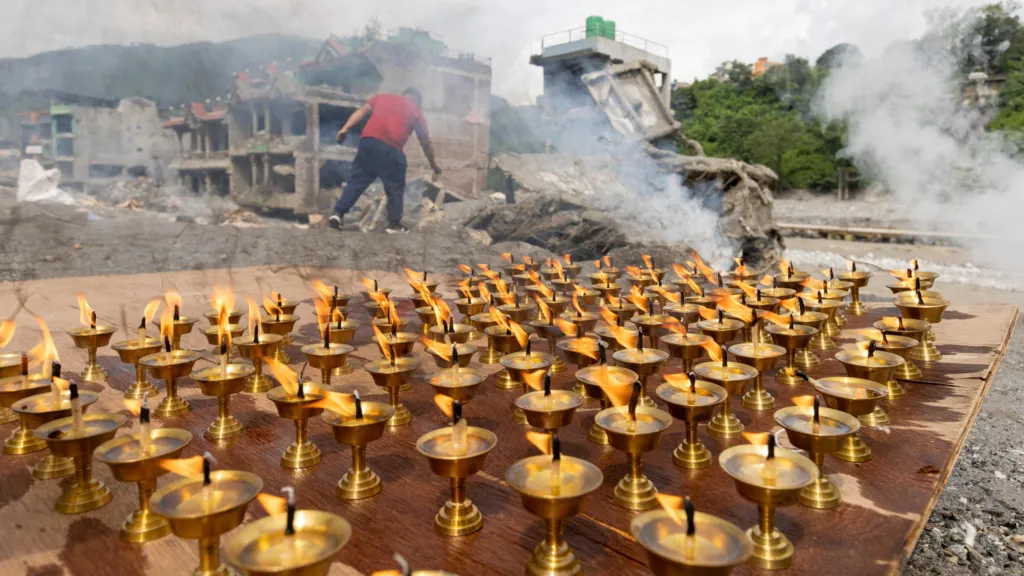
The Government’s update for the 13th day put recovered bodies at 1,355, with around 5,000 still missing and 13,396 people rescued. September 7 marked Nepal’s official day of mourning for flood victims, the traditional close of the 13-day Hindu mourning period. Flags flew at half-mast at government offices and Nepali missions abroad, and candlelight vigils were held nationwide that evening.
National Day of Mourning for Flood Victims, Image Source: BBC NEWS
President Ram Chandra Paudel traveled to the worst-affected districts to meet survivors and rescue teams in person, while Nepal Army spokesperson Raja Ram Basnet told AFP that search efforts were continuing at the same pace as day one.
September 6, 2026: 1,341 Bodies Recovered as Rescue Teams Reach Rasuwagadhi, and a Separate Disruption Hits Manaslu
The Government’s update for the 12th day put recovered bodies at 1,341, with around 5,000 still missing and 13,104 people rescued. Figures are revised daily as search and verification continue, which can mean small day-to-day shifts rather than a steady climb.
Nepali Army engineers began work on a temporary bridge over the Tadi River to help restore the Galchhi–Trishuli road. Separately, Nepal flagged a second, unrelated disruption: a landslide near Tsum Valley and a collapsed bridge at Namrung on the Manaslu Circuit, linked to ongoing monsoon rain rather than the main disaster. Gorkha’s District Administration Office advised trekkers to defer Manaslu and Tsum Valley trips for now.
September 5, 2026: Toll Passes 1,342 as a Miracle Rescue Brings Nepal to Tears
Nepal Police confirmed 1,342 deaths by Saturday morning, with 4,886 still missing. Bodies have been recovered across eight districts, led by Chitwan (360) and Nawalparasi West (230); over 1,030 have now been identified through DNA testing and formally buried.
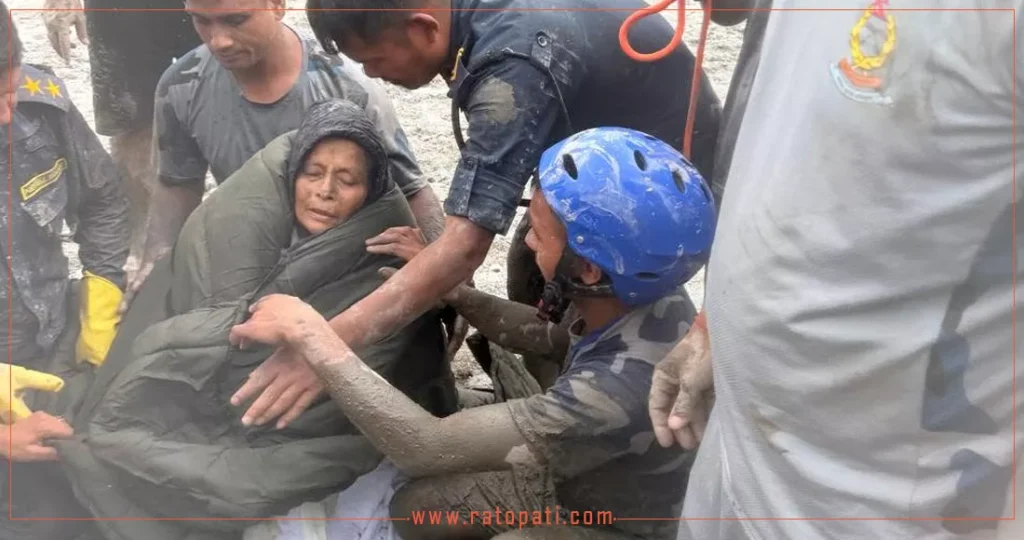
Chandika Shrestha, rescued alive from a home, Image Source: Ratopati
Chandika Shrestha, 64, was rescued alive from a home buried by the flood in Betrawati, Nuwakot, 11 days after the disaster struck and airlifted to Kathmandu for treatment. Separately, a Chinese hydropower worker was also pulled alive from a tunnel with help from a South Korean rescue team.
September 4, 2026: Toll Reaches 1,287 as Two Workers Pulled Alive From a Buried Tunnel
Nepal’s disaster authority raised the confirmed toll to 1,287, with 5,083 still missing. More than 800 foreign nationals remain unaccounted for, including trekkers and Kailash Mansarovar pilgrims.
Pulling out two workers alive from a hydropower tunnel, Image Source: BBC NEWS
Rescuers pulled two workers alive from a hydropower tunnel in Rasuwa, nine days after the flood: foreman Sanjay Sah, 30, and supervisor Kabir Maharjan, 45. One of them said more workers may still be alive deeper inside; around 115 are believed to be trapped in the tunnel’s main chamber.
September 3, 2026: Toll Rises to 1,252 as 4,216 Remain Unaccounted For
NDRRMA’s Thursday-noon figures put Nepal’s confirmed death toll at 1,252, with at least 4,216 people still unaccounted for. Chitwan has recorded the most deaths (355), followed by Nawalparasi East (218), Nawalparasi West (208), and Nuwakot (177); Rasuwa, where the disaster began, has recorded 127.
Nepali Army helping the affected area, Image Source: ABC News
More than 21,000 security personnel are now deployed for search, rescue, and relief work, with 11,900+ people rescued so far. The Nepali Army has airlifted over 4,300 people across 700+ helicopter flights, including hundreds of foreign nationals. Telecommunications are largely restored; nearly all damaged towers across the disaster zone are back in operation.
September 2, 2026: One Week On: Toll at 1,114, PM Gives Parliament a Full Account
A week after the disaster began, NDRRMA placed the confirmed toll at 1,114, with roughly 4,500 people still missing across Nepal and China combined. Scientists flagged that glaciers near the original collapse site may still be unstable, keeping authorities on alert.
Prime Minister Balendra “Balen” Shah gave Parliament a detailed, minute-by-minute account of the government’s response on the day of the disaster, while also publicly thanking India and China for their swift aid. Nepal signaled it wants India, China, and the US, as major greenhouse-gas emitters, to contribute compensation for what it considers a climate-induced disaster, and has approached the UNFCCC’s Fund for Responding to Loss and Damage for support.
September 1, 2026: Death Toll Crosses 1,000, Pulling 279 Workers from Tunnels Alive
NDRRMA’s toll reached 1,003 (1,019 combined with China’s count of 16), with 3,916 people still missing in Nepal, including 583 foreign nationals from 38 countries. Authorities held a mass burial for unidentified victims, and a preliminary report noted that warning signs of the glacier’s instability had reportedly been visible before the collapse.
On a more hopeful note, Prime Minister Balen Shah announced that 279 workers had been rescued alive from hydropower tunnels where more than 900 had initially been feared trapped, pushing Nepal’s total rescues past 11,800.
Captain Priya Adhikari’s rescue mission
Among those leading the air rescue effort was Captain Priya Adhikari, Nepal’s first female helicopter captain, who by this point had flown close to 100 missions through unstable mountain valleys to bring survivors to safety. International funding pledges also grew, with the World Bank, India, China, and the US signaling up to US$229 million combined toward Nepal’s relief fund.
August 31, 2026: Toll Passes 900 as Rescues Pass 10,000, Qatar Sends Emergency Airlift
Nepal’s confirmed death toll rose to 903, with more than 4,200 still missing — officially making this Nepal’s deadliest disaster since the 2015 earthquake, which killed around 9,000 people.
Engineers carried out a technically difficult controlled explosion at a hydropower tunnel to reach hundreds of trapped workers, part of an effort that had now rescued more than 10,000 people in total, including 252 foreign nationals. Qatar dispatched an Emiri Air Force aircraft carrying emergency relief supplies expected to benefit roughly 52,000 flood-affected people, alongside a search-and-rescue team to help distribute the aid.
August 30, 2026: Flood Warning Across Much of the Country
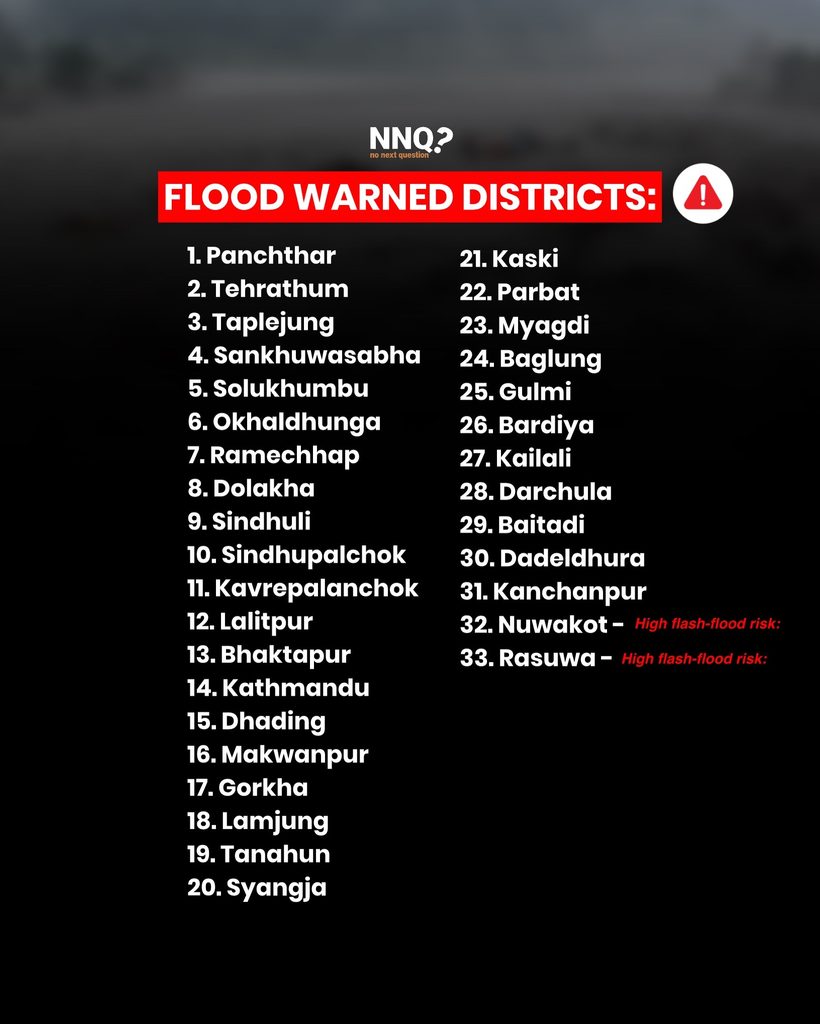
With a newly formed glacial lake near the border still considered unstable, authorities issued a fresh warning flagging Nuwakot and Rasuwa for a high risk of flash flooding, plus a moderate risk across nearly 30 districts spanning the country’s east, center, and west. It was a stark reminder of how widely the monsoon and the disaster’s aftershocks were straining Nepal’s rivers, well beyond the original flood zone.
Communities had already begun their own cleanup alongside government-led recovery work. By day’s end, no major secondary flood had struck, and the warning gave downstream communities valuable time to prepare.
August 29, 2026: Toll Reaches 734 as PM Shah Marks a Rescue Milestone
Addressing the country on the Raksha Bandhan holiday, PM Balen Shah detailed a major scale-up in the response: more than 15,400 security personnel now deployed, over 4,400 people rescued to date (including 191 pulled from hydropower tunnels), and 129 foreign tourists rescued and formally identified. Alternate light-vehicle routes had reconnected Rasuwa to Kathmandu, and Nepal’s Prime Minister’s Relief Fund passed NPR 5.44 billion in public donations, with Shah and his full cabinet pledging to donate a month’s salary.
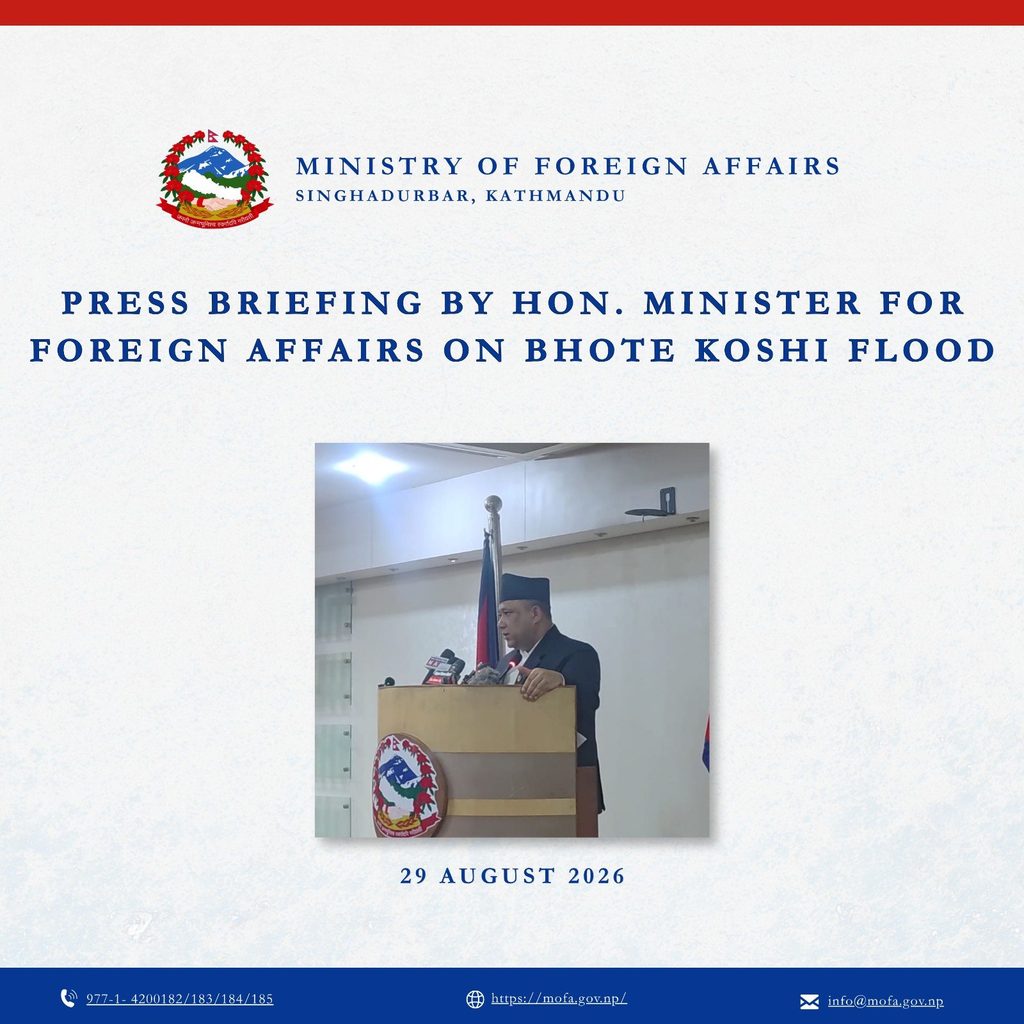
Press Briefing by Hon. Minister for Foreign Affairs on Bhote Koshi Flood, Image Source: MOFA
Nepal’s death toll rose to 734, with close to 2,500 people still missing, and rescue crews pushed into some of the hardest-to-reach corners of Rasuwa for the first time since the disaster, delivering food, medical supplies, and aid to villages cut off for days.
August 28, 2026: A Second Flood Scare at the Border, and Nepal Opens the Door to Foreign Rescue Teams
Chinese authorities reported a newly formed glacial lake near the collapse site, raising fears of a secondary flood; rescue operations on the China side paused briefly as a precaution before resuming once the risk eased. A 21-member Chinese rescue team, with a search-and-rescue dog, reached the badly damaged Gyirong crossing on foot after flooding destroyed the access road. Nepal’s death toll climbed to 616–626, with roughly 2,500 still missing on the Nepali side.
Map overview: Glacial debris flow path across the China-Nepal border region, Image Source: Wikimedia Commons
Nepal reversed its earlier position and formally accepted specialized international search-and-rescue support, including tunnel rescue, medical, and forensic teams from India, China, Australia, and South Korea, with Ireland, Israel, Singapore, and Pakistan also announcing humanitarian assistance.
August 27, 2026: Nepal Police Confirms Rising Toll as the Nation Mobilizes
By Thursday morning, Nepal Police confirmed 389 dead, with 466 injured and more than 1,300 people unaccounted for. More than 13,000 security personnel from the Nepal Police, Army, and Armed Police Force were engaged in search and rescue, with 14 helicopters flying continuous sorties.
International support began arriving quickly: India dispatched nearly 50 metric tonnes of relief supplies via air force aircraft, South Korea pledged US$1 million and a response team, and Australia announced an AU$5 million assistance package. The World Bank signaled up to US$163.5 million in potential emergency funding, and the UN released US$2.5 million from its Central Emergency Response Fund.
August 26, 2026: The Flood Hits Rasuwa
At around 8:30–9:15 a.m., a section of the Langtang Lirung glacier collapsed, sending an estimated 1,200-metre avalanche of ice and rock into the Lhende Khola. The impact generated a magnitude-5.2 tremor and triggered a glacial outburst flood — water levels in the Trishuli River rose by as much as 9 metres in 30 minutes.
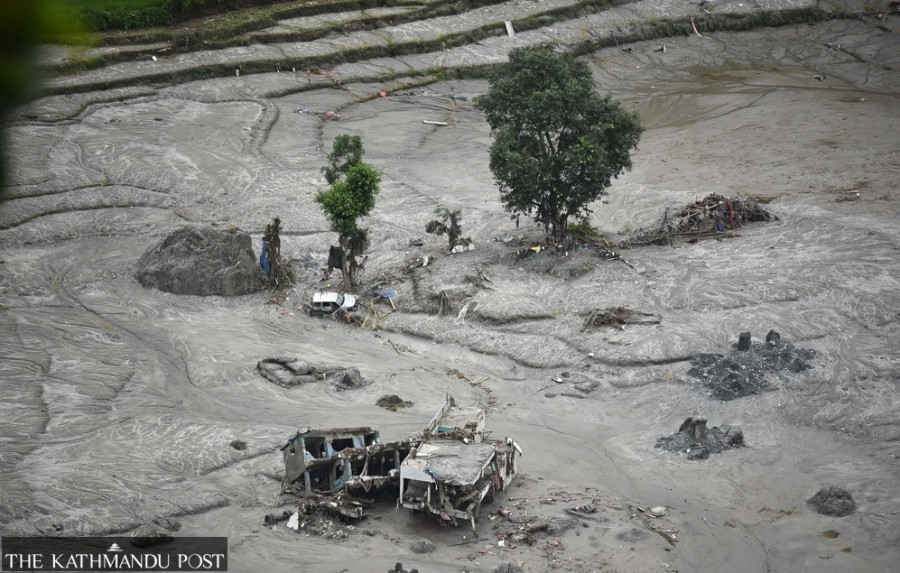
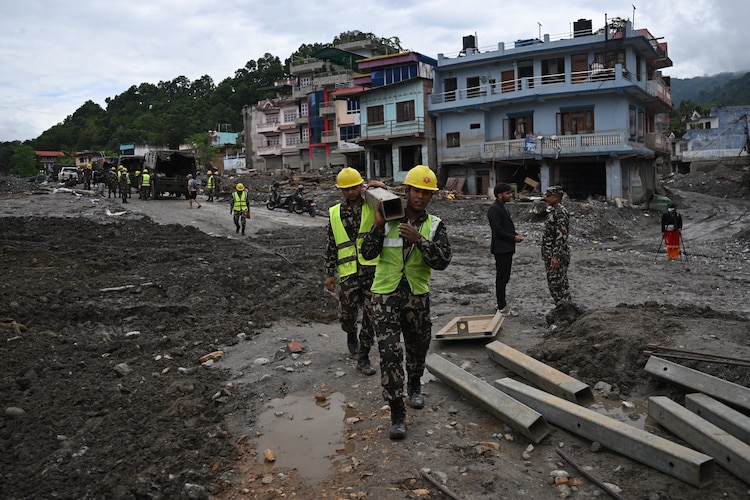
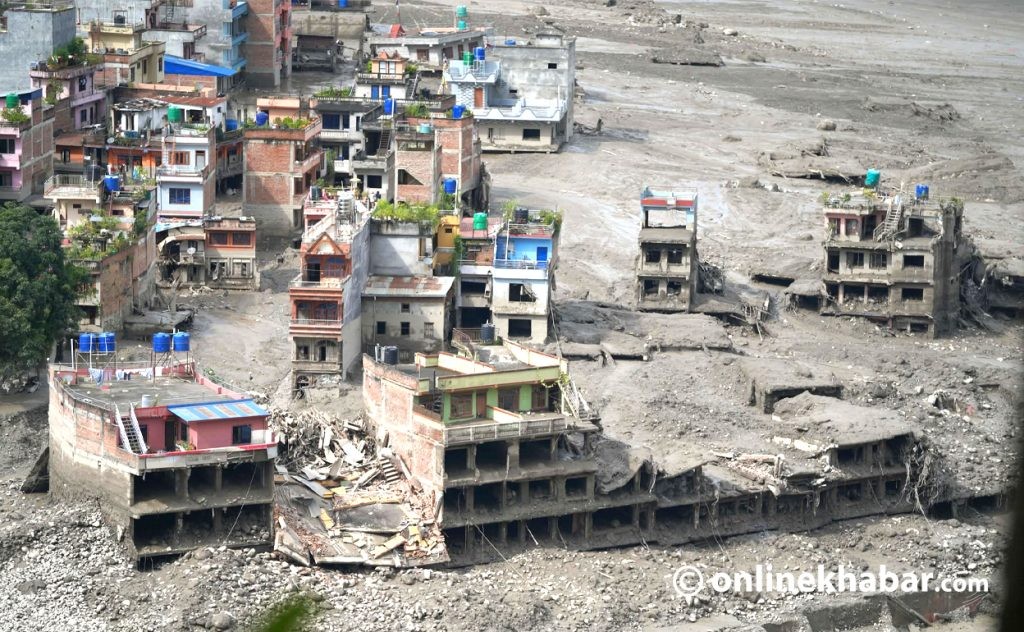
Trisuli Bazar after the Flood, Image source: Online Khabar
The flood destroyed the Gyirong border checkpoint and tore through Timure and Syabrubesi, the main gateway to Langtang National Park, before continuing through Rasuwagadhi, Trishuli Bazaar, and Devighat. Roughly 60 houses and multiple bridges were swept away, and public transport between Kathmandu and seven districts was suspended. Nepal’s Army and Police mobilized within the hour, launching search and rescue around Bidur and evacuating riverside villages before water levels could rise further downstream a rapid first response that likely saved many lives in the disaster’s earliest, most chaotic hours. By nightfall, Nepal’s death toll stood at 165, with around 910 people missing or unaccounted for.
Nepal has been through a disaster that has taken lives, homes, and dreams that will never fully come back. But the damage that’s been done can be rebuilt, and for those who survived, even a small part from each of us can make a difference. Whatever you’re able to give, big or small, here’s where you can help:
Festivals have played an important part in Nepali life and culture for centuries, and it seems like almost every day there is a celebration happening somewhere in the country. These can range from small-scale local festivals held by one of the country’s many tribes and ethnic groups, right up to nationwide Buddhist and Hindu celebrations, full of colour and music.
If you’re lucky enough to be in Nepal at the right time to experience these popular Nepalese festivals, it can add a truly unique experience to your vacation. 2026-2027 promises to be a big time for Nepali festivals once more!
Here is our list of the major festivals of Nepal coming up in 2026/27, as well as a little information about the most significant events in the calendar.
NOTE: Nepal follows the lunar calendar, meaning that the Western calendar dates for these festivals are slightly different each year.
Quick Links
Lhosar (2026 – January 19)
Lhosar is widely celebrated by Nepalese ethnic groups who trace their heritage to Tibet – namely the Gurung, Tamang, and Sherpa people. Lhosar is the first day of the new year, and each community celebrates the festival in its own way. Traditional dress is worn by young and old, and festivities are held across the country in cities and more remote regions.
Maha Shivaratri (2026 – February 15)
‘Shivaratri’ literally means the ‘night of Lord Shiva’, and on this day, devout Hindus bathe early in the morning and then fast before visiting Shiva temples for worship. The best place to witness the festival is at Pashupatinath temple in Kathmandu, where thousands of Sadhus (Hindu holy men) gather to smoke marijuana and hashish, considered dear to Lord Shiva. People also drink Bhang, a drink made by mixing ground nuts, spices, herbs, and extracts of marijuana into milk.
Basant Panchami (2026 – February 23)
Devotees worship the Hindu goddess Saraswati, the goddess of knowledge and creator of arts, education, and music. Celebrated by both Hindus and Sikhs across Nepal and India, people often dress in yellow on this day, and kite-flying is also common. Basant Panchami also marks the end of winter and the beginning of the spring season in Nepal.
Holi (2026 – March 2)
Perhaps the best-known festival on this list, Holi is a crazily colourful and playful event held over 2 days. It is celebrated in Kathmandu and the hill regions on one day and in the Terai region on the next day. People smear coloured powders on their friends, relatives, and family members, as well as take part in giant water fights using coloured water and water balloons.
There are a few more vibrant and photogenic festivals in the world… but be careful to try to keep your camera and valuables dry!
Ghode Jatra is a particularly important Nepali festival in the Kathmandu Valley and is celebrated to ward off the demonic Gurumapa. It is said the soul of the demon still lives underground at Tundikhel. To prevent him from rising again, a horse race is organised on this day by the Nepal Army.
Nepali New Year and Bisket Jatra (2026 – April 14)
The New Year is always a lively time to be in Nepal, with mass celebrations taking place all over the country. A particularly lively place to spend the day is Bhaktapur, where the Bisket Jatra festival takes place. A huge chariot carrying the god Bhairab is pulled through the streets, ending with a chariot battle at Bhaktapur’s Khalna Tole.
Rato Machchhendranath (2026 – April 21)
This is Nepal’s longest and largest festival, held in Patan (or Lalitpur). A giant chariot is built on Pulchowk Road over several weeks, before an effigy of the god Machchhendranath is placed inside. Three days later, the chariot begins its procession throughout Patan and wider Lalitpur, towards Bungamati. Machchhendranath is the Newar god of rain, and the festival ushers in the monsoon.
The Lord Buddha’s birthday falls on the first full day of the first month of the Hindu lunar calendar and is celebrated by Hindus and Buddhists alike. It is observed at Buddhist shrines and monasteries throughout Nepal, but a particularly grand ceremony is held at Buddha’s birthplace in Lumbini. In Kathmandu, the Tibetan enclave of Boudhanath is a particularly good place to watch the festivities.
Naag Panchami (2026 – August 17)
Naag Panchami falls right in the middle of the monsoon. This Hindu festival worships the serpent god, Naag, and pictures of Naag are posted in doorways, as well as offerings of milk. It is believed that worshipping Naag protects against snake bites. This festival marks respect for serpents as water guardians and ensures regular rainfall in the Kathmandu Valley.
Janaipurnima (2026– August 28)
Janai Purnima is the Sacred Thread Festival, when Hindu men, especially the Brahmins and Chettris, perform their annual change of Janai. Everyone who celebrates this festival puts a sacred thread around their wrist. Gosaikunda, a sacred pond at high altitude, is the hub of this festival and sees a hive of colour and activity on this day.
Gai Jatra (2026 – August 29)
Gai Jatra (literally meaning the festival of cows) is a fusion of three traditions that came into being in three different periods of time. The first and oldest tradition incorporates a cult and worship of the ancient god of death, Yamaraj. Despite the deathly theme, it is actually a time full of music, dancing, and laughter!
The festival marks the acceptance and celebration of death positively, as an inevitable part of life. Every family that has lost a member in the previous year is supposed to lead an intricately decorated cow through the city. In the absence of a cow, a boy dressed as a cow can take on the role.
The festival takes place all across the Kathmandu Valley.
Krishna Janmashtami (2026 – September 4)
Krishna Janmashtami is a celebration to mark the birth of Krishna. Considered the eighth incarnation of Lord Vishnu, Krishna is the most important character in the Hindu epic, the Mahabharata. During this festival, Hindu devotees visit Krishna temples. In particular, thousands of devotees gather at the stone Krishna Mandir in Patan Durbar Square.
Teej (2026– September 14)
Teej is a festival celebrated exclusively by Nepali women, with festivities often stretching over 3 days around the month of August. Dressed in red saris and a red tika, the women sing and dance for the long lives of their husbands and a long and firm relationship until death parts them. Teej is observed for marital happiness, the well-being of one’s spouse and children, and the purification of one’s own body and soul. Teej is the most famous festival among Nepali women.
Rishi Panchami (2026 –September 15)
Rishi Panchami is a festival that is celebrated immediately after Teej Puja. Hindu women attach a lot of importance to this festival because they believe that by observing the Rishi Panchami fast and by paying homage to Rishis (Saints) on this day of the festival, they will be blessed and forgiven for all their sins.
Indra Jatra (2026 – September 25)
Indra Jatra is a colourful street festival held each year in Kathmandu, in honour of the Hindu god Indra. The celebrations consist of two events: Indra Jatra with its masked dances of deities and demons, and Kumari Jatra, which is a chariot procession for the living goddess Kumari.
Centred around Kathmandu Durbar Square, the celebrations last for eight days. This is also a time for family members who have died during the past year to be remembered.
Dashain (2026 – October 17-23)
Dashain is the most important Nepalese festival and stretches over 2 weeks with various stages and events. It is a celebration of good prevailing over evil, and most families offer male goats, ducks, chickens, eggs, and coconuts to the goddess Durga.
Many Nepali people return to their home villages at this time to spend the fifteen-day festival with their families. Large swings are set up for children, and from the tenth day, family members receive Tika (rice, red vermilion, and yoghurt) on their foreheads from their elders.
Tihar (2026 – November 7-11)
Tihar is Nepal’s second most important festival, after Dashain. In each of the three days, a different deity is worshipped: on the first day, the crow, the messenger of Yama and the bringer of death; on the second, dogs, which are believed to be Yama’s custodians; and on the third, the goddess Lakshmi, the bringer of wealth. Lakshmi is worshipped by lighting houses with oil lamps, candles, and colourful lights.
Chhath (2026 – November 15)
Chhath is the most important festival observed in the Terai region and falls on the seventh day after Tihar. Devotees fast and make offerings to the sun by gathering at river banks. The festival is dedicated to the Hindu solar deity, Surya, and the goddess Shashthi.
The Terai region is the best place to observe this festival, or the Rani Pokhari tank in central Kathmandu.
Want to experience Nepal’s unique culture and spectacular landscapes for yourself?
6 of the best ways to see the world’s highest mountain
Discovering the ultimate ways to experience Everest in Nepal gives you the unique opportunity to stand face-to-face with the crown jewel of the Himalayas. With more than half of the world’s 8000m+ mountains sitting within the borders of Nepal, there’s nowhere better to go if you’re looking for a high-altitude adventure! For many travellers, however, there’s one particular mountain that’s simply a must-see.
At 8,848m above sea level, Mount Everest is the highest point on Earth. Reaching the peak on foot is a serious mountaineering challenge that requires skill, bravery, training, and local expertise, but the good news is that there are plenty more ways that you can tick Mount Everest off your travel bucket list!
Here, we take a look at some of our favourite ways that you can get your once-in-a-lifetime Everest experience.
1. Everest Base Camp Trek
The most popular multi-day trek in Nepal takes you through the stunning Khumbu region, where you’ll experience the unique landscapes and culture of the Himalayas firsthand. Beginning with a flight from Kathmandu to Lukla, the route passes small mountain communities and ancient religious sites, and you’ll also enjoy a night in the vibrant capital of the Sherpas—Namche Bazaar.
The highlight of the trek is, of course, Everest Base Camp, where excited mountaineers prepare to ascend to the peak. Even without climbing to the top, the view from base camp is one of the world’s most spectacular and a wonderful reward after your epic trek. The EBC trek is actually surprisingly accessible. Sure, you’ll be on your feet for long stretches, and you’ll need a reasonable level of fitness, but you don’t need to be a superhero or have previous trekking experience to take on this famous route. The trails are very well maintained, and you can rest and recharge each night in cosy teahouse accommodation too.
Enquire now or check out the full trip with our partners at Royal Mountain Travel.
2. Pikey Peak Trek
If you’re looking for an easier trekking experience, then this shorter route through the Everest foothills is a great choice. Reaching a maximum altitude of 4,065m, staying in teahouse accommodation, and passing through several fascinating Himalayan communities, it’s the perfect way to trek this region of Nepal in a more relaxed way. You’ll also enjoy some of the best views of Everest and other giant mountains without the high altitudes, long trekking days, and tough climbs.
3. Gokyo Trek
Another alternative offering amazing Everest views, the big selling point of the Gokyo Trek is the lack of crowds and the feeling of being truly away from it all. It’s comparable to the EBC trek in terms of difficulty, reaching 5,400m and remaining at a relatively high altitude for several days, and some of the views here are every bit as spectacular. You can also visit the stunning Gokyo Lake—one of the most beautiful spots in the Himalayas.
4. Everest Flight
Every morning, assuming the weather is clear, flights depart from Kathmandu’s domestic airport that take you into the Himalayas for an amazing view of Everest from above. Prices are affordable, window seats are guaranteed, and you’ll be back in the city in time for lunch!
For a closer look at Everest from the air, you can’t beat an exclusive helicopter tour. These flights depart from Kathmandu and touch down in Lukla, from where you’ll take an epic journey that takes you as close as 5 nautical miles to the mountain itself. You’ll also see Everest Base Camp, Mount Lhotse, the Khumbu Glacier, and land at Kalapatthar (5,643m), where you’ll set foot on the mountains themselves. You’ll then enjoy breakfast at the stunning Everest View Hotel before beginning your journey back to Kathmandu.
6. Distant Views from Nagarkot and Chandragiri
Nagarkot
If you’d rather stay closer to the ground and don’t have time for a full trek, then there are a couple of options close to Kathmandu where you might catch a distant glimpse of Everest on a clear day. Nagarkot is an incredibly charming hilltop village around 30km east of the capital, and with some great short hikes nearby, it makes for a wonderful day trip or overnight stay.
Southwest of Kathmandu, near Thankot, the 2.5km Chandragiri Cable Car takes you to a picturesque hill station just above 2,500m. The views on the way and at the top are truly spectacular, offering a panorama that stretches from the Annapurna region in the east towards Everest in the west.
Bear in mind that seeing Everest is not guaranteed with either of these options, but they are both unforgettable trips even if you don’t spot the world’s highest mountain.
If you’d like to discuss the right option for you with a real local expert and get help planning and booking your perfect Everest adventure, feel free to get in touch with our friendly team!
Things to know and places to go for a more moderate Nepal trekking experience
Finding the right Nepal treks for beginners and families opens up the magic of the Himalayas to hikers of all ages and fitness levels. If you love the idea of trekking in the Himalayas but you’re not sure where to start, read on!
Trekking in Nepal isn’t all about high-altitude mountain passes or 3-week expeditions, so if you’re looking for something a little gentler to get you started, then there are plenty of options to look at. Nepal has a huge range of trekking regions and routes, each presenting a different challenge. What never changes is those Himalayan views and that glorious feeling you get from escaping the everyday.
In this guide, we’ll be looking at what to expect on a trek in Nepal, what level of fitness you need, and some of the easier treks you might want to consider if this is your first trekking adventure, if you’re trekking with kids, or if you just fancy something a little more leisurely this time around.
These kinds of treks are ideal for families, too, depending on the age of your kids. We know that the fascination with new landscapes and cultures only lasts a certain time, especially if your child or teenager is walking up a mountain!
What to expect when trekking in Nepal
First things first, trekking is never easy, especially in a landscape like the Himalayas, where it’s anything but flat. Slopes will need to be climbed and descended, and even the easier treks may have days where you’re walking for 4 or 5 hours.
Depending on the season, it can also get hot, cold, or rainy, and the weather can switch with barely any warning. Of course, if you come at the right time of year, then you can improve your chances of good weather immeasurably, but nothing is ever guaranteed in the mountains!
You’ll also need to deal with a different level of comfort than you’d expect on a typical holiday, whether that be in a local teahouse, a homestay, or even a tent. And you won’t have much choice when it comes to dinner either.
But that’s only one way of looking at it. The food (usually a classic Dal Bat at most teahouses and homestays) is delicious, hearty, and everything you need after a trek. And there’s no comfier bed in the world than whatever mattress or camping mat you end up on after a full day walking through the mountains. Trekking in the Himalayas for a few days changes your perspective on what you actually need and makes you appreciate the simple things like never before.
Personal hygiene
Other priorities from your daily life gradually take a back seat and become an inconvenience, like showering. Don’t worry, there are showers available at almost all homestays, teahouses, and lodges. Some are better than others, of course, but you can usually have an OK shower most days if you want to. But it’s a bit of a hassle; you’ll have to put most of the same clothes back on anyway, and wouldn’t your time be better spent enjoying a drink and staring out across the mountains?
The truth is that most trekkers very quickly stop caring what their face, hair, or anything else looks like. And unless you’re starting to actually smell, often a quick wet-wipe “shower” seems the best option. It’s kind of liberating, but probably not a habit you should take back home with you!
*PLEASE use the biodegradable type of wet wipes; the normal ones do all sorts of damage to the environment.
What to wear for trekking
It’s nice to set out on a trek looking good, but that’s now a secondary consideration. Can you feel your sock seams on your toes? Change the socks. Can you feel the logo on your t-shirt over your nipple? Leave that shirt at home. Do the boots feel a little tight? Invest in some new ones. These minuscule annoyances can be vastly amplified after a few days of walking and can end up putting a real downer on your experience.
Most people agree that those zip-off quick-dry trousers with 10,000 different pockets should not be worn to weddings, parties, and any other type of social occasion, but in the Himalayas, they’re the best possible choice.
The point is, think practically! Think about it, suddenly getting a bit cold, then 10 minutes later the sun is beating down on you, then there’s a heavy rain shower, then the weather is just perfect, then it rains again, and gets cold…..
You need to be prepared and to make it easy to switch outfits whenever you need to. But you also need to pack light. The secret is layers – thermal ones, lightweight ones, woollen ones, waterproof ones – that are compact enough to carry in your day bag.
A good trekking team is essential, especially on longer treks or if it’s your first time. You’re going to want a qualified guide who’s super-familiar with the route you’re taking and knows how to deal with the challenges the Himalayas throw up. Professional guides are used to leading groups and individuals of all abilities, and they can spot very quickly if someone’s struggling with tiredness or altitude sickness. They’ve seen it before, and they know what to do about it.
They can also tell you things like which mountains you’re looking at and make excellent translators, too! Almost all qualified guides in Nepal speak good English and sometimes French, German, and other languages too.
On the majority of multi-day treks in Nepal, porters will be included to carry things like food supplies and camping equipment for the group. Additional porters are sometimes included or are available to hire for an extra fee (and usually quite a small one by Western standards). They’ll generally carry your bulkier items like sleeping bags, evening clothes, or anything else you don’t need while you’re walking. Porters are often younger men from the area you’re visiting, and they may be keen to become guides themselves one day.
The recommended maximum weight is 15kg per porter, which is already quite a lot, and heavier loads risk serious injury. Your trek operator will give you more specific advice before you set off, but as a rule of thumb, one porter between two trekkers is more than enough. You can empty one of your large backpacks and share the space.
These guys do a tough job for not much money, so tips are appreciated. To read about how to treat porters, wildlife, and the environment responsibly in Nepal, click here.
Nepal trekking accommodation
Although camping is common in Nepal, most of the more accessible treks give you a proper roof over your head every night. This will often come in the form of teahouse accommodation. Teahouses are remote lodges that have sprung up along trails specifically for trekkers. You’ll usually have a small, basic, twin-share room (although sometimes more) and can get a nice hot meal and a warm place to watch the sun go down.
Alternatively, community homestays mean you’ll sleep in a village along the route, hosted by a local family. It’s an experience we highly recommend as it gives you an insight into life in the mountains and a chance to connect with the people who live there. You’ll get a home-cooked meal, a friendly welcome, and a spare room in somebody’s home for the night (usually with its own separate entrance and keys).
The dining area at Nagarkot Community Homestay.
So then, what trek should I do?
We spoke to our partners at Royal Mountain Travel in Kathmandu about the best treks in Nepal for beginners and families with kids of different ages. Age limits aren’t set in stone, but they provide a useful guideline. You know your kids best, and ultimately it’s your decision. We’d recommend checking in with your doctor before you set off on a trek for the first time, and this is pretty much essential to do if you’re taking your kids along.
Easier Nepal Treks for Beginners or Older Kids
You don’t have to be a first-timer or a teenager to enjoy these treks, but slightly shorter walks, slightly simpler terrain, and more moderate altitudes make these ideal for anyone wanting a less daunting challenge.
Annapurna Foothills Trek(4 day/3 night) Wonderful views, local villages, and a maximum altitude of 2000 m View trek (external link)
Annapurna Community Trek (5 day/4 night) A beautiful shorter route in the Annapurna Range, mainly staying in Community Homestays. Max 3300m altitude View trek (external link)
Ghorepani Poon Hill Trek (5 day/4 night) Follow ancient trails through forests and villages, and get one of the finest views in the Annapurna region. Tea house trek, max altitude 3210m. View trek (external link)
Pikey Peak Trek (7 day/6 night) A great way to see Everest close-up and explore the stunning foothills and communities. Simple homestay accommodation, max altitude 4065m. View trek (external link)
Langtang Gosaikunda Trek (12 days/11 nights) An epic but manageable trek into one of Nepal’s most stunning valleys and the lakes of Gosaikunda. Tea house trek, max altitude 4400m View trek (external link)
A great trek for younger kids
Kathmandu Valley Rim Hike (5 day/4 night) Easy travel, low altitudes, views of famous mountains, and great insight into local life in the valley. Homestay accommodation is suitable for kids aged 6+. Max altitude 2800m. View trek (external link)
A perfect Nepal holiday package for families
Central Nepal with Family (13 days/ 12 nights) A great mix of cities, culture, and wildlife, with a little trekking in there too. Basically, everything you could want for a holiday with kids in Nepal! View tour (external link)
Want to talk to an expert?
For many people, a holiday to Nepal is a once-in-a-lifetime thing, so you want to get it just right.
You can spend hours, days even, trawling through articles to try and decide where to go and what to do in Nepal. Or you can make your life a bit easier and talk to an expert (and one that has access to good local rates too!).
Just send us a message, and we’ll put you in touch with a local, English-speaking Travel Expert who’ll make planning your Nepal holiday a breeze!
Buddhist sites, destinations, festivals, and history
Nepal may be a majority-Hindu country, but did you know that Lord Buddha himself was born here? Hindu and Buddhist communities have lived side by side peacefully for many years in Nepal, and the country is filled with beautiful stupas and some of the most important sites in Buddhism. Whilst neighbouring Bhutan and Tibet offer colourful Buddhist travel experiences, Nepal takes you back to where it all began.
The birthplace of Buddha
Lumbini is a village in the Terai plains in what is now southern Nepal, and was the birthplace of Gautama Buddha (or Siddhartha Gautama) back in 624 BC. As a young man, he left his wealthy family behind and spent his time wandering, begging, meditating, and eventually attaining spiritual enlightenment, or nirvana. He went on to teach and lay the foundation for what is now the Buddhist religion, followed by some 400 million people worldwide to this day.
He became known as the Lord Buddha, and his birthplace in Lumbini became one of the most important Buddhist pilgrimage sites in the world, with well over a million visitors every year. The village itself is a complex of shrines, monasteries, and artwork dedicated to Buddha, and visitors can see the Lumbini garden where Maya Devi gave birth to the boy who would become Lord Buddha.
The Maya Devi temple in Lumbini, named after Lord Buddha’s mother
Interestingly, Hindus also revere Lord Buddha, regarding him as the 9th reincarnation of Lord Vishnu – a god in their own religion.
It’s a fascinating, peaceful and deeply spiritual place, whether you follow Buddhism or not. Pilgrims walk next to the origins of their religion, whilst Buddhist monks debate and meditate in the shade of the trees and fluttering prayer flags.
Prayer flags in Lumbini – birthplace of Gautama Buddha
Boudhanath Stupa
Boudhanath Stupa at night
In the western part of Kathmandu, Boudhanath Stupa is one of Nepal’s most famous Buddhist sites. Situated on an ancient trade route from Tibet, several Tibetan gompas (monasteries) were built around the giant white dome and golden spire.
Swayambhunath
Monkeys at Swayambhunath in Kathmandu
Another important Kathmandu stupa, Swayambhunath, is known to many tourists as the Monkey Temple thanks to the hundreds of monkeys that hang around here. More than just a stupa, it’s surrounded by a complex of shrines and temples and sits on top of a hill in the east of the city, providing an excellent view of Kathmandu.
Seto Gumba
The view from Seto Gumba
Also known as White Gumba and Druk Amitabh Monastery, this peaceful Tibetan Buddhist monastery isn’t far from Swayambhunath in eastern Kathmandu. It was damaged quite badly in the 2015 earthquake, but has been restored and is open to the public once again.
Tengboche Monastery
Tengboche monastery skyline
Situated in the beautiful Sagarmatha National Park, some 3,870m above sea level, this is perhaps the Khumbu (Everest) region’s most famous Buddhist site. It’s a place of huge importance to the Sherpa community and a popular stop on the Everest Base Camp Trek.
World Peace Pagoda
The Peace Pagoda on Lake Phewa
Also known as Shanti Stupa, this more recent Buddhist site was built to promote world peace in the aftermath of World War II. It’s also easily accessible from Pokhara and provides a wonderful view of the city and the beautiful Phewa Lake.
Mahaboudha Temple
One of the most striking and beautifully crafted Buddhist temples in Nepal is Mahaboudha, located to the south of Patan Durbar Square. Built in 1585, it is made up of 9,000 bricks, each holding an image of Buddha. It’s affectionately known as “the temple of a thousand Buddhas”.
Halesi-Maratika Caves
A natural cave in the Khotang district of eastern Nepal, this site holds importance for Buddhists and Hindus alike. For Buddhists, it is the legendary place where Guru Padmasambhava and Dakini Mandarava achieved immortality, whilst Hindus regard it as a sacred place associated with Lord Shiva.
Shey Gompa
At 4,200m above sea level in the mountainous Dolpa district, Shey Gompa is one of Nepal’s most remote and peaceful Buddhist sites, requiring days of trekking through dramatic landscapes and traversing the 5,151m Kanga La pass to reach it. It’s been around since the 11th century and is an important place of spirituality.
Buddhist festivals in Nepal
Nepal is a land of colourful festivals, both Hindu and Buddhist. Some of the most important Buddhist festivals celebrated include;
Lhosar
This marks the start of the new year and usually falls in February or March, primarily over 3 days but with celebrations stretching over 15 days in total. Expect to see plenty of dancing, feasting, and elaborate outfits wherever you are in Nepal.
Buddha Jayanti
A day to celebrate the birth of Lord Buddha, usually falling in April or May. Buddhist sites are adorned with prayer flags, and thousands of pilgrims travel to Lumbini to pay their respects.
Mani Rimdhu
This festival usually falls in November or December and is celebrated by Sherpas in the Khumbu region around Mount Everest. Monks perform dances to mark the victory of Buddhism over the indigenous Bon religion that used to dominate here.
Tiji festval
Usually falling over 3 days in May, Tiji is celebrated by the Lhoba people in the Upper Mustang region of Nepal. It’s a colourful, lively festival which celebrates the story of a son defeating his demon father and saving the people of Mustang from destruction.
Yartung
This festival marks the end of summer and lasts for 3 days in July in the town of Ranipauwa, Mustang. It comprises a royal day, a monk’s day, and a day for ordinary people and tourists. The highlight for most is the thrilling horse racing competition that takes place around the town.
Buddhist travel and retreats in Nepal
Whether you’re a Buddhist yourself or just want to experience the culture, sites and communities associated with it, Nepal offers countless opportunities to get in touch with the origins and teachings of Buddhism.
It’s easy enough to visit major Buddhist sites such as Kathmandu’s Boudhanath Stupa as part of a larger itinerary, and even the birthplace of Buddha in Lumbini can easily be reached by air or road.
There are numerous spiritual and Buddhist retreats scattered through Nepal in stunning countryside locations, including silent retreats, yoga retreats, and Buddhist meditation retreats. One of our favourites is the Kopan Monastery, where you can live alongside the monks to study Buddhism, learn meditation or simply escape from the modern world for a while.
Monks at Kopan Monastery
If you’re looking for a tour that’ll give you a good insight into Buddhist culture and history in Nepal, we’d recommend this unique Pikey Peak Trek in the Everest region with Royal Mountain Travel. It passes through a region full of remote monasteries and Buddhist history.
Himalayan landscapes on the Pikey Peak Trek
We work with expert local travel planners who’ll help tailor a trip just for you and can take care of all your hotel, transport and tour bookings too. Just get in touch if you’d like to start creating your perfect Nepal adventure.
Navigating Nepal LGBT travel provides an eye-opening look into a destination that has evolved into one of Asia’s most progressive environments for queer adventurers. Gay travellers don’t always have it easy, especially in Asia, where local culture and local laws often prohibit open homosexuality. Nepal once held the same reputation and laws, and stories of discrimination were not uncommon, especially amongst Maoist leaders and insurgents who once declared homosexuality a “social pollutant”.
Over the past decade in particular, Nepal has made major efforts to improve LGBTQ rights within the country, and this more liberal attitude has made it one of the most gay-friendly countries in South Asia.
You’ll notice it from the moment you fill in your landing card – that little box marked “other” in the gender section. It’s a small thing to most, but for travellers who identify differently, this is a big deal.
Nepal constitutional changes
Homosexuality was officially legalised in Nepal in 2007, ending a long history of gay people having to fear prosecution for their sexuality. In 2015, further changes were written into the constitution, allowing people to identify as the “third gender” on their citizenship documents.
People from gender and sexual minorities also found their rights enhanced by the changes. Discrimination on these grounds would now be prohibited by law, with further allowances made to empower LGBTQ citizens, including cementing their rights to participate in all state mechanisms and public services.
Nepal is considered one of the more progressive countries in South Asia regarding LGBTQ+ rights, with legal recognition and constitutional protections in place—though some areas are still evolving.
Same-Sex Sexual Activity: Legal
Lesbian Activity: Legal
Same-Sex Marriage:Not fully legalized yet However, following a landmark interim order from the Supreme Court in 2023, Nepal has begun temporary registration of same-sex marriages, with full legalization still under review.
Same-Sex Adoption: Not legally recognized for couples; however, single individuals (including LGBTQ+ persons) may adopt under general adoption laws.
Right to Change Gender: Legal and increasingly progressive self-identification is recognized in practice, though administrative processes may still vary.
Non-Binary Gender Recognition: Legally recognized as a third gender on citizenship documents and passports.
LGBT Discrimination: Prohibited under the Constitution, though enforcement can vary in practice.
Censorship: No specific censorship targeting LGBTQ+ identities.
Military / Public Service: LGBTQ+ individuals are allowed to serve.
Employment Discrimination: Illegal under constitutional protections.
Housing Discrimination: Not explicitly defined in all cases, but broadly covered under anti-discrimination provisions.
Age of Consent: Equal (16 years), regardless of gender or sexual orientation.
Changes in a population’s attitude are a slower process, of course, but in recent years public shows of support have become more common, including the now annual Nepal Pride Parade held each year in Kathmandu on the second Saturday of June. Nepal’s first openly gay bar, PINK Tiffany, opened in 2015 in Kathmandu.
The Blue Diamond Society also organizes a separate Pride event every August or September, coinciding with the Gai Jatra festival and demanding equal rights for the LGBTQ community in a colourful and peaceful march through Kathmandu.
In more rural communities and among older generations, attitudes have been slower to change, but travellers are unlikely to encounter hostility.
People enjoying Nepal Pride Parade (from nepalprideparade.com)
Can I be openly gay in Nepal?
In short, yes. You shouldn’t feel afraid to be open about your sexuality, but apply your own judgment, of course.
In fact, in Nepali culture, it is common for men to be quite affectionate with each other and hold hands in public, even if both men are straight. It is just a show of friendship and being comfortable with each other, so people are unlikely to raise an eyebrow if you do the same.
It’s worth noting, however, that Nepal is a conservative and deeply religious country. Regardless of gender or sexual orientation, overly passionate public displays of affection are not appreciated and could offend, so best to save that for the hotel.
On that subject, it’s not uncommon for same-sex couples to book a double room and be given a twin instead. For the most part, the hotel employee has probably assumed you made a mistake with your booking and tried to correct it, rather than it being any kind of anti-gay statement. Open same-sex relationships are still relatively new and unexpected for many Nepalis.
To avoid this, just add a simple note to your reservation if you’re booking online, or let your tour agency know so that they can communicate this for you.
Is there a gay scene in Nepal?
Yes, but not a big one. As previously mentioned, there are gay pride events in Kathmandu, where Nepal’s fledgling gay scene is centred.
Currently, Nepal’s only actual gay bar, PINK Tiffany, was opened by famous transgender model Meghna Lama in 2015. It is probably fair to say that this is the centre of the Kathmandu LGBTQ community venue-wise, and at night it becomes one of the liveliest and friendliest places for travellers to mix with the local scene.
Other venues also attract mixed and gay-friendly crowds, and there’s a famous gay night every Friday at Fire Club in Thamel, too. You can check out a few more gay-friendly going-out options here.
Outside Kathmandu, there is no real gay scene to speak of.
Are there LGBTQ tours in Nepal?
Some companies are offering LGBTQ group tours in Nepal, although, to be honest, we don’t know them well enough to recommend their services. Generally, these tours follow the same routes as a standard tour but encourage gay travellers in particular.
LGBTQ travellers won’t be discriminated against by any decent, modern travel operator nowadays, so all options are open, and you could even create your own custom group tour. Feel free to contact us if you have some ideas, and we’ll put you in touch with the right people.
In summary
There’s still some way to go for gay rights in Nepal, but the progress made in the past 15 years makes it one of the safest and most welcoming Asian destinations for LGBTQ+ travellers.
If you have any further questions or want some help booking your own Nepal adventure, feel free to get in touch with our team.
Due to Nepal’s terrain, road conditions, and the sheer length of the country, Nepal flight safety is a topic every traveller should understand before booking, especially since taking a short flight between places can save hours or even days of travel. The tickets are relatively inexpensive, too, so it’s no wonder that Nepal’s domestic airlines carried a record 3.54 million passengers in 2021.
Accidents have increased, too. The tragic Tara Air crash in May 2022, in which 22 people lost their lives, has brought Nepal’s flight safety into focus once again, 3 years after the last fatal accident in the country.
We’ll take a look at the Nepal flight safety record, explain the reasons behind the accidents, and give advice on alternative travel and how to reduce risk.
View from the plane above the Himalayas
How safe is it to fly, generally?
Harvard University puts the individual risk of dying in an air crash even lower, at 1 in 11 million.
Statistically, flying is safer than all other major forms of transport.
What is Nepal flight safety record like?
Compared to the global average, Nepal has a relatively poor record for reasons we’ll explain below. Over the past three decades, there have been 27 fatal air crashes – just under one per year. Most involved small aircraft, with the notable exception of the 2018 crash at Tribhuvan International Airport in Kathmandu, which was a larger aircraft from Bangladesh, and the 1992 Pakistan International Airlines crash at the same location.
10 of these Nepal air accidents have happened in the past 10 years, although this reflects an increase in the number of flights rather than a drop in overall safety.
Why do plane crashes happen in Nepal?
There are several reasons affecting Nepal’s flight safety.
Nepal is one of the world’s highest and most mountainous countries, which presents a range of aviation challenges.
Smaller mountain airports often have short approaches and runways, such as Lukla, which is regarded as one of the most challenging landings by pilots.
The weather at this altitude can change quickly and with little warning, especially when flying mountain routes.
With poor weather comes poor visibility and pilot disorientation, which have been blamed for several accidents.
Mountain routes have to use smaller, more manoeuvrable propeller planes, which are more vulnerable to weather conditions.
Although steps are gradually being taken to modernise fleets, there has been a lack of investment in new aircraft from many of the airlines that operate in the region.
Nepal actually performs above the global average for flight safety in a number of categories, and in April 2022 was given a score of 70.1% in a safety audit by the International Civil Aviation Organisation (ICAO), with the worldwide average sitting at 67.2%.
However, the practical challenges of flying over Nepal’s terrain place the country below average in terms of overall safety, sitting 102nd out of 121 countries in a recent ranking by backgroundchecks.org.
What is being done about it?
Nepal flight safety is under near-constant review and, in light of the recent Tara Air crash, rules have been tightened around operating in adverse weather conditions, obligating airlines and airports to suspend operations in certain circumstances, and giving final approval to air traffic services on all flight plans. The Civil Aviation Authority of Nepal (CAAN) is also considering making two pilots mandatory for single-engine planes.
Externally, the International Civil Aviation Organisation, a United Nations agency, has prioritised helping Nepal through its Aviation Safety Implementation Assistance Partnership.
Of course, nothing can change Nepal’s weather conditions and terrain, but some steps are being taken to improve aircraft safety and organisation.
How can I reduce the risk?
Whilst the overall risk of flying anywhere in Nepal remains statistically low, certain routes are naturally more prone to accidents than others. Most accidents occur with smaller planes in mountainous regions, such as flights to Jomsom (the destination of the recent Tara Air crash) and Lukla.
Popular routes such as Kathmandu to Pokhara tend to operate with larger planes and over less hostile terrain, so the risk is significantly lower.
It’s also totally possible to plan an itinerary with little or no domestic flights involved, and many people do – there are plenty of highlights and outstanding trekking regions which can be reached quite easily by road from Kathmandu or Pokhara.
Make sure you thoroughly research the travel options available if you plan to go somewhere. You can also get in touch with our team for help planning and organising transport, accommodation, tours, or treks.
What are the alternatives to flying in Nepal?
Nepal has no national rail network, so ground travel is restricted to the country’s long, winding, and occasionally very bumpy roads. Buses are an inexpensive option and cover most possible routes, or you can hire a private transfer for a little extra comfort, and usually a quicker journey.
Drivers in Nepal operate with a whole different set of rules and customs from what you might be used to elsewhere in the world, and for that reason, we wouldn’t generally recommend car hire for foreign travellers.
You can read more about the available options in our Getting around Nepal guide.
In summary, flying in Nepal does carry more risk than it would in Europe, for example, particularly on mountain routes where weather and terrain make flying more challenging.
But it remains statistically very unlikely that you’d be involved in an accident, and given the time savings and road conditions often found in Nepal, flying remains a very popular option for travellers and locals alike.
For more on international and domestic flights in Nepal, visit our flight info page.
Book local
Up-to-date advice, an incredible range of tours and treks, and simple local prices Speak to an Expert!
There are just 14 mountains above 8,000m on our planet, and 8 of them are on or within Nepal’s borders. Each of these giants has its own story, with legends dating back centuries. It’s no wonder that Nepal is the world’s mountaineering capital, drawing in explorers from across the globe.
We look at the top 10 highest mountains in Nepal, together with their statistics, dangers, and stories.
Highest Nepal Mountains
10. Annapurna 2
Nepal ranking: 10th
World ranking: 16th
Elevation: 7,937 m (26,040 ft)
Prominence (height compared to immediate landscape): 2,437 m (7,995 ft)
The northeast wall of Annapurna II (cr. Markus Beudert)
The 2nd-highest peak of the Annapurna Range is notable for the skull-like image on its northeast face, which seems fitting considering the danger it presents for climbers. Avalanches, rock slides, ice overhangs, and violent storms are commonplace, meaning expeditions here are comparatively rare.
You can see spectacular views of Annapurna II, along with Annapurna I, Machhapuchhare, and several other famous peaks as part of the Annapurna Circuit Trek.
9. Gyachung Kang
Nepal ranking: 9th
World ranking: 15th
Elevation: 7,952 m (26,089 ft)
Prominence (height compared to immediate landscape): 700 m (2,300 ft)
Gyachung Kang (cr. Miguel Amaral)
Coming in just shy of the 8,000m mark and without the dramatic prominence that makes peaks like Everest so awe-inspiring, Gyachung Kang is a relative unknown internationally. It’s still a fearsome challenge for mountaineers, though, forming part of the Mahalangur Himal region that is home to both Everest and Cho Oyu, and straddling the border between Nepal and Tibet.
8. Annapurna 1
Nepal ranking: 8th
World ranking: 10th
Elevation: 8,091 m (26,545 ft)
Prominence (height compared to immediate landscape): 2,984 m (9,790 ft)
Annapurna Peak (cr. Raimond Klavins)
With a climbing fatality rate of 32% up until 2012, Annapurna has become one of the most feared peaks in the world. In recent years, this has improved to around 20%, but it’s still not for the faint-hearted.
Maurice Herzog made Annapurna the first eight-thousander to be successfully scaled in 1950, and since then, a further 364 people have made it to the summit. 72 people have died trying, making Annapurna one of the world’s most deadly mountains statistically. The routes up are highly prone to avalanches and unpredictable storms and contain some of the steepest and most challenging climbing sections you’ll find anywhere on earth. Sitting in the Annapurna Range, to which it gives its name, most visitors choose to admire it from afar and enjoy the beautiful landscapes surrounding it.
You can get up close and personal with Annapurna by taking on the Annapurna Base Camp trek with Royal Mountain Travel.
7. Manaslu
Nepal ranking: 7th
World ranking: 8th
Elevation: 8,163 m (26,781 ft)
Prominence (height compared to immediate landscape): 3,092 m (10,144 ft)
Mount Manaslu (c/o Royal Mountain Travel)
Arguably one of the most beautiful mountains in Nepal, Manaslu’s jagged peak soars above the skyline in the Gorkha District of the northern Himalayas. It’s surrounded by one of Nepal’s most popular trekking regions, made up of sub-tropical foothills and arid high pastures around the Tibetan border – the Manaslu Circuit Trek in particular draws a steady stream of trekkers throughout the high season. For mountaineers, an enticing but dangerous challenge awaits, with a fatality rate of almost 18%.
6. Dhaulagiri
Nepal ranking: 6th
World ranking: 7th
Elevation: 8,167 m (26,795 ft)
Prominence (height compared to immediate landscape): 3,357 m (11,014 ft)
Distant view of Dhaulagiri (cr. K. Rahul)
Sitting 34km east of Annapurna I, Dhaulagiri is the highest mountain you’ll find contained entirely within Nepal, with most others sitting on the border with Tibet. Its name originates from Sanskrit, translating as “beautiful white mountain”, and until the 1800’s it was thought to be the world’s highest mountain. There have been some notable disasters on the mountain since it was first scaled in 1960, with 70 climbers losing their lives and a fatality rate of around 16.2%.
5. Cho Oyu
Nepal ranking: 5th
World ranking: 6th
Elevation: 8,188 m (26,864 ft)
Prominence (height compared to immediate landscape): 2,340 m (7,680 ft)
Cho Oyu (cr. Sami Abusamra)
Lying just 20km west of Mount Everest, Cho Oyu (meaning Turquoise Goddess in Tibetan) forms part of the Mahalangur Himalaya and lies close to Nangpa La pass – an ancient glaciated trading route used by Tibetans and Sherpas. This pass makes the mountain one of the most accessible eight-thousanders for climbers, and is often used as a starting point for people looking to get into high-altitude mountaineering. Its fatality rate of 1.4% is the lowest among the world’s 14 8,000m mountains.
4. Makalu
Nepal ranking: 4th
World ranking: 5th
Elevation: 8,463 m (27,766 ft)
Prominence (height compared to immediate landscape): 2,386 m (7,828 ft)
Mount Makalu (cr. Bisesh Gurung)
19km southeast of Everest, Makalu is a striking, isolated peak with a very classical four-sided pyramid shape. In years gone by (and occasionally in modern times), it was believed to be the stomping ground of the mythical Yeti. For climbers, it is one of the most technically difficult mountains to conquer out of all the eight-thousanders, with steep faces, razor-thin ridges, and a final ascent that requires rock and ice climbing. The fatality rate for the mountain is around 9%.
3. Lhotse
Nepal ranking: 3rd
World ranking: 4th
Elevation: 8,516 m (27,940 ft)
Prominence (height compared to immediate landscape): 610 m (2,000 ft)
Lhotse (cr. Alan Hopin)
Forming part of the Everest massif, Lhotse translates from Tibetan as ‘South Peak’ and is joined by a ridge (South Col) to the world’s highest mountain. Climbers often use the same approach for both mountains, and they are regarded as similarly difficult peaks to summit, at least on the common routes. Lhotse’s steep South Face is an exception, thought to be one of the hardest climbs in the world and tackled by only a handful of people. The mountain has 4 distinct peaks and a relatively low prominence due to the height of South Col.
You can see the might of Lhotse, Makalu, Cho Oyu, and Everest from the comfort of a helicopter tour throughout most of the year.
2. Kanchenjunga
Nepal ranking: 2nd
World ranking: 3rd
Elevation: 8,586 m (28,169 ft)
Prominence (height compared to immediate landscape): 3,922 m (12,867 ft)
Kanchenjunga (cr. Labun Hang Limboo)
In the far east of Nepal, Kanchenjunga lies on the border with India, and its transboundary landscape stretches into Bhutan and China. It was thought to be the world’s highest mountain until 1852 and consists of 5 peaks, with 4 over 8,000m. Its name translates as ‘The five treasures of high snow’ and local legend suggests that the mountain holds precious treasures, including gold and invincible armour.
Climbing-wise, it’s incredibly tough, with a fatality rate of around 20%, making it one of the world’s deadliest mountains.
For something a little less extreme, the Kanchenjunga Base Camps Trek takes you as close as you can get to the mountain without climbing.
1. Mount Everest
Nepal ranking: 1st
World ranking: 1st
Elevation : 8,848.86 m (29,031.7 ft)
Prominence (height compared to immediate landscape): 8,848.86 m (29,031.7 ft)*
*Prominence is calculated using the nearest higher peak for measurement. For Everest, there is nothing higher, of course.
View of Mount Everest (cr. Tashi Dai)
In 1852, Everest (or Sagarmatha in Tibetan) was officially recognised as the world’s highest mountain and has fascinated adventurers ever since. Tenzing Norgay and Edmund Hillary made the first ascent in 1953, and since then, there have been over 9,000 successful summit climbs (with around 300 fatalities). In recent years, the problem of overtourism on the mountain has entered the public eye, highlighted by a famous photo posted by Nirmal Purja in 2019, which shows a huge queue waiting to reach the peak.
The appeal of the mountain is obvious, both in terms of the achievement it offers and its sheer beauty and size.
You can experience the famous journey to the mountain as part of the Everest Base Camp Trek, operated by our partners at Royal Mountain Travel.
Is Everest really the highest mountain in the world?
There is some debate over the world’s highest mountain title, with Mount Chimborazo in Ecuador also staking a claim. The reason is the Equatorial Bulge – Earth is not a perfect sphere, and bulges around the equator, where Chimborazo lies. This makes Chimborazo the furthest you can get from the centre of the Earth and the closest land point to the moon (depending on the time of day, of course).
However, Everest is the highest point above sea level, some 2,500m higher than Chimborazo. This puts it comfortably on top of the list, geographically speaking. Everest also looks a lot bigger, if that matters…
Mount Chimborazo in Ecuador (cr. Joris Beugels)
There they are, the top 10 peaks in the land of mountains. If you’re keen to see some of these giants in real life, you can get in touch with the Travel Nepal team for advice, planning help, and direct bookings with our local partners.
Exploring the remote and enigmatic Manaslu Tsum Valley
The Manaslu Tsum Valley Trek is one of Nepal’s most unique and authentic experiences, visiting a beautiful Himalayan region barely discovered by the outside world. It’s available as a 22-day fixed-departure tour just a few times a year with Royal Mountain Travel.
Isolated, spectacular, and virtually untouched, the Manaslu Tsum Valley in Nepal’s northern Himalayas is one of the country’s most fascinating destinations. Until as recently as 2008, travel to this hidden region in the mountains remained restricted, and few outsiders had ever seen its wild landscapes or experienced its ancient culture and way of life.
Situated in the Gorkha district (often referred to generally as Manaslu), a mountainous region north of Kathmandu, the valley lies on the Tibetan border and is home to around 4,000 people of Tibetan descent, known as the Tsumbas. Much like Tibet itself, years of relative isolation from the modern world have preserved Tsumba culture almost perfectly, making it a strikingly different experience for any foreigners (or even Nepalis) lucky enough to visit.
Here, the familiar Nepali greeting of “Namaste” is rarely heard. “Tashi delek” is the local phrase used to welcome people, and in fact, the entire dialect here is unique and virtually unchanged from centuries ago. The same can be said for almost everything here, with traditions, religion, art, and cuisine all carrying a distinctive Tsumba flavour. Spirituality is hugely important in this part of Nepal, where traditional Tibetan Buddhism runs deep in the community and prayer flags with messages of peace flutter in the wind. Visitors invariably speak of the warm, genuine hospitality of the Manaslu people as one of the highlights of their time here.
Green fields and terraces in Manaslu Tsum Valley
The valley is circled by several famous peaks, including Ganesh Himal and the unmistakable Mount Manaslu – the 8th highest in the world at 8,163 metres and one of mountaineering’s most formidable challenges. Down on the valley floor, you’ll find a dramatic and beautiful mix of green hills and terraces, barren tundra, gushing rivers, waterfalls, and deep forested gorges. It’s the kind of untouched landscape that most of us have only seen in films (usually the ones with dragons in them…).
A monastery with a mountain backdrop, Manaslu Region
Most travellers looking for an epic trek in Nepal choose one of the headline acts, such as Everest Base Camp or the Annapurna Circuit, but alternative routes are becoming more popular, and the Gorkha District offers everything to satisfy adventurous trekkers who want something different and want to avoid the crowds of the main trails.
The classic Manaslu Circuit and now the Manaslu Tsum Valley Trek pass through otherworldly landscapes and provide stunning views of the Himalayan peaks, along with challenging mountain passes and welcoming local communities to encounter along the way. The region also lies at a slightly lower altitude compared to other trekking regions and can be reached from Kathmandu by road, making it an appealing option for practical reasons, too.
Tsum Valley forest trailMount Manaslu
The Manaslu Tsum Valley Trek is a 19-day route starting in the close-knit community of Barpak, gradually rebuilt after the 2015 earthquake and is home to many ex-Gorkha soldiers. It’s a friendly place to spend your first night in the region. The first goal is to reach Mu Gompa – a remote Buddhist monastery surrounded by jaw-dropping mountain scenery at the highest point of the valley. It takes 7 days of trekking to reach the Gompa, winding through rhododendron and pine forests, crossing suspension bridges over deep ravines, and serving up views of Ganesh Himal and Buddha Himal along the way. You’ll also visit tiny traditional villages and sacred caves, including Piren Phu (pigeon cave), where Buddhist murals and scripts are carved into the rock face.
A ‘gompa’ on the Manaslu Tsum Valley Trek
From Mu Gompa, you’ll retrace your steps south before heading west on the route that encircles the giant peaks of Manaslu, Nagadichuli, and Himalchuli. The trail crosses the Budhi Gandaki River multiple times and passes by the Larkya Glacier as it ascends to the highest point of the trek – the often snow-covered Larkya La Pass at 5165m. From here, you begin to descend as you head south, and the Annapurna Range gradually comes into view. After a few days, you’ll reach the lively trekking town of Chamje – the perfect spot to spend a final night in the mountains, recounting stories of your adventure.
Larkya La Pass, the highest point of the trekManaslu Tsum Valley Trek – route map
Accommodation on the Manaslu Tsum Valley Trek
Camping is possible here, of course, but the route of this trek allows you to spend every night in the relative warmth and comfort of a tea house or homestay. These vary from functional mountain lodges to community-run village accommodation, and generally provide a simple bed in a shared room, a warm home-cooked meal, and any other basic supplies you might need for your journey.
For us, where you sleep is one of the true highlights of the trek, giving you unforgettably remote nights in the mountains or the chance to spend some time with local people who have a completely different outlook and lifestyle to your own. It’s in these communities, with their proud traditions and peaceful way of life, where you’ll find connections and experiences that will stay with you long after you’ve returned home.
Difficulty and altitude of the Manaslu Tsum Valley Trek
Manaslu Tsum Valley Trek is rated as moderately difficult, meaning it’s not for the faint-hearted but should be achievable if you have a decent level of fitness. Aside from a short section over the fringes of the glacier, you’ll largely be following a maintained path, so normal hiking boots will suffice (check our packing list for tips on what else to bring).
Although most of the region sits at a relatively low altitude by Himalayan standards, you will be ascending above 5000m at Larkya La Pass. At these heights, altitude sickness is a possibility, and you should take precautions and be aware of the symptoms (check our medical advice and altitude sickness page for advice). All guides here are experienced in dealing with altitude sickness, so be sure to let them know as soon as something doesn’t feel right.
A lone yak near Mount Manaslu
Manaslu Tsum Valley Trek permits and how to get there
To reach the starting point at Barpak, you’ll need to travel north for a few hours from Kathmandu. Cheap public bus options are available, but can be slow, and some require you to change vehicles. If you book a tour such as the fixed-departure one in this article, private transport is included for your group. The route can be winding and bumpy, but the views more than compensate for any lack of comfort.
Being in such an unexplored and previously restricted area of Nepal, the Manaslu Tsum Valley Trek needs to be arranged professionally. Permits are mandatory for both the Manaslu region and the Tsum Valley.
Manaslu Conservation Area fees NRs3000 (approx. $25)
Manaslu Circuit Trek September – November USD 100 per person/week USD 15 per person/day (beyond 1 week) December – August USD 75 per person/week USD 10 per person/day (beyond 1 week)
Tsum Valley Trek September – November USD 40 per person/week USD 7 per person/day (beyond 1 week) December – August USD 30 per person/week USD 7 per person/day (beyond 1 week)
NOTE: Tour Operator Service Charge will be applicable to the above rates. For more information, check our Nepal permits page.
Booking the Manaslu Tsum Valley Trek
With a minimum of two people, you can book the Manaslu Tsum Valley Trek as a private tour. No solo or independent trekking is allowed, and you must be accompanied by a Special Trekking Guide. The infrastructure and phone signal here are very limited, so expert guidance is essential to keep trekkers safe.
Our partners at Royal Mountain Travel can arrange everything as a fully private tour, and also run a fixed-departure group tour four times per year. This allows the cost per person to be reduced and offers the opportunity to share your experience with like-minded adventurers.
2022 Departure dates
17th April 2022
18th September 2022
16th October 2022
13th November 2022
US$1690 per person, 22-day tour including transport, excursions, and 3 nights in Kathmandu.
For full details and a day-by-day breakdown, head to the Royal Mountain Travel tour page.
You can contact us for questions or enquire directly with the Royal Mountain team.
Looking for the lowdown on the classic Manaslu Circuit? This article tells you everything.
A list of the current Nepal trekking permit costs and entrance fees for the most popular tourist sites, national parks, conservation areas, peak climbs, and special trekking regions.
The fees are split into two categories: Foreign nationals and SAARC (South Asian nationals – Afghanistan, Bangladesh, Bhutan, India, the Maldives, Nepal, Pakistan, and Sri Lanka)
Fees are listed in NPR and are correct at the time of writing (March 2022). Updates will be made when necessary.
For reference, the exchange rate is usually somewhere around NRs110-120 to US$1 (NRs1000 is about US$8.50, if that’s easier to remember). 13% VAT and Tour Operator Service Charge are applicable.
If you need help arranging permits, guides, and treks in Nepal, please contact our team.
Update: As of March 31, 2023, trekkers on all routes covered by the TIMS card must be accompanied by an officially licensed guide. For further information or help finding your guide, feel free to get in touch!
Nepal trekking permit and entrance fees
Categories
TIMS card
This is the basic trekking permit required for all trekkers in Nepal. Proof of travel insurance, a photocopy of your passport, and passport-size photographs will be required.
The following regions and treks are covered by the TIMS card and require an officially licensed trekking guide;
Tourist sites entry fees
National Park entry fees
Conservation area fees
Wildlife & Hunting Reserve fees
Peak climbing fees
For peak climbing in Nepal, you’ll need comprehensive insurance that covers Accidents and Rescue up to NRs1,500,000 (approx. $13,000), Medical up to NRs400,000 (approx. $3,500), and the Rescue insurance of your Climbing Guide.