Nepal Floods 2026: Travel & Safety Update
Overview:
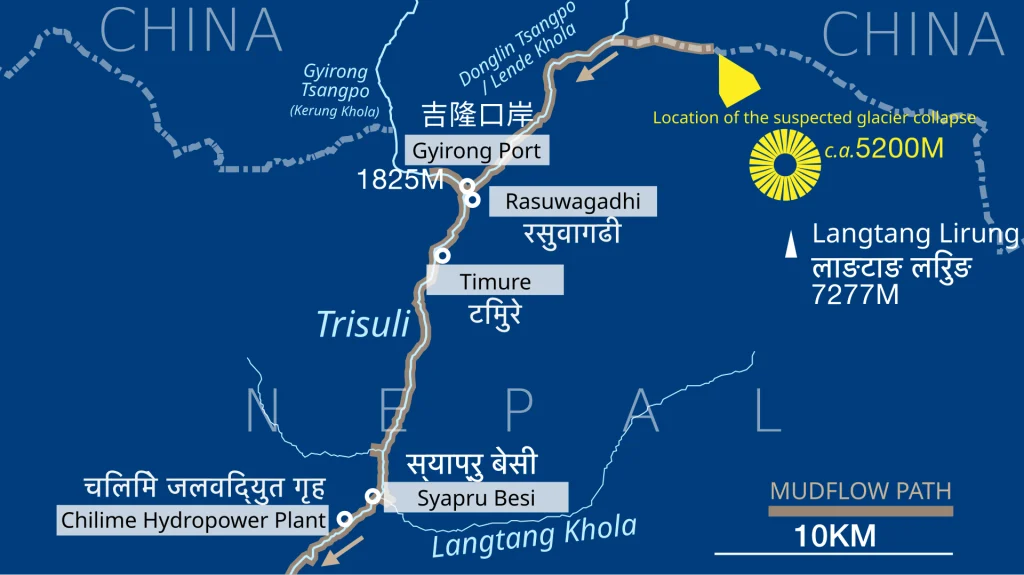
The Nepal Floods 2026 began on August 26, when a partial collapse of the Langtang Lirung glacier sent rock, ice, and meltwater surging into the Lhende Khola, Bhote Koshi, and Trishuli rivers, tearing through Nepal’s Rasuwa, Nuwakot, and Dhading districts before reaching the China border at Gyirong. It is now Nepal’s deadliest disaster since the 2015 earthquake.
The corridor hit Syabrubesi, Timure, and the Rasuwagadhi crossing, which is also the gateway to the Langtang trekking region and the overland route used by Kailash Mansarovar pilgrims, so alongside the immediate humanitarian emergency, this has real implications for travelers and the tourism communities connected to it.
As a company operating across Nepal’s travel industry, we’re tracking developments from official, verified sources and updating this page as the situation evolves. We’re avoiding speculation, unverified claims, and graphic imagery out of respect for those affected.
What This Means If You’re Traveling to Nepal?
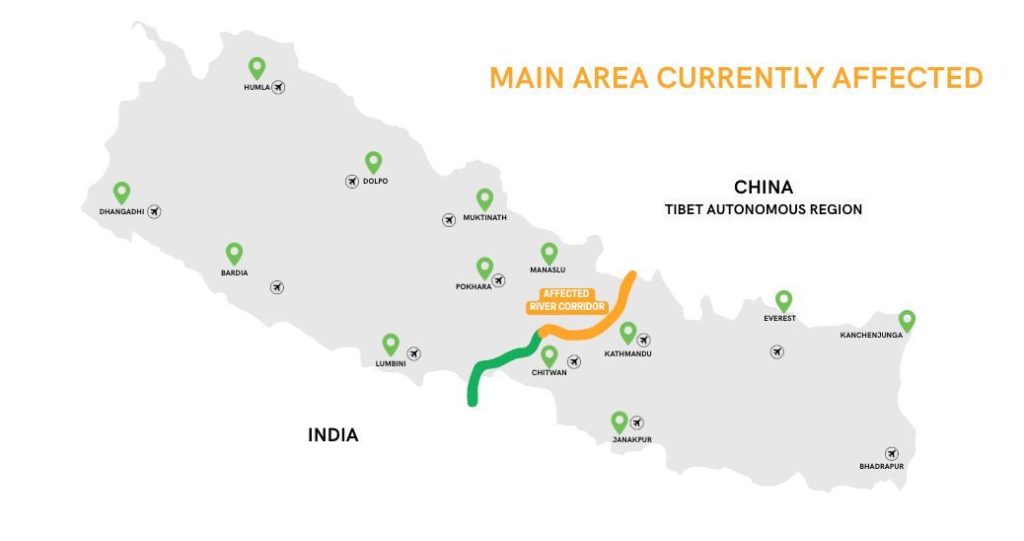
Affected: the Rasuwa–Bhote Koshi–Trishuli corridor, including Syabrubesi (gateway to Langtang National Park), Timure, Rasuwagadhi, and the overland Nepal–Tibet border crossing (the Kailash Mansarovar overland route is currently suspended).
Unaffected: Everest, Annapurna, Manaslu, Kanchenjunga, and Makalu flights, trails, teahouses, and permits in these regions continue operating normally.
If you have a booking for Langtang, Gosaikunda, Ruby Valley, or a Tibet overland route, talk to your operator about postponing or rerouting. No confirmed reopening timeline for the Rasuwa corridor yet.
Where the Disaster Hit Hardest?
The flood began at the very top of the watershed and carried its impact a long way downstream:
Rasuwa district ground zero. The Langtang Lirung glacier collapse originated here, and the towns of Syabrubesi, Timure, and the Rasuwagadhi border crossing took the initial, most direct hit.
Nuwakot and Dhading districts were next in the flood’s path, with Trishuli Bazaar and Devighat among the hardest-hit towns as the surge continued downstream.
Chitwan, Nawalparasi East, and Nawalparasi West, further downstream, have recorded the highest numbers of recovered bodies, showing just how far the floodwaters carried people and debris.
Gyirong, on the China side of the border, the crossing point itself was largely destroyed, and China has reported its own, smaller toll of dead and missing.
September 26, 2026: Landslides Cut the Jomsom–Korala Road as Gandak Barrage Flow Nears Danger Level
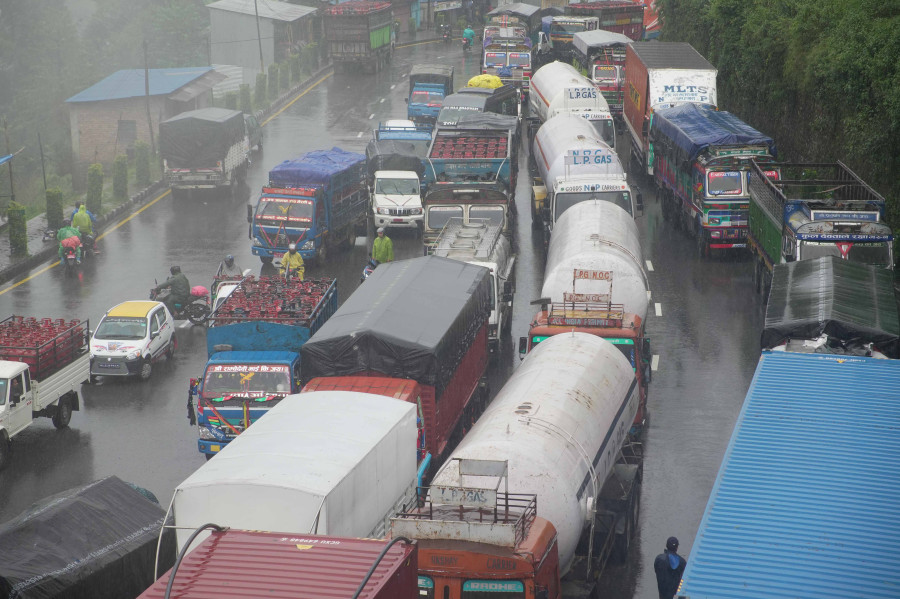
Continuous rain triggered landslides at three points along the Jomsom–Korala highway, cutting cross-border trade and transport with China through that route. Elsewhere, sections of major highways and strategic roads stayed blocked by floods, landslides and rain; some cleared stretches reopened only to be hit again, and public vehicles to and from Kathmandu remained affected. Several districts stayed on high alert.
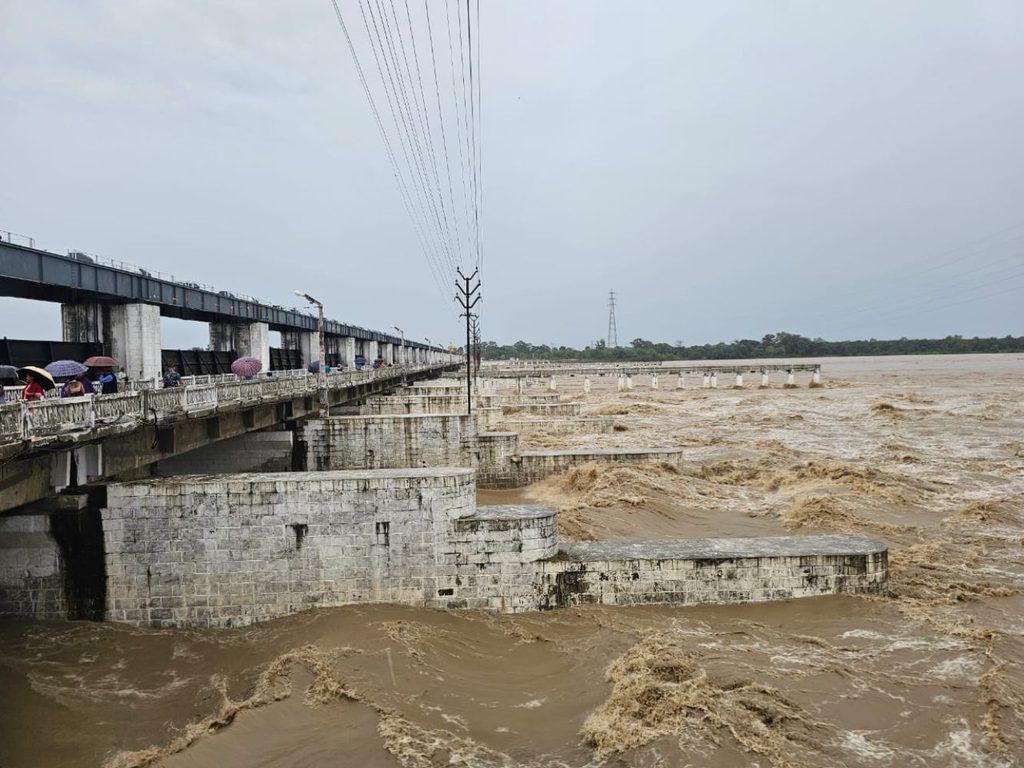
On the India border, water at the Gandak Barrage reached 267,000 cusecs by 7 a.m., putting over 150 houses at risk. Authorities evacuated residents as floodwater submerged homes, farmland and crops, and a local campaigner said the river had eroded land after shifting course toward the village. All border points between India and China were shut because of the weather.
September 25, 2026: Landslides Shut the BP Highway as Roads Close in 26 Districts
Heavy rain since Thursday blocked the BP Highway at Charsayabensi and Gimdi in Kavrepalanchok’s Roshi Rural Municipality, with the Roshi River crossing the warning level at Panuti. The Prithvi Highway was also disrupted, and two mud-and-brick houses collapsed in Panauti. NDRRMA reported road closures or restrictions in 26 districts across the country, including Sindhupalchok, Nuwakot, Dhading, Rasuwa and Chitwan. The Flood Forecasting Division separately flagged a high-to-moderate flash-flood risk on small rivers running through more than two dozen districts, from Gorkha and Kaski to Kailali and Kanchanpur. Authorities urged people to avoid river corridors and postpone long-distance travel through September 27.
September 24, 2026: PM Shah Tells the UN the Bhotekoshi Disaster Was “a Warning to the World”
Addressing the 81st UN General Assembly, Prime Minister Balendra Shah described the August 26 disaster as a “Himalayan Tsunami” that killed at least 1,400 people and left more than 6,000 missing, at a cost of roughly 10% of Nepal’s GDP. He said Nepal produced less than a tenth of one percent of global heat-trapping emissions yet was paying a heavy price, and pressed the Assembly on “relief, rehabilitation, reconstruction” as well as “responsibility, reparation, resilience.” He proposed a Himalaya Climate Resilience Mechanism with India and China to share satellite data, monitor glacial lakes and strengthen cross-border early-warning systems. UN Secretary-General António Guterres met Shah separately and had already referenced Nepal’s floods in his own opening remarks.
September 23, 2026: Met Office Urges Trekkers to Head Down and Travelers to Avoid Long Drives From September 25 to 27
The Department of Hydrology and Meteorology’s forecasting division asked all trekkers to suspend Himalayan treks and those already on the trails to return to safer, lower elevations, citing heavy rain and snow. It also advised the public to avoid long-distance road travel from September 25 to 27. A deep depression over the Bay of Bengal is expected to bring rain to every province from Friday to Sunday. Extremely heavy rainfall and snowfall are possible in Gandaki and Lumbini, home to the Annapurna Circuit, Manaslu Circuit, Annapurna Base Camp, Mardi Himal and Tilicho Lake. Forecasters said there is no need to panic, but people should stay alert. The system is separate from the August disaster.
On the ground, Kavrepalanchok authorities will bar vehicles from the BP Highway section between 5 p.m. and 5 a.m. from September 24 to 28, citing flood and landslide risk. Separately, the Asian Development Bank trimmed its FY2026/27 growth forecast for Nepal by 0.4 percentage points to 4.1%, largely because of the floods. Prime Minister Balendra Shah reached New York ahead of his September 24 address to the UN General Assembly.
September 22, 2026: PM Shah Leaves for the UN General Assembly as Guterres Recalls His Himalayan Warning
Prime Minister Balendra Shah left Kathmandu for New York to lead Nepal’s delegation to the 81st UN General Assembly. He is due to address the General Debate on September 24 and to raise the Bhotekoshi floods and Nepal’s call for climate justice and compensation. Foreign Minister Shisir Khanal was meeting India’s External Affairs Minister and a senior US State Department official on the sidelines. The Post reported that additional US recovery assistance is likely to be announced.
Opening the general debate, UN Secretary-General António Guterres recalled his 2023 warning from the mountains of Nepal about accelerating glacier melt. He said climate impacts are now arriving sooner and hitting harder than many expected. He did not specifically name the August 26 disaster.
September 21, 2026: Home Secretary Briefs Parliament as Holding Centers Fall From 34 to 20
Home Secretary Kedarnath Sharma told a parliamentary committee that rescue and relief work is continuing. He said Rs 135 million has been dispatched from the Prime Minister’s Disaster Relief Fund to Rasuwa, Nuwakot, Dhading, Chitwan and other affected districts. He also said Nepal would need to seek around Rs 723 billion from the international community under the principle of climate justice.
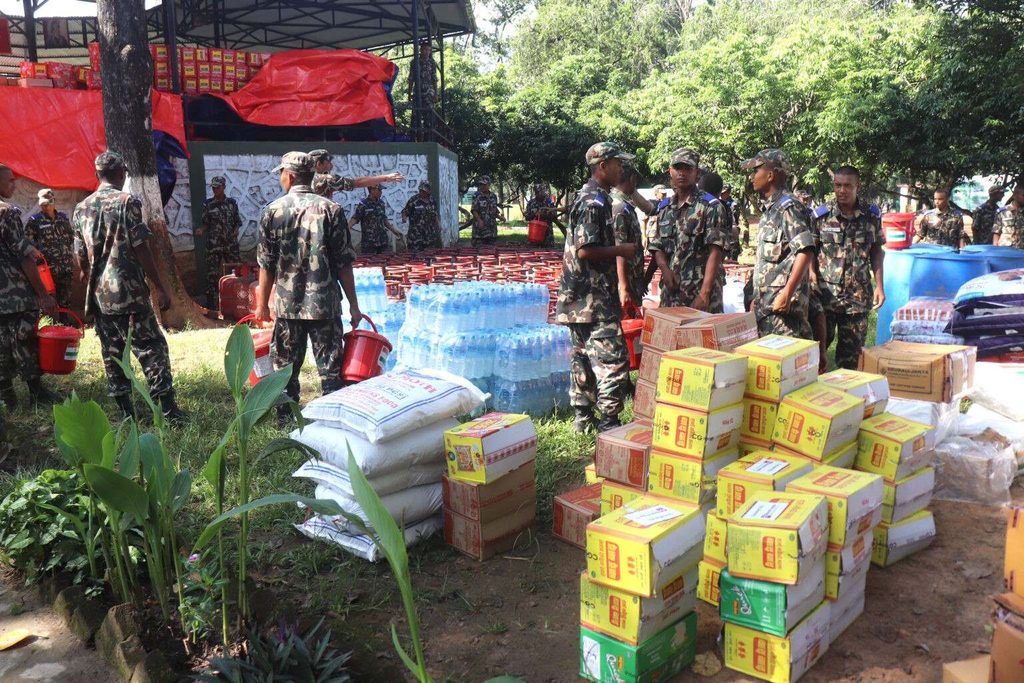
NDRRMA chief Dharmaraj Upreti put the count at 1,451 bodies recovered and 5,786 people still missing. Another 1,292 bodies have been buried after DNA sampling, and 111 have been identified and handed to families. The number of holding centers has dropped from 34 to 20 as the focus shifts to survivors’ needs. The government is running temporary learning centers for children and offering psychosocial counseling.
September 20, 2026: Toll Crosses 1,450 Four Weeks On, With Identification Still the Hardest Task
Nepal Police put the confirmed toll at 1,451, four weeks after the flood. Chitwan has the most recovered bodies (367), followed by Rasuwa (236), Nawalparasi East (232), and Nawalparasi West (222). Nuwakot recorded 203, Gorkha 79, Dhading 72, and Tanahu 38, and two people died in Kathmandu hospitals while undergoing treatment. A total of 13,784 people have been rescued. On the Chinese side, 43 people have died, and more than 500 remain missing, according to Chinese media.
Nepal floods: Death toll crosses 1,450, search continues for 6,000 missing +3
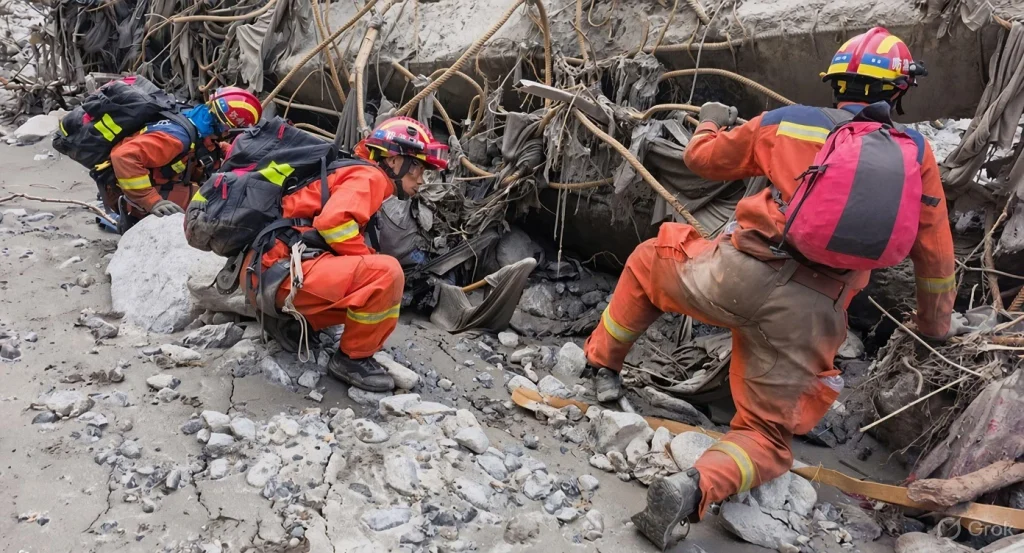
Only 110 bodies had been identified and returned to families, since many were decomposed or recovered only in parts. Nearly 1,300 have been temporarily buried after DNA collection. An army field commander said earlier this month that clearing some tunnels could take three to four months because of the volume of debris. Meanwhile, the government has begun repairing suspension bridges along the Trishuli corridor.
September 19, 2026: Government Launches a Scientific Probe Into What Triggered the Disaster
Nepal has commissioned a seven-member expert panel to investigate how the August 26 disaster unfolded and whether climate change played a role. It brings together experts in hydrology, glaciology, geology, remote sensing, hydropower infrastructure and disaster risk reduction, and will run field studies from the source to the downstream areas. This follows a preliminary assessment that found too little verified evidence to establish where the disaster began or what physical process set it off.
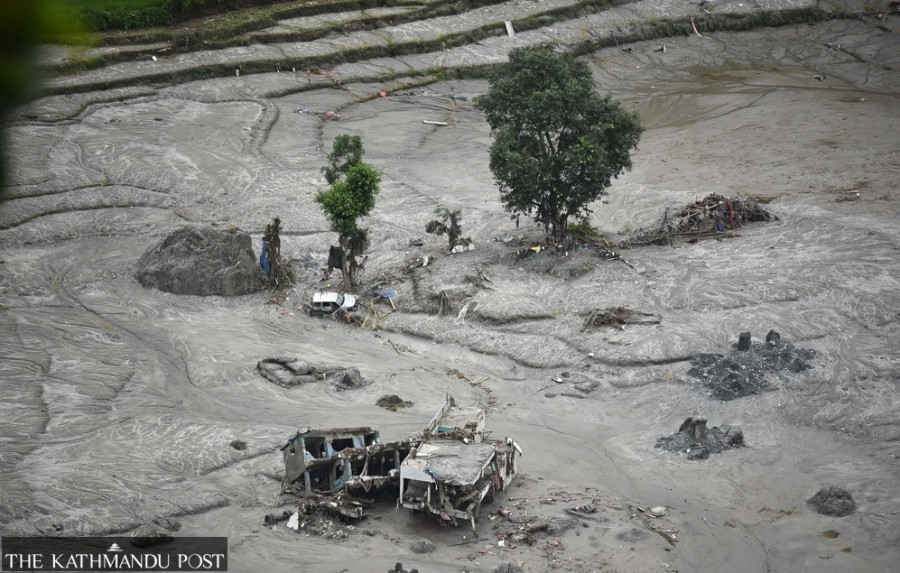
The Ministry of Energy, Water Resources and Irrigation formed the panel on Wednesday, and it is expected to run for two months. Once it submits its findings, the ministry plans to decide on an appropriate scientific classification for the event.
September 18, 2026: Six More Bodies Recovered From the Upper Trishuli-1 Tunnel as Toll Stands at 1,410
NDRRMA figures as of Thursday evening put the death toll at 1,410, with 6,145 people still missing, including 587 foreign nationals. The missing figure was revised after 110 bodies were identified. A total of 13,756 people have been rescued.
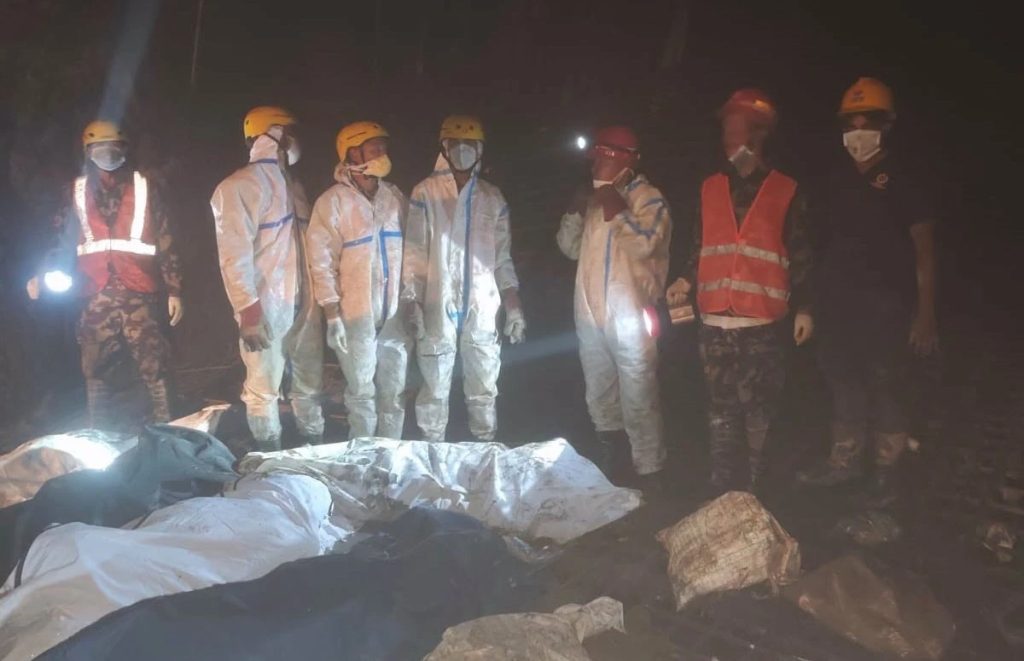
On Friday, a joint security team recovered six bodies from the Audit-3 tunnel of the Upper Trishuli-1 project in Nuwakot. They were found entangled in reinforcement mesh, and crews used cutting equipment to free them. Rescuers suspect more may lie under mud, and searches continue at several other projects, including Chilime, where five bodies had been recovered two days earlier.
September 17, 2026: Prithvi Highway Reopens After 18 Days, Restoring a Key Route to Western Nepal
Nepal Police confirmed the full reopening of the Prithvi Highway at Krishna Bhir in Dhading, with two-way traffic resuming from 6 a.m. Thursday, 18 days after a landslide triggered by the Rasuwa flood tore out roughly 100 meters of road and cut the route entirely. Crews built a new 270-meter track above the collapsed section, working 12 to 16 hours a day to gravel and compact it in time.
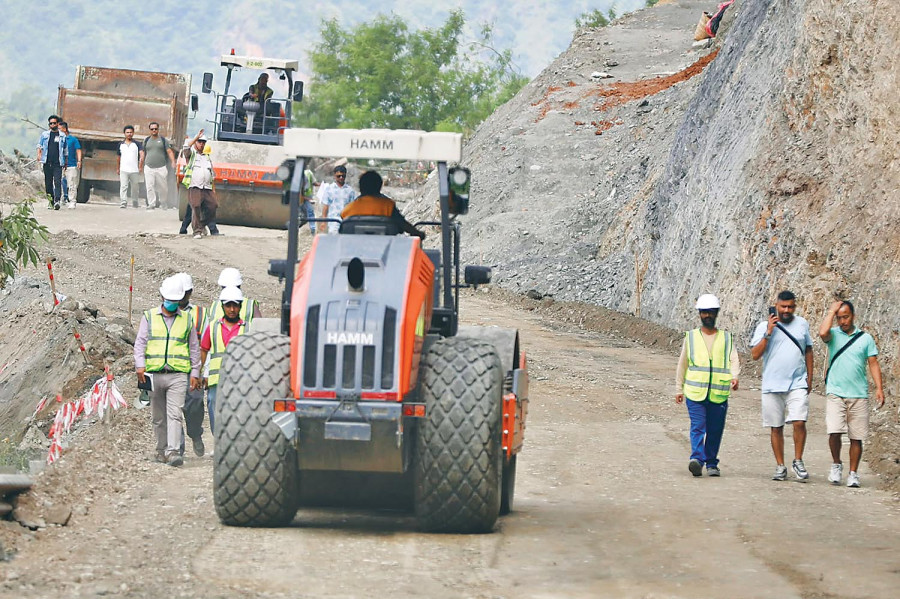
While the highway is officially open, some engagement remains: several stretches between Nagdhunga and Mugling are still narrowed to a single lane from flood and landslide damage, and other routes in the region, including parts of the Pasang Lhamu Highway near Khalte and Betrawati, washed out by the Trishuli River remain closed, with traffic to Syabrubesi still detouring along a single-lane dirt track. Transport operators, who lost tens of millions of rupees in revenue during the closure, welcomed the reopening as a major step for connectivity between Kathmandu and western Nepal.
September 16, 2026: Toll Surpasses 1,400 as Rasuwa Forms a Committee to Tally the Damage
NDRRMA figures as of Wednesday evening put the confirmed toll at 1,403, with more than 6,000 people still reported missing. Chitwan again recorded the most deaths (364), followed by Nawalparasi East (232), Nawalparasi West (222), Nuwakot (202), Rasuwa (193), Gorkha (78), Dhading (72), and Tanahun (38); two more people died while undergoing treatment. Also, three bodies have been recovered during a search operation at the Chilime Hydropower Project.
Rasuwa formed a 25-member data evaluation committee, chaired by the District Coordination Officer, to compile a full loss-of-life and property assessment within a month; with local municipal offices themselves destroyed, operations have shifted to vacant buildings while new facilities are built. Separately, Rasuwa’s civil society called for the swift installation of Bailey bridges over the Phalaku, Bhote Koshi, and Ronga rivers to restore connectivity, and lawmakers pressed the government in Parliament on the pace of tracing missing citizens and distributing relief.
September 15, 2026: 607 Foreign Tourists Still Missing as Rescue Teams Keep Tracing Trekkers and Pilgrims
The Department of Tourism confirmed that 607 foreign tourists from 34 countries remain unaccounted for nearly three weeks. Information officer Suraj Ghimire told RSS that most were traveling toward Kailash Mansarovar in Tibet or heading to Gosaikunda and Mustang over the Janai Purnima festival. A reminder of just how many visitors were moving through the Rasuwa corridor on the day the flood struck.
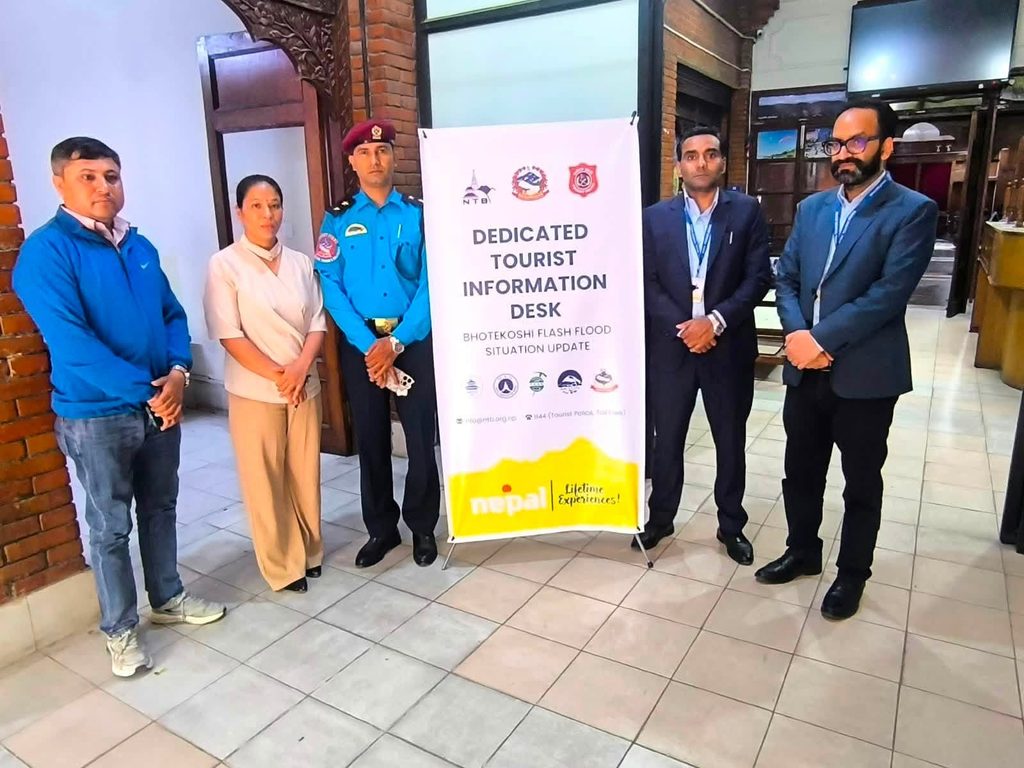
The figure reflects the difficulty of accounting for independent trekkers and pilgrims, many of whom were traveling without fixed itineraries or local operators when communications went down.
September 14, 2026: Toll Reaches 1,390 as Search Teams Work Through 1,230 Identified Bodies and Thousands of Records
Nepal Police figures as of 5 a.m. Monday put the toll at 1,390, with 4,089 people still missing. Bodies recovered by district: Chitwan (364), Nawalparasi East (230), Nawalparasi West (222), Nuwakot (202), Rasuwa (186), Gorkha (77), Dhading (71), and Tanahun (38). Authorities have completed formal identification of 1,230 bodies, with 3,132 DNA samples collected from the deceased and their relatives; details of unidentified remains have been published on Nepal Police’s website to help families still searching for missing loved ones, including foreign travelers.
Prime Minister Balendra Shah assured there would be no shortage of financial or material resources for rehabilitation along the Bhote Koshi–Trishuli–Narayani corridor. A total of 7,975 police personnel remain deployed for search, relief distribution, and body management.
September 13, 2026: Recovery and Search Efforts Continue Despite Festivals
President Ram Chandra Paudel extended greetings to Nepali women on Teej and to children on National Children’s Day, stressing the importance of protecting children’s rights and ensuring access to education and healthcare, words that carried added weight as schools across Rasuwa, Nuwakot, and Dhading remain damaged or destroyed. Families of missing tourists and trekkers are still waiting for news.

Search and relief work along the Bhote Koshi–Trishuli corridor continued through the holiday without pause. The confirmed toll held close to the 1,386 figure recorded the previous day.
September 12, 2026: Toll Reaches 1,386 as the Missing Count Holds Steady at 5,130
NDRRMA’s update for the day put the confirmed toll at 1,386, with 6,827 people injured and 5,130 still missing, including 587 foreign nationals from 39 countries. The missing figure has held roughly flat over the past couple of days, suggesting the search is now moving through its slower, harder phase rather than the rapid swings seen in the first two weeks.
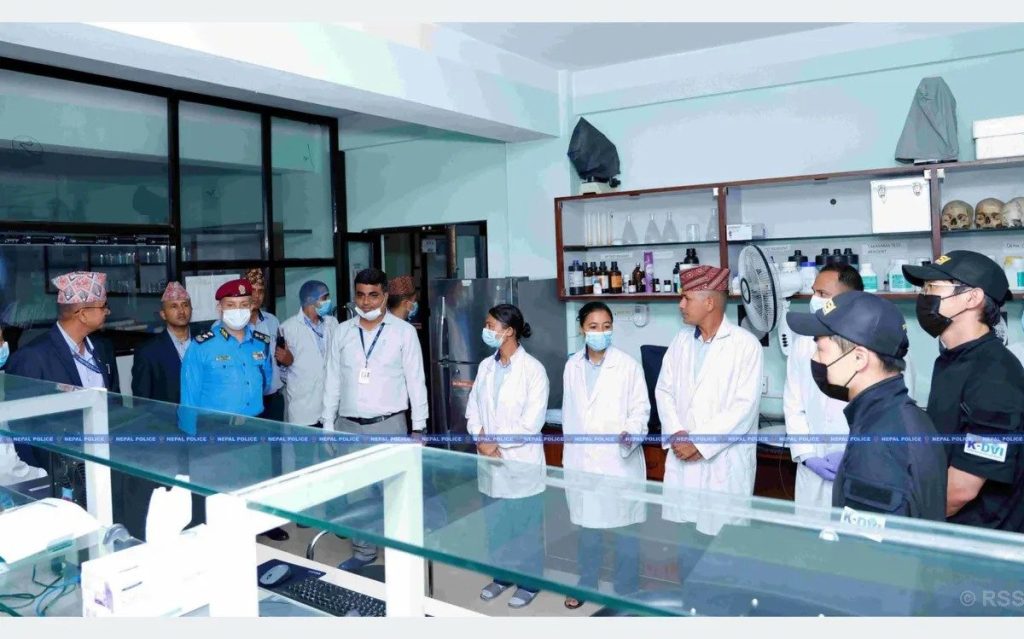
With the death toll’s pace of increase slowing, attention is shifting further toward recovery, identification of remains, support for displaced families, and the reconstruction planning Nepal outlined a day earlier with its $4.78 billion damage assessment.
September 11, 2026: Toll Reaches 1,385 as Nepal Puts a $4.78 Billion Price Tag on Recovery
NDRRMA’s update put the toll at 1,385, with 5,130 still missing and 13,676 rescued. The highest death counts remain in Chitwan (364), Nawalparasi East (228), Nawalparasi West (222), Nuwakot (199), and Rasuwa (185). A reminder of how far the flood carried people downstream from where it started. More than 21,000 security personnel remain deployed, supported by over 1,700 helicopter flights, while 3,685 displaced people are being sheltered across 37 holding centers.

Nepal’s government put a first hard number on the road ahead: its Rapid Damage and Needs Assessment estimates $1.8 billion in physical damage and $883 million in economic losses, with $4.78 billion needed for full reconstruction. Prime Minister Balendra Shah is set to raise the case for climate compensation at the UN General Assembly’s High-Level Debate on September 24, seeking climate finance and support from the UN’s Fund for Responding to Loss and Damage.
September 10, 2026: Toll Reaches 1,377 as Nepal’s Parliament Debates the Road Ahead
The government’s update issued at 11 a.m. on Thursday put the toll at 1,377, with 5,130 people still missing, including 587 foreign nationals. Officials noted the missing figure was revised down after 104 bodies were formally identified. A total of 13,656 people have now been rescued, with 21,063 security personnel still mobilized; the Army and Armed Police Force have flown 1,348 and 272 helicopter sorties, respectively.
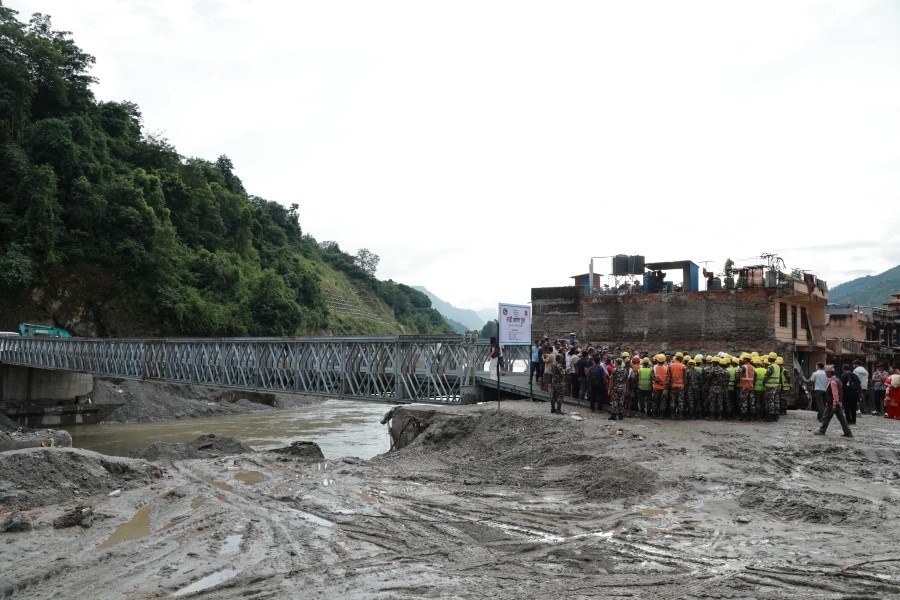
In Parliament, lawmakers pressed the government on several fronts: the pace of post-disaster reconstruction, the need for more advanced technology in the ongoing search around Rasuwa, and the government’s response to the recent Mustang earthquake. The Cabinet also formally approved Prime Minister Balendra “Balen” Shah’s upcoming visit to the UN General Assembly in the US, where Nepal is expected to press its case for climate compensation. On the ground, Chinese drone teams continued playing a significant role in the recovery effort, helping airlift bodies and supplies into hard-to-reach parts of the corridor.
September 9, 2026: Recovery Continues in Rasuwa as PATA Urges the Industry to Keep Nepal’s Story in Perspective
Sixteen days on, the response along the Bhote Koshi–Upper Trishuli corridor has shifted from primarily search and rescue toward relief and recovery. Government agencies, security forces, local governments, and numerous citizen-led groups are working to get food, medicine, and essential supplies to affected people. However, access remains difficult in several places. The scale of destruction in the corridor is significant, and rebuilding will take time, but as before, it remains concentrated in this one river corridor, not a nationwide event.
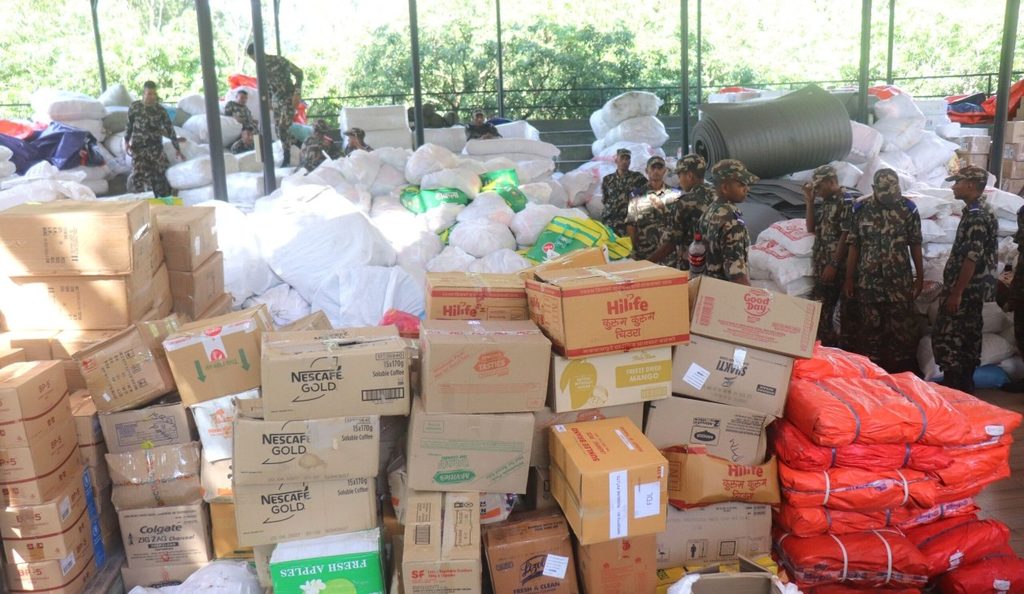
Good news came from the Manaslu Circuit, where two bridges near Namrung, washed out earlier this week by the Budi Gandaki River, were rebuilt by local communities within two days, using traditional timber construction. Nepal’s trekking trails are also the everyday lifelines connecting mountain villages to homes, farms, schools, and markets. And that same traditional knowledge is now being put to direct use in recovery.
Separately, a 5.3-magnitude earthquake struck near Lo Manthang in Upper Mustang on the evening of September 8. Access to the region hasn’t been disrupted; Jomsom, Kagbeni, and Muktinath continue functioning normally, and the route toward Lo Manthang remains open, but the quake has cracked and damaged some of the area’s older mud-and-stone buildings and monasteries, many of which were already vulnerable due to age, changing rainfall patterns, and limited maintenance.
Industry response
The Pacific Asia Travel Association issued an open letter urging travel businesses and media worldwide to rely on verified sources rather than blanket cancellations, noting that Kathmandu Valley, Pokhara, Annapurna, Everest, Chitwan, and Nepal’s airports all remain fully open. PATA is also launching a Nepal Tourism Recovery Fund to support guides, drivers, porters, and homestay and lodge owners who lost income and property in the affected corridor.

Climate compensation
Nepal’s Foreign Minister, Shisir Khanal, told The Guardian that Nepal has formally requested $20 million in climate-related damages from the UN’s loss and damage fund, arguing that Nepal contributes under 0.1% of global emissions while the Himalayas warm roughly 50% faster than the global average. He noted the request covers only a fraction of the estimated $5 billion-plus total damage, and said neither Nepali nor Chinese scientists had seen clear signs the glacier collapse was imminent, despite the glacier’s known fragility.
September 8, 2026: Nepal Marks a Day of Mourning for the Gen Z Martyrs along with the Rescues Going on
The Government’s update for the 14th day put recovered bodies at 1,357, with around 5,300 still missing (roughly 600 foreign nationals from 35 countries) and 13,583 people rescued in total.
September 8 was separately observed as Nepal’s national day of mourning for the Gen Z Martyrs, marking one year since the protests that brought the current government to power, with Nepal holding space for two griefs at once, even as search and relief work continued without pause. Dedicated help desks remain open at Tribhuvan International Airport and the Nepal Tourism Board for families still searching for loved ones.
September 7, 2026: Nepal Observes a National Day of Mourning for Flood Victims
The Government’s update for the 13th day put recovered bodies at 1,355, with around 5,000 still missing and 13,396 people rescued. September 7 marked Nepal’s official day of mourning for flood victims, the traditional close of the 13-day Hindu mourning period. Flags flew at half-mast at government offices and Nepali missions abroad, and candlelight vigils were held nationwide that evening.
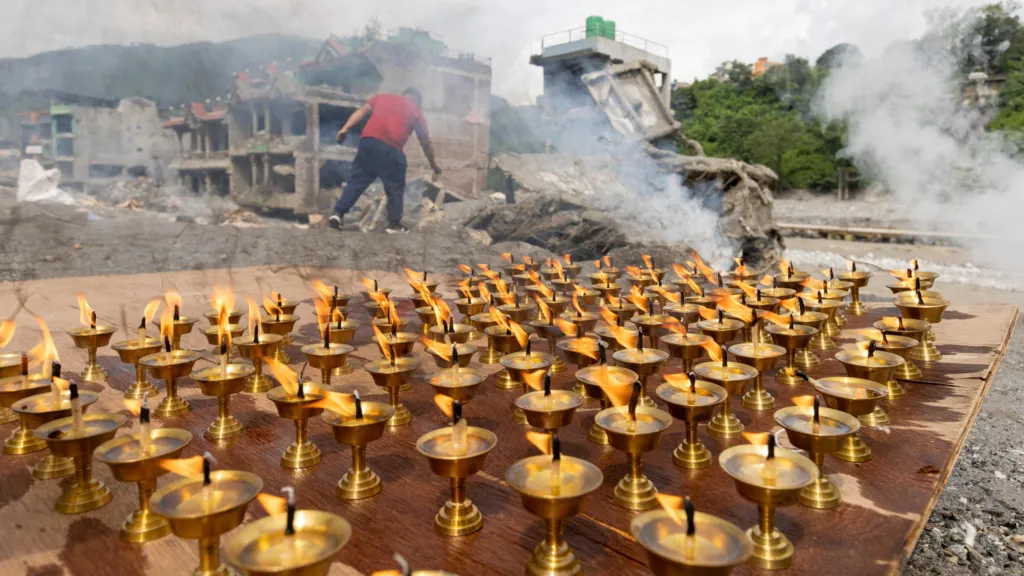
President Ram Chandra Paudel traveled to the worst-affected districts to meet survivors and rescue teams in person, while Nepal Army spokesperson Raja Ram Basnet told AFP that search efforts were continuing at the same pace as day one.
September 6, 2026: 1,341 Bodies Recovered as Rescue Teams Reach Rasuwagadhi, and a Separate Disruption Hits Manaslu
The Government’s update for the 12th day put recovered bodies at 1,341, with around 5,000 still missing and 13,104 people rescued. Figures are revised daily as search and verification continue, which can mean small day-to-day shifts rather than a steady climb.
Nepali Army engineers began work on a temporary bridge over the Tadi River to help restore the Galchhi–Trishuli road. Separately, Nepal flagged a second, unrelated disruption: a landslide near Tsum Valley and a collapsed bridge at Namrung on the Manaslu Circuit, linked to ongoing monsoon rain rather than the main disaster. Gorkha’s District Administration Office advised trekkers to defer Manaslu and Tsum Valley trips for now.
September 5, 2026: Toll Passes 1,342 as a Miracle Rescue Brings Nepal to Tears
Nepal Police confirmed 1,342 deaths by Saturday morning, with 4,886 still missing. Bodies have been recovered across eight districts, led by Chitwan (360) and Nawalparasi West (230); over 1,030 have now been identified through DNA testing and formally buried.
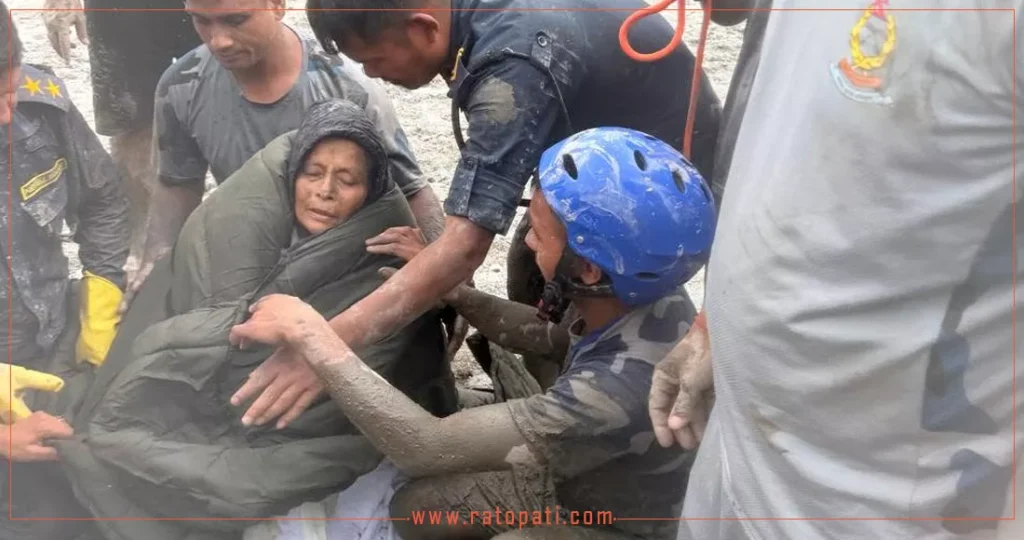
Chandika Shrestha, 64, was rescued alive from a home buried by the flood in Betrawati, Nuwakot, 11 days after the disaster struck and airlifted to Kathmandu for treatment. Separately, a Chinese hydropower worker was also pulled alive from a tunnel with help from a South Korean rescue team.
September 4, 2026: Toll Reaches 1,287 as Two Workers Pulled Alive From a Buried Tunnel
Nepal’s disaster authority raised the confirmed toll to 1,287, with 5,083 still missing. More than 800 foreign nationals remain unaccounted for, including trekkers and Kailash Mansarovar pilgrims.
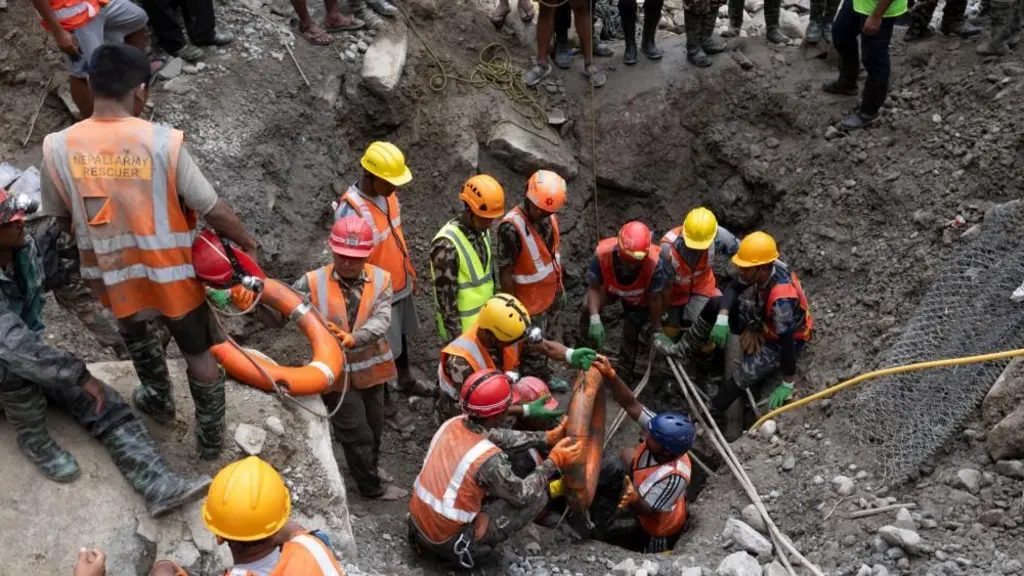
Rescuers pulled two workers alive from a hydropower tunnel in Rasuwa, nine days after the flood: foreman Sanjay Sah, 30, and supervisor Kabir Maharjan, 45. One of them said more workers may still be alive deeper inside; around 115 are believed to be trapped in the tunnel’s main chamber.
September 3, 2026: Toll Rises to 1,252 as 4,216 Remain Unaccounted For
NDRRMA’s Thursday-noon figures put Nepal’s confirmed death toll at 1,252, with at least 4,216 people still unaccounted for. Chitwan has recorded the most deaths (355), followed by Nawalparasi East (218), Nawalparasi West (208), and Nuwakot (177); Rasuwa, where the disaster began, has recorded 127.
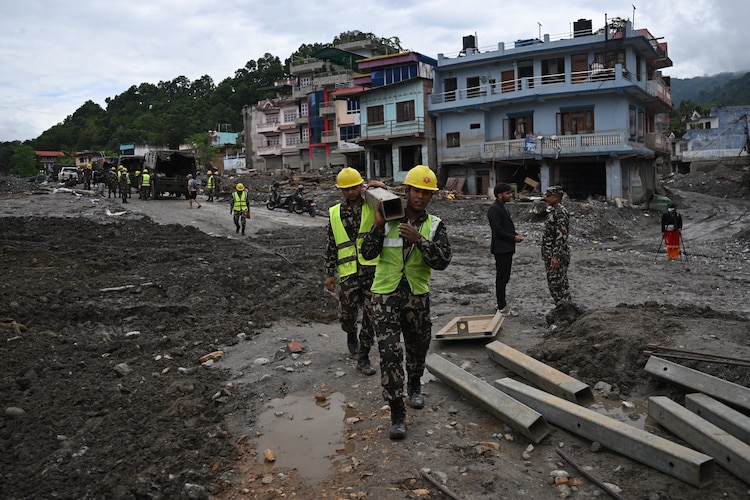
More than 21,000 security personnel are now deployed for search, rescue, and relief work, with 11,900+ people rescued so far. The Nepali Army has airlifted over 4,300 people across 700+ helicopter flights, including hundreds of foreign nationals. Telecommunications are largely restored; nearly all damaged towers across the disaster zone are back in operation.
September 2, 2026: One Week On: Toll at 1,114, PM Gives Parliament a Full Account
A week after the disaster began, NDRRMA placed the confirmed toll at 1,114, with roughly 4,500 people still missing across Nepal and China combined. Scientists flagged that glaciers near the original collapse site may still be unstable, keeping authorities on alert.
Prime Minister Balendra “Balen” Shah gave Parliament a detailed, minute-by-minute account of the government’s response on the day of the disaster, while also publicly thanking India and China for their swift aid. Nepal signaled it wants India, China, and the US, as major greenhouse-gas emitters, to contribute compensation for what it considers a climate-induced disaster, and has approached the UNFCCC’s Fund for Responding to Loss and Damage for support.
September 1, 2026: Death Toll Crosses 1,000, Pulling 279 Workers from Tunnels Alive
NDRRMA’s toll reached 1,003 (1,019 combined with China’s count of 16), with 3,916 people still missing in Nepal, including 583 foreign nationals from 38 countries. Authorities held a mass burial for unidentified victims, and a preliminary report noted that warning signs of the glacier’s instability had reportedly been visible before the collapse.
On a more hopeful note, Prime Minister Balen Shah announced that 279 workers had been rescued alive from hydropower tunnels where more than 900 had initially been feared trapped, pushing Nepal’s total rescues past 11,800.
Among those leading the air rescue effort was Captain Priya Adhikari, Nepal’s first female helicopter captain, who by this point had flown close to 100 missions through unstable mountain valleys to bring survivors to safety. International funding pledges also grew, with the World Bank, India, China, and the US signaling up to US$229 million combined toward Nepal’s relief fund.
August 31, 2026: Toll Passes 900 as Rescues Pass 10,000, Qatar Sends Emergency Airlift
Nepal’s confirmed death toll rose to 903, with more than 4,200 still missing — officially making this Nepal’s deadliest disaster since the 2015 earthquake, which killed around 9,000 people.
Engineers carried out a technically difficult controlled explosion at a hydropower tunnel to reach hundreds of trapped workers, part of an effort that had now rescued more than 10,000 people in total, including 252 foreign nationals. Qatar dispatched an Emiri Air Force aircraft carrying emergency relief supplies expected to benefit roughly 52,000 flood-affected people, alongside a search-and-rescue team to help distribute the aid.
August 30, 2026: Flood Warning Across Much of the Country
With a newly formed glacial lake near the border still considered unstable, authorities issued a fresh warning flagging Nuwakot and Rasuwa for a high risk of flash flooding, plus a moderate risk across nearly 30 districts spanning the country’s east, center, and west. It was a stark reminder of how widely the monsoon and the disaster’s aftershocks were straining Nepal’s rivers, well beyond the original flood zone.
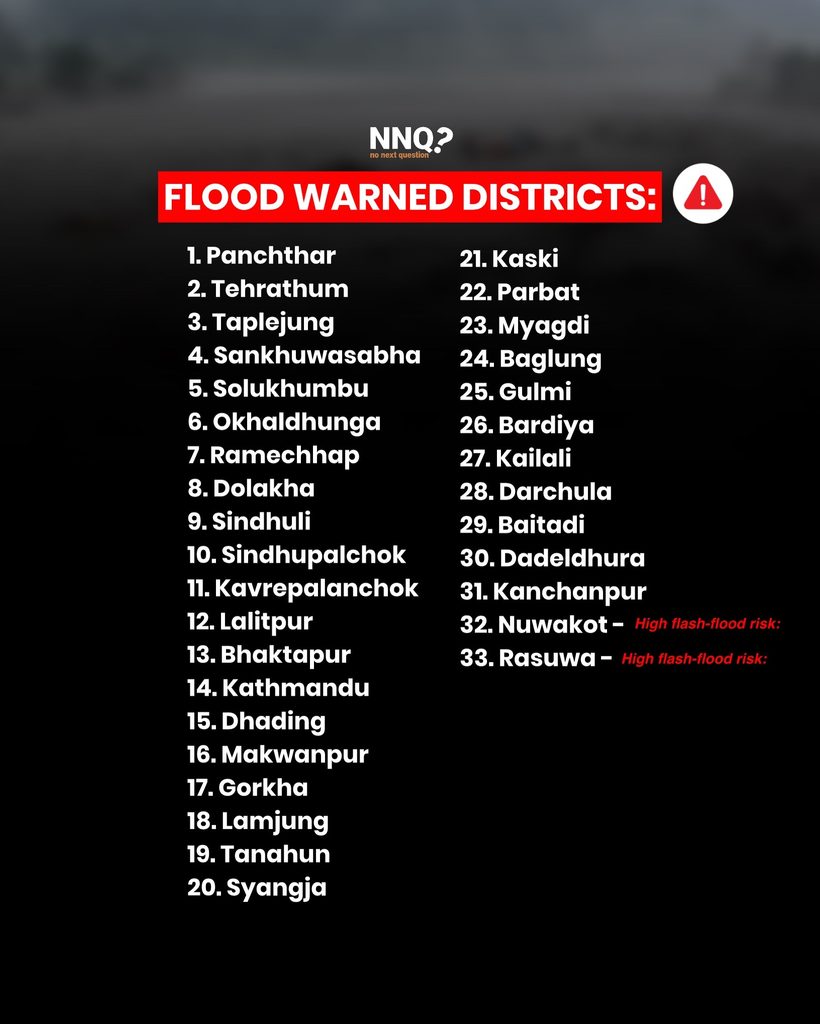
Communities had already begun their own cleanup alongside government-led recovery work. By day’s end, no major secondary flood had struck, and the warning gave downstream communities valuable time to prepare.
August 29, 2026: Toll Reaches 734 as PM Shah Marks a Rescue Milestone
Addressing the country on the Raksha Bandhan holiday, PM Balen Shah detailed a major scale-up in the response: more than 15,400 security personnel now deployed, over 4,400 people rescued to date (including 191 pulled from hydropower tunnels), and 129 foreign tourists rescued and formally identified. Alternate light-vehicle routes had reconnected Rasuwa to Kathmandu, and Nepal’s Prime Minister’s Relief Fund passed NPR 5.44 billion in public donations, with Shah and his full cabinet pledging to donate a month’s salary.
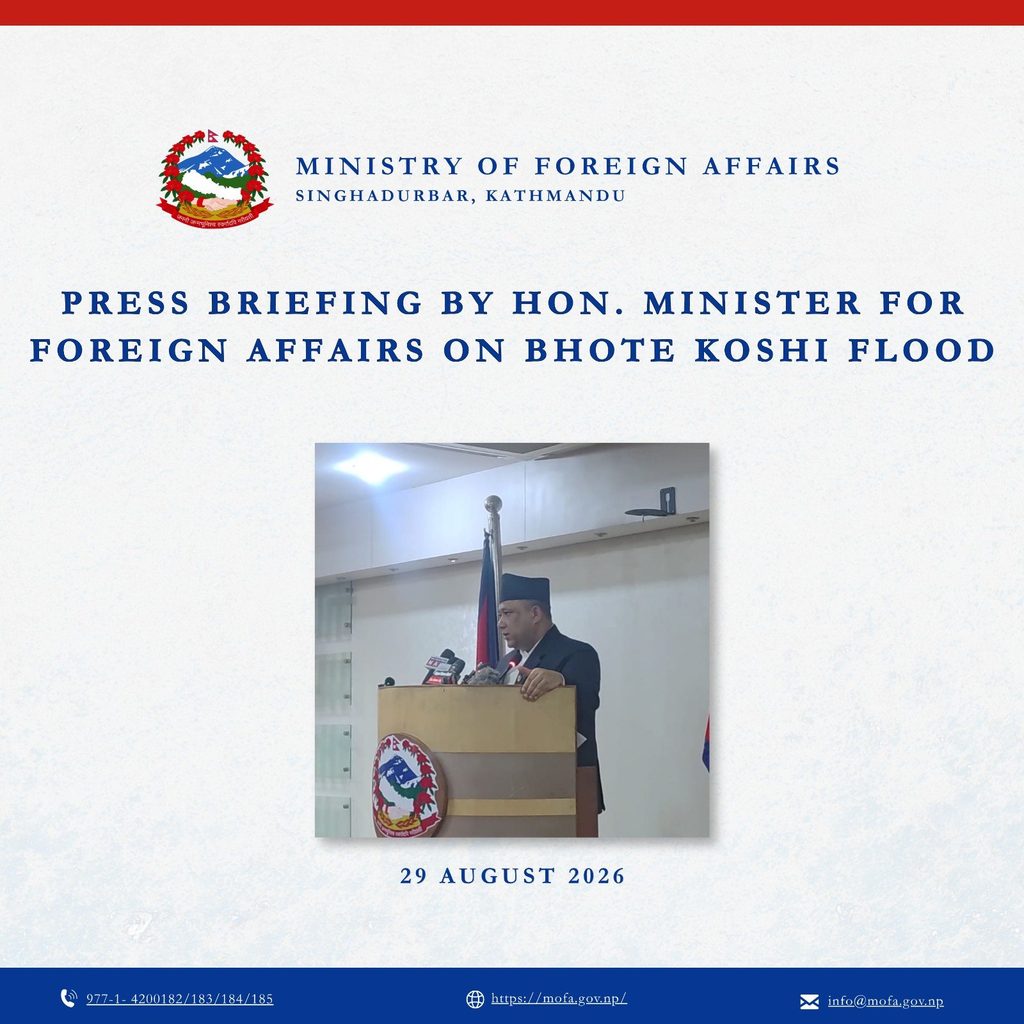
Nepal’s death toll rose to 734, with close to 2,500 people still missing, and rescue crews pushed into some of the hardest-to-reach corners of Rasuwa for the first time since the disaster, delivering food, medical supplies, and aid to villages cut off for days.
August 28, 2026: A Second Flood Scare at the Border, and Nepal Opens the Door to Foreign Rescue Teams
Chinese authorities reported a newly formed glacial lake near the collapse site, raising fears of a secondary flood; rescue operations on the China side paused briefly as a precaution before resuming once the risk eased. A 21-member Chinese rescue team, with a search-and-rescue dog, reached the badly damaged Gyirong crossing on foot after flooding destroyed the access road. Nepal’s death toll climbed to 616–626, with roughly 2,500 still missing on the Nepali side.
Nepal reversed its earlier position and formally accepted specialized international search-and-rescue support, including tunnel rescue, medical, and forensic teams from India, China, Australia, and South Korea, with Ireland, Israel, Singapore, and Pakistan also announcing humanitarian assistance.
August 27, 2026: Nepal Police Confirms Rising Toll as the Nation Mobilizes
By Thursday morning, Nepal Police confirmed 389 dead, with 466 injured and more than 1,300 people unaccounted for. More than 13,000 security personnel from the Nepal Police, Army, and Armed Police Force were engaged in search and rescue, with 14 helicopters flying continuous sorties.

International support began arriving quickly: India dispatched nearly 50 metric tonnes of relief supplies via air force aircraft, South Korea pledged US$1 million and a response team, and Australia announced an AU$5 million assistance package. The World Bank signaled up to US$163.5 million in potential emergency funding, and the UN released US$2.5 million from its Central Emergency Response Fund.
August 26, 2026: The Flood Hits Rasuwa
At around 8:30–9:15 a.m., a section of the Langtang Lirung glacier collapsed, sending an estimated 1,200-metre avalanche of ice and rock into the Lhende Khola. The impact generated a magnitude-5.2 tremor and triggered a glacial outburst flood — water levels in the Trishuli River rose by as much as 9 metres in 30 minutes.
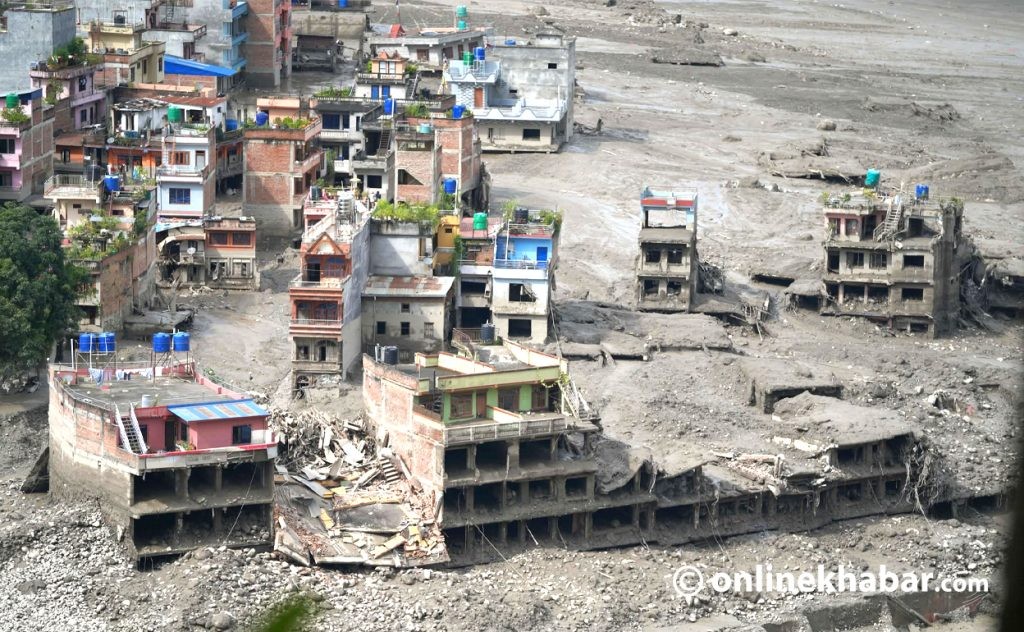
The flood destroyed the Gyirong border checkpoint and tore through Timure and Syabrubesi, the main gateway to Langtang National Park, before continuing through Rasuwagadhi, Trishuli Bazaar, and Devighat. Roughly 60 houses and multiple bridges were swept away, and public transport between Kathmandu and seven districts was suspended. Nepal’s Army and Police mobilized within the hour, launching search and rescue around Bidur and evacuating riverside villages before water levels could rise further downstream a rapid first response that likely saved many lives in the disaster’s earliest, most chaotic hours. By nightfall, Nepal’s death toll stood at 165, with around 910 people missing or unaccounted for.
Sources & References
Nepal’s National Disaster Risk Reduction and Management Authority (NDRRMA), Nepal Police, Ministry of Foreign Affairs, Office of the Prime Minister, BBC News, CNN, Reuters, Al Jazeera, The Guardian, UN News, The Kathmandu Post, AP News
Standing With Nepal
Nepal has been through a disaster that has taken lives, homes, and dreams that will never fully come back. But the damage that’s been done can be rebuilt, and for those who survived, even a small part from each of us can make a difference. Whatever you’re able to give, big or small, here’s where you can help: