Experience life on a Himalayan trek to discover a journey that will completely transform your perspective on travel and adventure. A Himalayan trek is more than just walking through mountains. It’s an experience that slowly reshapes your daily routine and the way you see the world. It’s not just about reaching a destination; it’s about the rhythm of life you step into along the way.
Once you leave Kathmandu behind, everything begins to feel different. The noise fades, the air feels fresher, and time seems to slow down. Your days become simple and intentional, waking up early with the first light, walking through quiet trails, stopping for tea breaks, and resting as the sun sets behind the mountains.
There’s something deeply calming about this routine that’s hard to find in everyday life.
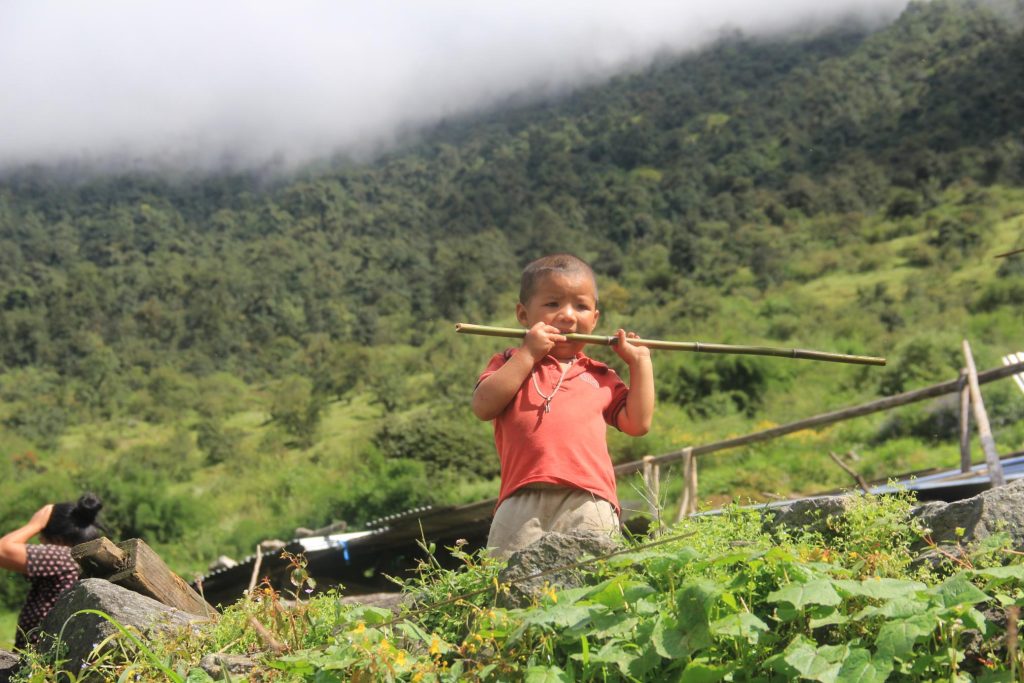
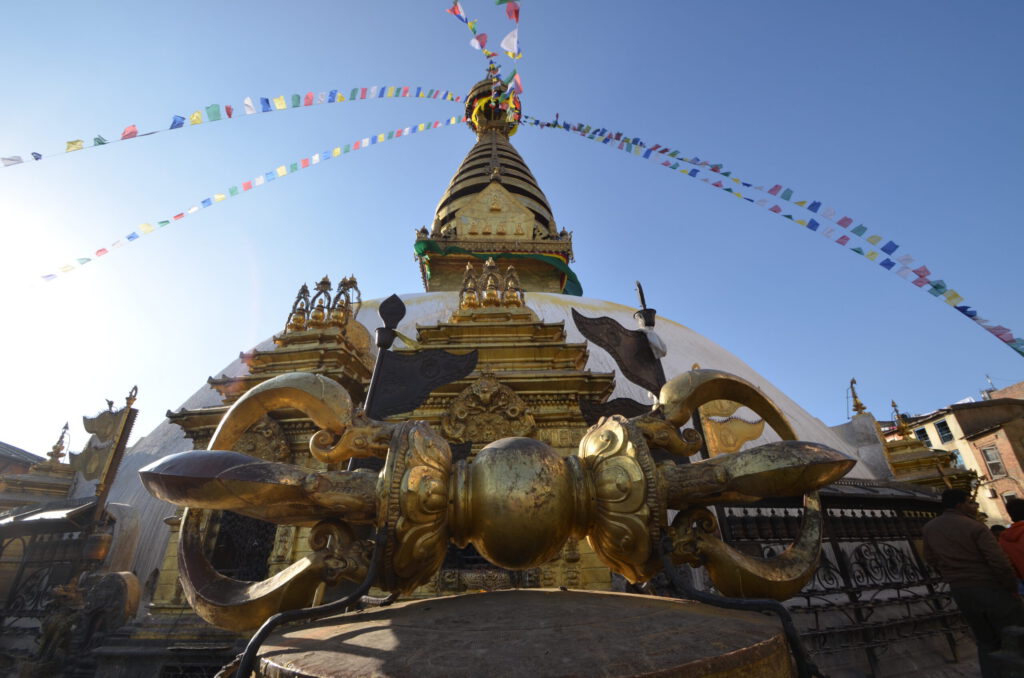
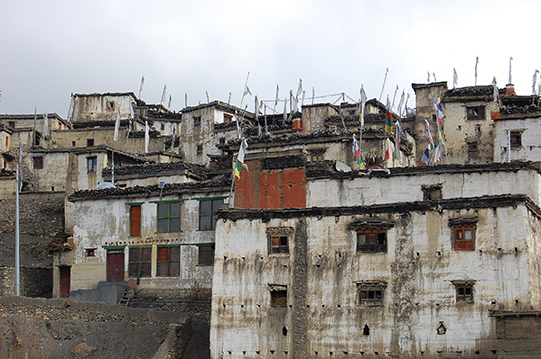
As you walk through villages, you’ll notice how people live with very little, yet seem completely content. Stone houses, prayer flags fluttering in the wind, and locals going about their daily chores create a peaceful atmosphere. Children playing in open fields, elders sitting outside enjoying the sun, and farmers working the land- it all feels real, grounded, and untouched by the modern rush.
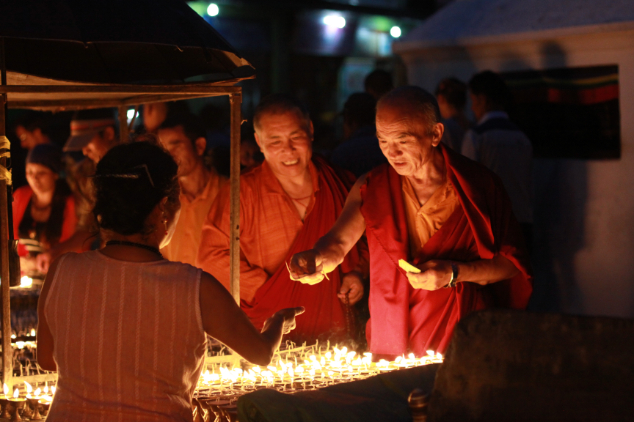
Tea houses become your home during the trek. These small, family-run lodges may be simple, but they carry a warmth that’s hard to describe. Rooms are basic, often with wooden beds and thick blankets, but after a long day of walking, they feel more than enough. Evenings are usually spent in a common dining area, gathered around a warm stove, sharing stories with fellow trekkers, and enjoying the quiet comfort of the mountains.
Food plays a big role in the experience. Meals are simple, fresh, and nourishing. A plate of rice, lentils, vegetables, and pickles becomes a staple, giving you the energy needed for long trekking days. There’s something special about eating a hot meal in the cold mountain air, knowing it’s been prepared with care using local ingredients. Even a cup of tea or hot soup feels comforting after hours on the trail.
One of the most beautiful aspects of trekking is the people you meet. Travelers from different parts of the world come together, forming quick friendships over shared experiences. Conversations flow easily, laughter comes naturally, and there’s a sense of connection that doesn’t need much explanation.
Of course, trekking also comes with its challenges. Cold mornings, basic facilities, and limited connectivity can feel unfamiliar at first. But over time, these small discomforts become part of the experience. You begin to appreciate the little things: the warmth of sunlight, the taste of a simple meal, the sound of the wind through the mountains.
By the end of the trek, you realize it was never just about the destination. It’s about the quiet moments, the people, the simplicity, and the way the mountains make you slow down and truly feel present.
At the end, you sense a deeper appreciation for a simpler and more meaningful way of living.
Buddhist sites, destinations, festivals, and history
Nepal may be a majority-Hindu country, but did you know that Lord Buddha himself was born here? Hindu and Buddhist communities have lived side by side peacefully for many years in Nepal, and the country is filled with beautiful stupas and some of the most important sites in Buddhism. Whilst neighbouring Bhutan and Tibet offer colourful Buddhist travel experiences, Nepal takes you back to where it all began.
The birthplace of Buddha
Lumbini is a village in the Terai plains in what is now southern Nepal, and was the birthplace of Gautama Buddha (or Siddhartha Gautama) back in 624 BC. As a young man, he left his wealthy family behind and spent his time wandering, begging, meditating, and eventually attaining spiritual enlightenment, or nirvana. He went on to teach and lay the foundation for what is now the Buddhist religion, followed by some 400 million people worldwide to this day.
He became known as the Lord Buddha, and his birthplace in Lumbini became one of the most important Buddhist pilgrimage sites in the world, with well over a million visitors every year. The village itself is a complex of shrines, monasteries, and artwork dedicated to Buddha, and visitors can see the Lumbini garden where Maya Devi gave birth to the boy who would become Lord Buddha.
The Maya Devi temple in Lumbini, named after Lord Buddha’s mother
Interestingly, Hindus also revere Lord Buddha, regarding him as the 9th reincarnation of Lord Vishnu – a god in their own religion.
It’s a fascinating, peaceful and deeply spiritual place, whether you follow Buddhism or not. Pilgrims walk next to the origins of their religion, whilst Buddhist monks debate and meditate in the shade of the trees and fluttering prayer flags.
Prayer flags in Lumbini – birthplace of Gautama Buddha
Boudhanath Stupa
Boudhanath Stupa at night
In the western part of Kathmandu, Boudhanath Stupa is one of Nepal’s most famous Buddhist sites. Situated on an ancient trade route from Tibet, several Tibetan gompas (monasteries) were built around the giant white dome and golden spire.
Swayambhunath
Monkeys at Swayambhunath in Kathmandu
Another important Kathmandu stupa, Swayambhunath, is known to many tourists as the Monkey Temple thanks to the hundreds of monkeys that hang around here. More than just a stupa, it’s surrounded by a complex of shrines and temples and sits on top of a hill in the east of the city, providing an excellent view of Kathmandu.
Seto Gumba
The view from Seto Gumba
Also known as White Gumba and Druk Amitabh Monastery, this peaceful Tibetan Buddhist monastery isn’t far from Swayambhunath in eastern Kathmandu. It was damaged quite badly in the 2015 earthquake, but has been restored and is open to the public once again.
Tengboche Monastery
Tengboche monastery skyline
Situated in the beautiful Sagarmatha National Park, some 3,870m above sea level, this is perhaps the Khumbu (Everest) region’s most famous Buddhist site. It’s a place of huge importance to the Sherpa community and a popular stop on the Everest Base Camp Trek.
World Peace Pagoda
The Peace Pagoda on Lake Phewa
Also known as Shanti Stupa, this more recent Buddhist site was built to promote world peace in the aftermath of World War II. It’s also easily accessible from Pokhara and provides a wonderful view of the city and the beautiful Phewa Lake.
Mahaboudha Temple
One of the most striking and beautifully crafted Buddhist temples in Nepal is Mahaboudha, located to the south of Patan Durbar Square. Built in 1585, it is made up of 9,000 bricks, each holding an image of Buddha. It’s affectionately known as “the temple of a thousand Buddhas”.
Halesi-Maratika Caves
A natural cave in the Khotang district of eastern Nepal, this site holds importance for Buddhists and Hindus alike. For Buddhists, it is the legendary place where Guru Padmasambhava and Dakini Mandarava achieved immortality, whilst Hindus regard it as a sacred place associated with Lord Shiva.
Shey Gompa
At 4,200m above sea level in the mountainous Dolpa district, Shey Gompa is one of Nepal’s most remote and peaceful Buddhist sites, requiring days of trekking through dramatic landscapes and traversing the 5,151m Kanga La pass to reach it. It’s been around since the 11th century and is an important place of spirituality.
Buddhist festivals in Nepal
Nepal is a land of colourful festivals, both Hindu and Buddhist. Some of the most important Buddhist festivals celebrated include;
Lhosar
This marks the start of the new year and usually falls in February or March, primarily over 3 days but with celebrations stretching over 15 days in total. Expect to see plenty of dancing, feasting, and elaborate outfits wherever you are in Nepal.
Buddha Jayanti
A day to celebrate the birth of Lord Buddha, usually falling in April or May. Buddhist sites are adorned with prayer flags, and thousands of pilgrims travel to Lumbini to pay their respects.
Mani Rimdhu
This festival usually falls in November or December and is celebrated by Sherpas in the Khumbu region around Mount Everest. Monks perform dances to mark the victory of Buddhism over the indigenous Bon religion that used to dominate here.
Tiji festval
Usually falling over 3 days in May, Tiji is celebrated by the Lhoba people in the Upper Mustang region of Nepal. It’s a colourful, lively festival which celebrates the story of a son defeating his demon father and saving the people of Mustang from destruction.
Yartung
This festival marks the end of summer and lasts for 3 days in July in the town of Ranipauwa, Mustang. It comprises a royal day, a monk’s day, and a day for ordinary people and tourists. The highlight for most is the thrilling horse racing competition that takes place around the town.
Buddhist travel and retreats in Nepal
Whether you’re a Buddhist yourself or just want to experience the culture, sites and communities associated with it, Nepal offers countless opportunities to get in touch with the origins and teachings of Buddhism.
It’s easy enough to visit major Buddhist sites such as Kathmandu’s Boudhanath Stupa as part of a larger itinerary, and even the birthplace of Buddha in Lumbini can easily be reached by air or road.
There are numerous spiritual and Buddhist retreats scattered through Nepal in stunning countryside locations, including silent retreats, yoga retreats, and Buddhist meditation retreats. One of our favourites is the Kopan Monastery, where you can live alongside the monks to study Buddhism, learn meditation or simply escape from the modern world for a while.
Monks at Kopan Monastery
If you’re looking for a tour that’ll give you a good insight into Buddhist culture and history in Nepal, we’d recommend this unique Pikey Peak Trek in the Everest region with Royal Mountain Travel. It passes through a region full of remote monasteries and Buddhist history.
Himalayan landscapes on the Pikey Peak Trek
We work with expert local travel planners who’ll help tailor a trip just for you and can take care of all your hotel, transport and tour bookings too. Just get in touch if you’d like to start creating your perfect Nepal adventure.
Due to Nepal’s terrain, road conditions, and the sheer length of the country, Nepal flight safety is a topic every traveller should understand before booking, especially since taking a short flight between places can save hours or even days of travel. The tickets are relatively inexpensive, too, so it’s no wonder that Nepal’s domestic airlines carried a record 3.54 million passengers in 2021.
Accidents have increased, too. The tragic Tara Air crash in May 2022, in which 22 people lost their lives, has brought Nepal’s flight safety into focus once again, 3 years after the last fatal accident in the country.
We’ll take a look at the Nepal flight safety record, explain the reasons behind the accidents, and give advice on alternative travel and how to reduce risk.
View from the plane above the Himalayas
How safe is it to fly, generally?
Harvard University puts the individual risk of dying in an air crash even lower, at 1 in 11 million.
Statistically, flying is safer than all other major forms of transport.
What is Nepal flight safety record like?
Compared to the global average, Nepal has a relatively poor record for reasons we’ll explain below. Over the past three decades, there have been 27 fatal air crashes – just under one per year. Most involved small aircraft, with the notable exception of the 2018 crash at Tribhuvan International Airport in Kathmandu, which was a larger aircraft from Bangladesh, and the 1992 Pakistan International Airlines crash at the same location.
10 of these Nepal air accidents have happened in the past 10 years, although this reflects an increase in the number of flights rather than a drop in overall safety.
Why do plane crashes happen in Nepal?
There are several reasons affecting Nepal’s flight safety.
Nepal is one of the world’s highest and most mountainous countries, which presents a range of aviation challenges.
Smaller mountain airports often have short approaches and runways, such as Lukla, which is regarded as one of the most challenging landings by pilots.
The weather at this altitude can change quickly and with little warning, especially when flying mountain routes.
With poor weather comes poor visibility and pilot disorientation, which have been blamed for several accidents.
Mountain routes have to use smaller, more manoeuvrable propeller planes, which are more vulnerable to weather conditions.
Although steps are gradually being taken to modernise fleets, there has been a lack of investment in new aircraft from many of the airlines that operate in the region.
Nepal actually performs above the global average for flight safety in a number of categories, and in April 2022 was given a score of 70.1% in a safety audit by the International Civil Aviation Organisation (ICAO), with the worldwide average sitting at 67.2%.
However, the practical challenges of flying over Nepal’s terrain place the country below average in terms of overall safety, sitting 102nd out of 121 countries in a recent ranking by backgroundchecks.org.
What is being done about it?
Nepal flight safety is under near-constant review and, in light of the recent Tara Air crash, rules have been tightened around operating in adverse weather conditions, obligating airlines and airports to suspend operations in certain circumstances, and giving final approval to air traffic services on all flight plans. The Civil Aviation Authority of Nepal (CAAN) is also considering making two pilots mandatory for single-engine planes.
Externally, the International Civil Aviation Organisation, a United Nations agency, has prioritised helping Nepal through its Aviation Safety Implementation Assistance Partnership.
Of course, nothing can change Nepal’s weather conditions and terrain, but some steps are being taken to improve aircraft safety and organisation.
How can I reduce the risk?
Whilst the overall risk of flying anywhere in Nepal remains statistically low, certain routes are naturally more prone to accidents than others. Most accidents occur with smaller planes in mountainous regions, such as flights to Jomsom (the destination of the recent Tara Air crash) and Lukla.
Popular routes such as Kathmandu to Pokhara tend to operate with larger planes and over less hostile terrain, so the risk is significantly lower.
It’s also totally possible to plan an itinerary with little or no domestic flights involved, and many people do – there are plenty of highlights and outstanding trekking regions which can be reached quite easily by road from Kathmandu or Pokhara.
Make sure you thoroughly research the travel options available if you plan to go somewhere. You can also get in touch with our team for help planning and organising transport, accommodation, tours, or treks.
What are the alternatives to flying in Nepal?
Nepal has no national rail network, so ground travel is restricted to the country’s long, winding, and occasionally very bumpy roads. Buses are an inexpensive option and cover most possible routes, or you can hire a private transfer for a little extra comfort, and usually a quicker journey.
Drivers in Nepal operate with a whole different set of rules and customs from what you might be used to elsewhere in the world, and for that reason, we wouldn’t generally recommend car hire for foreign travellers.
You can read more about the available options in our Getting around Nepal guide.
In summary, flying in Nepal does carry more risk than it would in Europe, for example, particularly on mountain routes where weather and terrain make flying more challenging.
But it remains statistically very unlikely that you’d be involved in an accident, and given the time savings and road conditions often found in Nepal, flying remains a very popular option for travellers and locals alike.
For more on international and domestic flights in Nepal, visit our flight info page.
Book local
Up-to-date advice, an incredible range of tours and treks, and simple local prices Speak to an Expert!
There are just 14 mountains above 8,000m on our planet, and 8 of them are on or within Nepal’s borders. Each of these giants has its own story, with legends dating back centuries. It’s no wonder that Nepal is the world’s mountaineering capital, drawing in explorers from across the globe.
We look at the top 10 highest mountains in Nepal, together with their statistics, dangers, and stories.
Highest Nepal Mountains
10. Annapurna 2
Nepal ranking: 10th
World ranking: 16th
Elevation: 7,937 m (26,040 ft)
Prominence (height compared to immediate landscape): 2,437 m (7,995 ft)
The northeast wall of Annapurna II (cr. Markus Beudert)
The 2nd-highest peak of the Annapurna Range is notable for the skull-like image on its northeast face, which seems fitting considering the danger it presents for climbers. Avalanches, rock slides, ice overhangs, and violent storms are commonplace, meaning expeditions here are comparatively rare.
You can see spectacular views of Annapurna II, along with Annapurna I, Machhapuchhare, and several other famous peaks as part of the Annapurna Circuit Trek.
9. Gyachung Kang
Nepal ranking: 9th
World ranking: 15th
Elevation: 7,952 m (26,089 ft)
Prominence (height compared to immediate landscape): 700 m (2,300 ft)
Gyachung Kang (cr. Miguel Amaral)
Coming in just shy of the 8,000m mark and without the dramatic prominence that makes peaks like Everest so awe-inspiring, Gyachung Kang is a relative unknown internationally. It’s still a fearsome challenge for mountaineers, though, forming part of the Mahalangur Himal region that is home to both Everest and Cho Oyu, and straddling the border between Nepal and Tibet.
8. Annapurna 1
Nepal ranking: 8th
World ranking: 10th
Elevation: 8,091 m (26,545 ft)
Prominence (height compared to immediate landscape): 2,984 m (9,790 ft)
Annapurna Peak (cr. Raimond Klavins)
With a climbing fatality rate of 32% up until 2012, Annapurna has become one of the most feared peaks in the world. In recent years, this has improved to around 20%, but it’s still not for the faint-hearted.
Maurice Herzog made Annapurna the first eight-thousander to be successfully scaled in 1950, and since then, a further 364 people have made it to the summit. 72 people have died trying, making Annapurna one of the world’s most deadly mountains statistically. The routes up are highly prone to avalanches and unpredictable storms and contain some of the steepest and most challenging climbing sections you’ll find anywhere on earth. Sitting in the Annapurna Range, to which it gives its name, most visitors choose to admire it from afar and enjoy the beautiful landscapes surrounding it.
You can get up close and personal with Annapurna by taking on the Annapurna Base Camp trek with Royal Mountain Travel.
7. Manaslu
Nepal ranking: 7th
World ranking: 8th
Elevation: 8,163 m (26,781 ft)
Prominence (height compared to immediate landscape): 3,092 m (10,144 ft)
Mount Manaslu (c/o Royal Mountain Travel)
Arguably one of the most beautiful mountains in Nepal, Manaslu’s jagged peak soars above the skyline in the Gorkha District of the northern Himalayas. It’s surrounded by one of Nepal’s most popular trekking regions, made up of sub-tropical foothills and arid high pastures around the Tibetan border – the Manaslu Circuit Trek in particular draws a steady stream of trekkers throughout the high season. For mountaineers, an enticing but dangerous challenge awaits, with a fatality rate of almost 18%.
6. Dhaulagiri
Nepal ranking: 6th
World ranking: 7th
Elevation: 8,167 m (26,795 ft)
Prominence (height compared to immediate landscape): 3,357 m (11,014 ft)
Distant view of Dhaulagiri (cr. K. Rahul)
Sitting 34km east of Annapurna I, Dhaulagiri is the highest mountain you’ll find contained entirely within Nepal, with most others sitting on the border with Tibet. Its name originates from Sanskrit, translating as “beautiful white mountain”, and until the 1800’s it was thought to be the world’s highest mountain. There have been some notable disasters on the mountain since it was first scaled in 1960, with 70 climbers losing their lives and a fatality rate of around 16.2%.
5. Cho Oyu
Nepal ranking: 5th
World ranking: 6th
Elevation: 8,188 m (26,864 ft)
Prominence (height compared to immediate landscape): 2,340 m (7,680 ft)
Cho Oyu (cr. Sami Abusamra)
Lying just 20km west of Mount Everest, Cho Oyu (meaning Turquoise Goddess in Tibetan) forms part of the Mahalangur Himalaya and lies close to Nangpa La pass – an ancient glaciated trading route used by Tibetans and Sherpas. This pass makes the mountain one of the most accessible eight-thousanders for climbers, and is often used as a starting point for people looking to get into high-altitude mountaineering. Its fatality rate of 1.4% is the lowest among the world’s 14 8,000m mountains.
4. Makalu
Nepal ranking: 4th
World ranking: 5th
Elevation: 8,463 m (27,766 ft)
Prominence (height compared to immediate landscape): 2,386 m (7,828 ft)
Mount Makalu (cr. Bisesh Gurung)
19km southeast of Everest, Makalu is a striking, isolated peak with a very classical four-sided pyramid shape. In years gone by (and occasionally in modern times), it was believed to be the stomping ground of the mythical Yeti. For climbers, it is one of the most technically difficult mountains to conquer out of all the eight-thousanders, with steep faces, razor-thin ridges, and a final ascent that requires rock and ice climbing. The fatality rate for the mountain is around 9%.
3. Lhotse
Nepal ranking: 3rd
World ranking: 4th
Elevation: 8,516 m (27,940 ft)
Prominence (height compared to immediate landscape): 610 m (2,000 ft)
Lhotse (cr. Alan Hopin)
Forming part of the Everest massif, Lhotse translates from Tibetan as ‘South Peak’ and is joined by a ridge (South Col) to the world’s highest mountain. Climbers often use the same approach for both mountains, and they are regarded as similarly difficult peaks to summit, at least on the common routes. Lhotse’s steep South Face is an exception, thought to be one of the hardest climbs in the world and tackled by only a handful of people. The mountain has 4 distinct peaks and a relatively low prominence due to the height of South Col.
You can see the might of Lhotse, Makalu, Cho Oyu, and Everest from the comfort of a helicopter tour throughout most of the year.
2. Kanchenjunga
Nepal ranking: 2nd
World ranking: 3rd
Elevation: 8,586 m (28,169 ft)
Prominence (height compared to immediate landscape): 3,922 m (12,867 ft)
Kanchenjunga (cr. Labun Hang Limboo)
In the far east of Nepal, Kanchenjunga lies on the border with India, and its transboundary landscape stretches into Bhutan and China. It was thought to be the world’s highest mountain until 1852 and consists of 5 peaks, with 4 over 8,000m. Its name translates as ‘The five treasures of high snow’ and local legend suggests that the mountain holds precious treasures, including gold and invincible armour.
Climbing-wise, it’s incredibly tough, with a fatality rate of around 20%, making it one of the world’s deadliest mountains.
For something a little less extreme, the Kanchenjunga Base Camps Trek takes you as close as you can get to the mountain without climbing.
1. Mount Everest
Nepal ranking: 1st
World ranking: 1st
Elevation : 8,848.86 m (29,031.7 ft)
Prominence (height compared to immediate landscape): 8,848.86 m (29,031.7 ft)*
*Prominence is calculated using the nearest higher peak for measurement. For Everest, there is nothing higher, of course.
View of Mount Everest (cr. Tashi Dai)
In 1852, Everest (or Sagarmatha in Tibetan) was officially recognised as the world’s highest mountain and has fascinated adventurers ever since. Tenzing Norgay and Edmund Hillary made the first ascent in 1953, and since then, there have been over 9,000 successful summit climbs (with around 300 fatalities). In recent years, the problem of overtourism on the mountain has entered the public eye, highlighted by a famous photo posted by Nirmal Purja in 2019, which shows a huge queue waiting to reach the peak.
The appeal of the mountain is obvious, both in terms of the achievement it offers and its sheer beauty and size.
You can experience the famous journey to the mountain as part of the Everest Base Camp Trek, operated by our partners at Royal Mountain Travel.
Is Everest really the highest mountain in the world?
There is some debate over the world’s highest mountain title, with Mount Chimborazo in Ecuador also staking a claim. The reason is the Equatorial Bulge – Earth is not a perfect sphere, and bulges around the equator, where Chimborazo lies. This makes Chimborazo the furthest you can get from the centre of the Earth and the closest land point to the moon (depending on the time of day, of course).
However, Everest is the highest point above sea level, some 2,500m higher than Chimborazo. This puts it comfortably on top of the list, geographically speaking. Everest also looks a lot bigger, if that matters…
Mount Chimborazo in Ecuador (cr. Joris Beugels)
There they are, the top 10 peaks in the land of mountains. If you’re keen to see some of these giants in real life, you can get in touch with the Travel Nepal team for advice, planning help, and direct bookings with our local partners.
Exploring the remote and enigmatic Manaslu Tsum Valley
The Manaslu Tsum Valley Trek is one of Nepal’s most unique and authentic experiences, visiting a beautiful Himalayan region barely discovered by the outside world. It’s available as a 22-day fixed-departure tour just a few times a year with Royal Mountain Travel.
Isolated, spectacular, and virtually untouched, the Manaslu Tsum Valley in Nepal’s northern Himalayas is one of the country’s most fascinating destinations. Until as recently as 2008, travel to this hidden region in the mountains remained restricted, and few outsiders had ever seen its wild landscapes or experienced its ancient culture and way of life.
Situated in the Gorkha district (often referred to generally as Manaslu), a mountainous region north of Kathmandu, the valley lies on the Tibetan border and is home to around 4,000 people of Tibetan descent, known as the Tsumbas. Much like Tibet itself, years of relative isolation from the modern world have preserved Tsumba culture almost perfectly, making it a strikingly different experience for any foreigners (or even Nepalis) lucky enough to visit.
Here, the familiar Nepali greeting of “Namaste” is rarely heard. “Tashi delek” is the local phrase used to welcome people, and in fact, the entire dialect here is unique and virtually unchanged from centuries ago. The same can be said for almost everything here, with traditions, religion, art, and cuisine all carrying a distinctive Tsumba flavour. Spirituality is hugely important in this part of Nepal, where traditional Tibetan Buddhism runs deep in the community and prayer flags with messages of peace flutter in the wind. Visitors invariably speak of the warm, genuine hospitality of the Manaslu people as one of the highlights of their time here.
Green fields and terraces in Manaslu Tsum Valley
The valley is circled by several famous peaks, including Ganesh Himal and the unmistakable Mount Manaslu – the 8th highest in the world at 8,163 metres and one of mountaineering’s most formidable challenges. Down on the valley floor, you’ll find a dramatic and beautiful mix of green hills and terraces, barren tundra, gushing rivers, waterfalls, and deep forested gorges. It’s the kind of untouched landscape that most of us have only seen in films (usually the ones with dragons in them…).
A monastery with a mountain backdrop, Manaslu Region
Most travellers looking for an epic trek in Nepal choose one of the headline acts, such as Everest Base Camp or the Annapurna Circuit, but alternative routes are becoming more popular, and the Gorkha District offers everything to satisfy adventurous trekkers who want something different and want to avoid the crowds of the main trails.
The classic Manaslu Circuit and now the Manaslu Tsum Valley Trek pass through otherworldly landscapes and provide stunning views of the Himalayan peaks, along with challenging mountain passes and welcoming local communities to encounter along the way. The region also lies at a slightly lower altitude compared to other trekking regions and can be reached from Kathmandu by road, making it an appealing option for practical reasons, too.
Tsum Valley forest trailMount Manaslu
The Manaslu Tsum Valley Trek is a 19-day route starting in the close-knit community of Barpak, gradually rebuilt after the 2015 earthquake and is home to many ex-Gorkha soldiers. It’s a friendly place to spend your first night in the region. The first goal is to reach Mu Gompa – a remote Buddhist monastery surrounded by jaw-dropping mountain scenery at the highest point of the valley. It takes 7 days of trekking to reach the Gompa, winding through rhododendron and pine forests, crossing suspension bridges over deep ravines, and serving up views of Ganesh Himal and Buddha Himal along the way. You’ll also visit tiny traditional villages and sacred caves, including Piren Phu (pigeon cave), where Buddhist murals and scripts are carved into the rock face.
A ‘gompa’ on the Manaslu Tsum Valley Trek
From Mu Gompa, you’ll retrace your steps south before heading west on the route that encircles the giant peaks of Manaslu, Nagadichuli, and Himalchuli. The trail crosses the Budhi Gandaki River multiple times and passes by the Larkya Glacier as it ascends to the highest point of the trek – the often snow-covered Larkya La Pass at 5165m. From here, you begin to descend as you head south, and the Annapurna Range gradually comes into view. After a few days, you’ll reach the lively trekking town of Chamje – the perfect spot to spend a final night in the mountains, recounting stories of your adventure.
Larkya La Pass, the highest point of the trekManaslu Tsum Valley Trek – route map
Accommodation on the Manaslu Tsum Valley Trek
Camping is possible here, of course, but the route of this trek allows you to spend every night in the relative warmth and comfort of a tea house or homestay. These vary from functional mountain lodges to community-run village accommodation, and generally provide a simple bed in a shared room, a warm home-cooked meal, and any other basic supplies you might need for your journey.
For us, where you sleep is one of the true highlights of the trek, giving you unforgettably remote nights in the mountains or the chance to spend some time with local people who have a completely different outlook and lifestyle to your own. It’s in these communities, with their proud traditions and peaceful way of life, where you’ll find connections and experiences that will stay with you long after you’ve returned home.
Difficulty and altitude of the Manaslu Tsum Valley Trek
Manaslu Tsum Valley Trek is rated as moderately difficult, meaning it’s not for the faint-hearted but should be achievable if you have a decent level of fitness. Aside from a short section over the fringes of the glacier, you’ll largely be following a maintained path, so normal hiking boots will suffice (check our packing list for tips on what else to bring).
Although most of the region sits at a relatively low altitude by Himalayan standards, you will be ascending above 5000m at Larkya La Pass. At these heights, altitude sickness is a possibility, and you should take precautions and be aware of the symptoms (check our medical advice and altitude sickness page for advice). All guides here are experienced in dealing with altitude sickness, so be sure to let them know as soon as something doesn’t feel right.
A lone yak near Mount Manaslu
Manaslu Tsum Valley Trek permits and how to get there
To reach the starting point at Barpak, you’ll need to travel north for a few hours from Kathmandu. Cheap public bus options are available, but can be slow, and some require you to change vehicles. If you book a tour such as the fixed-departure one in this article, private transport is included for your group. The route can be winding and bumpy, but the views more than compensate for any lack of comfort.
Being in such an unexplored and previously restricted area of Nepal, the Manaslu Tsum Valley Trek needs to be arranged professionally. Permits are mandatory for both the Manaslu region and the Tsum Valley.
Manaslu Conservation Area fees NRs3000 (approx. $25)
Manaslu Circuit Trek September – November USD 100 per person/week USD 15 per person/day (beyond 1 week) December – August USD 75 per person/week USD 10 per person/day (beyond 1 week)
Tsum Valley Trek September – November USD 40 per person/week USD 7 per person/day (beyond 1 week) December – August USD 30 per person/week USD 7 per person/day (beyond 1 week)
NOTE: Tour Operator Service Charge will be applicable to the above rates. For more information, check our Nepal permits page.
Booking the Manaslu Tsum Valley Trek
With a minimum of two people, you can book the Manaslu Tsum Valley Trek as a private tour. No solo or independent trekking is allowed, and you must be accompanied by a Special Trekking Guide. The infrastructure and phone signal here are very limited, so expert guidance is essential to keep trekkers safe.
Our partners at Royal Mountain Travel can arrange everything as a fully private tour, and also run a fixed-departure group tour four times per year. This allows the cost per person to be reduced and offers the opportunity to share your experience with like-minded adventurers.
2022 Departure dates
17th April 2022
18th September 2022
16th October 2022
13th November 2022
US$1690 per person, 22-day tour including transport, excursions, and 3 nights in Kathmandu.
For full details and a day-by-day breakdown, head to the Royal Mountain Travel tour page.
You can contact us for questions or enquire directly with the Royal Mountain team.
Looking for the lowdown on the classic Manaslu Circuit? This article tells you everything.
Micro-adventures, 1-day hikes, and unique day trips in Nepal
Nepal may be known as the land of epic treks and adventures, but you’re always likely to find yourself with the odd spare day, however precisely you like to plan your holidays.
Sure, you can spend the day strolling around Kathmandu or Pokhara with a map, stopping to refuel with a momo now and again, or you can choose something that shows you a different side of Nepal and its culture.
Here’s a rundown of 10 of our favourite unique day trips in Nepal, from Kathmandu to Pokhara and beyond.
All tours listed are operated by our partners at Royal Mountain Travel – one of Nepal’s leading locally-based tour operators. Read more about who they are and the good they do for Nepal’s communities and environment here.
Experiences starting from Kathmandu
1. Cooking in Kathmandu
Nepal’s culture is largely built around food, and sitting down for a meal with a local family is a great way to get to know the people. This is an experience where you’ll also get involved in the preparation and cooking, so you can understand the flavours and techniques involved, and maybe take a couple of traditional recipes back home with you…
Your host family will pick you up from wherever you’re staying in Kathmandu and take you to the local market, where you’ll buy groceries and spices for lunch. You’ll learn about the ingredients and the different spices that make the food taste so unique.
Dal Bhat is the national dish of Nepal and the one you’re likely to be making. It’s a little different wherever you go, but the fundamentals are the same – steamed rice, a lentil dal, and whatever pickles, breads, and side dishes the family wants to add. You’ll be helping prepare and cook the various ingredients before taking your seat at the table for a delicious family dinner.
* Available to book most days as a group tour via Viator (est. $45pp), or contact Royal Mountain Travel for a private experience (est. $55pp for 2 people).
2. Temples and Stupas of Kathmandu Valley
Nepal’s history, culture, and architecture have been shaped over centuries by religion and by ancient kings devoted to Gods and Goddesses. On a private day tour, you can see a lot of sites in not a lot of time, plus you’ll have a local guide to explain the stories behind the places and a comfortable ride to and from your hotel.
You’ll visit some of the holiest sites in the Kathmandu Valley, giving you the chance to take in magnificent temples and stupas and to gain an insight into Nepal’s past. The main highlights are Pashupatinath, Boudhanath, and Patan Durbar Square, but you’ll also visit some super-local and lesser-known sites along the way.
* Available to book most days as a group tour via Viator (est. $35pp), or contact Royal Mountain Travel for a private experience (est. $85pp for 2 people).
3. Kathmandu Valley Community Day Hike
Take a day away from the city to explore the diverse landscapes and traditional communities of the Kathmandu Valley. Over this 10km route, you’ll traverse the hills which have always shielded Kathmandu and the ancient capitals of Nepal, looking down on civilisation on one side whilst enjoying magnificent views of the Himalayas on the other.
Along the way, you’ll pass through indigenous communities like the Tamang, who have lived around the valley for centuries and maintain many of their traditions and way of life. The hike ends in Panauti – a beautiful old Newari town – where you’ll enjoy a freshly prepared lunch at a Community Homestay and can get to know these innovative families a little better.
* Available to book most days as a group tour via Viator (est. $65pp), or contact Royal Mountain Travel for a private experience (est. $79pp for 2 people).
4. Panoramic Panauti – Cycling Tour
Started by 3 young guides from the community, the Panauti Bike Station offers cycling tours to show you the ancient towns and beautiful scenery in this peaceful part of the Kathmandu Valley.
After driving out of Kathmandu, you’ll ride from the historic town of Panauti and into the lush countryside, where you’ll see sweeping green valleys and rivers, as well as views of the distant Himalayan mountains. You’ll visit the picturesque old villages of Sunthan and Khopasi, passing through orange and silk farms along the way, as well as visiting the nearby hydropower station and enjoying some freshly-made Masala tea.
Depending on how fast you go, the tour should take 4 hours and is a relatively easy ride. You’ll be accompanied by a local guide and will be given a well-maintained mountain bike with a helmet.
The Panauti Bike Station provides opportunities and training for local youngsters and promotes sustainable tourism in the area. It’s a great way to see local life in this part of the valley, whilst helping an enterprise that really aims to do some good for its community.
30km east of Kathmandu, Nagarkot is a famous old hill town, best known for its views of 5 of the 10 highest mountains on the planet: Everest (8848m), Lhotse (8516m), Cho Oyu (8201m), Makalu (8463m), and Manaslu (8163m). You’d be incredibly lucky to see all five as the views are dependent on the weather, but the landscape is pretty jaw-dropping all the same.
You’ll travel partway by road before trekking the final 14km through the hills and past a few Tamang and Newari villages, where you can see rural life unfolding. You’ll follow the route through a forest and terraced fields, stopping for lunch at a local community homestay.
You’ll also have distant views of Bhaktapur and visit the Jalpa Devi Temple and Peace Buddha Park en route.
Once you’ve reached Nagarkot, you’ll have time to explore and could even choose to stay a night or two, if you have time.
* Available to book most days through Royal Mountain Travel (est. $80pp).
6. Nagi Gompa Shivapuri Hike
This lovely little day-hike takes you north of the city and into the beautiful Shivapuri National Park, before finishing at the Tibetan Buddhist nunnery at Nagi Gompa.
After a short drive, you start walking from the village of Budanilkantha, home to a famous temple of Lord Vishnu. The route is moderate with a couple of pretty steep sections, and you’ll be walking through oak, rhododendron, and bamboo forest for much of the route.
There’ll be plenty of wildlife to spot along the way, and once you’re at the top, you’ll get a glimpse of life at the convent, as well as spectacular views of Kathmandu Valley and distant peaks such as Ganesh Himal, Langtang-Lirung, and Dorji Lhakpa.
Get away from the bustle of Kathmandu for the day and take a peek back in time at two of Kathmandu Valley’s most beautiful old towns. The 6-hour private tour starts with a drive to the UNESCO World Heritage town of Bhaktapur. Once home to wealthy kings, this opulent Newari town has largely preserved its intricate temples and shrines, which surround vast, open squares in the old centre. During the Malla Dynasty, the Kings of Bhaktapur became obsessed with wrestling, and chunky carved wrestlers can be seen throughout the town.
You’ll continue to the tiny town of Panauti, surrounded by lush green hills and holy rivers. You’ll see impressive Hindu and Buddhist temples before joining a local family for a delicious Newari lunch. The homestay you visit is part of an initiative started by the local women of Panauti, bringing direct benefits to their community and offering you an unforgettable and authentic experience.
* Available to book most days as a group tour via Viator (est. $35pp), or contact Royal Mountain Travel for a private experience (est. $85pp for 2 people).
Experiences starting from Pokhara and Bandipur
8. Australian Camp Hike
Easily accessible from Pokhara, the Australian Camp sits on the edge of the Annapurna Range, surrounded by rolling green hills and valleys. From here, you have an unobstructed view of the Annapurna, Machhapuchhre, and Manaslu massifs, giving you a Himalayan experience without the long days of trekking.
It’s also a chance to get a glimpse of local life in the Annapurna foothills, as you pass through several small villages where you can stop for lunch and soak up the peaceful atmosphere.
Open year-round, it involves around 4-5 hours of walking and requires a moderate level of fitness.
Travel from Pokhara on a day-hike into the foothills of Macchapucchare (Fishtail Mountain). Your destination is the charming village of Hemjakot, where you’ll enjoy a traditional Nepali welcome and a delicious home-cooked lunch, as well as the chance to experience rural life in this part of the Himalayas.
It’s a relatively easy 2-hour hike, and you’ll ascend along stairways cut into the jungle and into the hills below one of Nepal’s most famous peaks. The village is surrounded by lush green valleys with a backdrop of distant mountains, giving it a peaceful, serene atmosphere. I found that writing my essay tasks became a more interesting process for me after being inspired by these landscapes, as after such a journey, the words just seemed to flow onto my paper.
The people of Hemjakot are of Tibetan descent and have farmed this land for hundreds of years, but they have truly embraced being part of the Community Homestay Network. It gives them the chance to meet and learn about people from all over the world, as well as supporting their income. It’s not uncommon for you to be met by various members of the community carrying Tikas and garlands, keen to show you their homes and their way of life. You can even help with some of their daily tasks if you’re feeling energetic!
Before you return to Pokhara, you’ll be treated to a hearty lunch, freshly cooked by your community host using ingredients from their farmland.
The final micro-adventure on our list starts from Bandipur – a small, historic Newari town on the edge of Bandipur Tiger Reserve and National Park. It’s a 5-hour round trip that gives you stunning scenery and a glimpse into rural Nepali life. You’ll hike through green hills and cliffs, past terraced fields and tiny villages where life goes on much as it has for centuries.
Your destination is the Magar village of Ramkot – the Magar people are descended from Mongol interlopers and are known to be hard-working, honest, and welcoming. You’ll have some time in the village and enjoy a picnic lunch with a mountain view before heading back to Bandipur.
Innovative tours and day trips are popping up all over Nepal, showing different sides of our country and giving you the chance to make those spare days of your holiday into something memorable.
If you need help or advice on planning your perfect Nepalese adventure, feel free to get in touch with our team or head straight over to our friends from Royal Mountain Travel.
9 Notable and famous Nepali people from modern times
Every so often, a person comes along and commits their life to achieving something truly remarkable. From feats of extreme endurance to ground-breaking innovations and lives dedicated to the service of others, these famous Nepali people have earned their place in the heart of a nation and continue to inspire the generations that follow them.
1. Ani Choying Drolma
Photo source: @theyoghiniproject by Ralf Braum
Ani Choying Drolma, also known as Choying Dolma and Ani Choying, rose to fame through her unique voice and musical talent and is credited with bringing Tibetan Buddhist chants and songs to mainstream audiences.
Born in Nepal to Tibetan refugee parents, she escaped a difficult upbringing and found refuge in a Buddhist monastery, where she would become a nun at the age of 13. Here, she discovered her passion and talent for music, as well as a deep desire to dedicate her life to helping others.
Drolma has gone on to create numerous humanitarian projects to help underprivileged people in Nepal, including care for the elderly, the education of young girls, and the provision of clean drinking water, as well as promoting renewable energy and caring for street dogs in the Kathmandu Valley.
In 2014, she was chosen to be the first National Ambassador for UNICEF Nepal.
Visit the Ani Foundation; http://www.theanifoundation.org/ani.html
At 18 years old, Nims achieved his childhood dream of joining the Gurkhas. It was the start of a distinguished 16-year career in the military, which included 10 years with the UK Special Forces (SBS) – one of the world’s elite military units.
Since then, he has gone on to become a truly remarkable mountaineer with numerous records to his name, and in 2019, he completed ‘Project Possible’ – a daunting mission to climb the world’s fourteen highest peaks in a little over 6 months. His adventure is the subject of a new Netflix documentary: 14 Peaks: Nothing is Impossible.
Perhaps his greatest achievements have been the lives he has saved in the mountains, where he has put his own safety and objectives aside to help others on many occasions.
In 2018, Nims was appointed as a Member of the Order of the British Empire (MBE) by Queen Elizabeth II for his outstanding work in high-altitude mountaineering.
Dr Ruit is the co-founder of the Himalayan Cataract Project and has made it his life’s mission to give people their eyesight back, regardless of whether they can afford to pay for the treatment.
Born in remote eastern Nepal, a family tragedy led to training as a doctor, eventually specialising in ophthalmology and studying in Australia. He became a highly skilled surgeon and, on his return to Nepal, he set about finding a way to perform high-level eye operations at low-level costs and without the need for an established urban hospital.
For almost 20 years, Dr Ruit had been working at his Tilganga Eye Centre and giving the gift of sight to people from remote parts of Nepal and across the Himalayas, often working without charge.
It is estimated that he has restored sight for over 130,000 people across Asia and Africa to date.
Affectionately known as Dijju (elder sister) in Nepal, Anuradha Koirala is the founder of Maiti Nepal – a non-profit organisation dedicated to protecting women and fighting against sex trafficking.
Since 1993, her efforts have helped countless women escape from life-threatening situations and empowered many young girls to achieve a brighter future. Maiti Nepal has grown from a small private house in Kathmandu into an influential and internationally recognised enterprise.
She has received 38 national and international awards for her contribution to society, including the CNN Hero Award in 2010.
The plight of Nepal’s endangered snow leopards is well-known and difficult to solve, but one man has done more than most to protect these elusive creatures.
Tashi R Ghale has made his livelihood as a hotel owner and talented photographer, known for his subtle style and beautiful shots of Nepal’s landscapes, people, and wildlife. However, it is the work he has done to protect the snow leopards which gained him international acclaim. Hailing from Manang, high in the Himalayas and close to the leopards’ natural territory, Tashi has probably observed these elusive animals in the wild more than anybody else in the world and has dedicated much of his life to their conservation. He is the co-founder of the Third Pole Conservancy NGO.
His tireless work in monitoring snow leopard numbers and behaviour has been vital in the effort to protect the species, whilst his photography and advocacy have raised global awareness of the problem facing Nepal’s snow leopards.
Tashi has received multiple accolades for his work, including the Disney Conservation Hero Award in 2018.
Regarded as one of the world’s best female ultrarunners, the story of Mira Rai is every bit as remarkable as her sporting achievements.
Born and raised in the remote Himalayan foothills of Bhojpar, Mira spent her childhood running to school and carrying supplies for her family, which inadvertently prepared her to take the ultrarunning world by storm, but the journey was far from simple. During the Nepalese Civil War, she was recruited by the Communist Party as a child soldier at the age of just 15. When the war ended a couple of years later, she returned to her village but struggled to adjust to life, eventually moving to Kathmandu in 2014.
A chance meeting with some soldiers whilst running landed her a place in a 50km ultramarathon, where she came in 1st place, beating an all-male field in the process. Since then, she has established herself as one of the world’s best ultrarunners, winning a number of elite races and inspiring a generation of Nepalis in the process.
In 2017, she was the winner of the 2017 National Geographic Adventurer of the Year.
One of Nepal’s most highly regarded social workers, Basnet has made it her life’s work to help children living in prisons with their incarcerated parents.
In 2005, she founded the Early Childhood Development Centre (ECDC) in Nepal to strengthen the rights and provide day-care for prison children, as well as the Butterfly Home residential house, where older children can live outside of the prison walls and under her care.
Over the years, the ECDC has helped with medical care, accommodation, nutritious food, and school enrolment, and offered a better chance in life to so many children.
In 2012, Basnet was awarded CNN Hero of the Year, and in 2016, she picked up the CNN SuperHero award.
Teacher, scientist, social entrepreneur, and founder of the Nepal Wireless Networking Project, Mahabir Pun has done much to improve the lives and opportunities of children living in remote villages across the Nepalese Himalayas.
After gaining a scholarship to study in the US for his exceptional ability in writing papers and achieving a master’s degree in education, Pun returned to his home village of Nangi with a mission and soon established a new school for the community. The school would serve as a template for a more sustainable form of education in rural Nepal, with a focus on computer science and other income-generating skills.
His innovation and campaigning over the past 30 years have led to computer equipment being donated from all over the world, the establishment of an improvised wireless network connecting remote villages across the Himalayas, and a brighter future for thousands of children in Nepal.
Nowadays, the majority of Mahabir’s focus is on his role with the National Innovation Centre, where he works to support promising individuals and innovative businesses as they look to supercharge Nepal’s economic future. The NIC has also played a vital role in the country’s response to the COVID-19 emergency, supporting hospitals with PPE production and specialist equipment to fight the virus.
Pasang Lhamu Sherpa during an expedition, courtesy of exploreinspired.com
The first woman to reach the summit of Mount Everest, Pasang Lhamu Sherpa, has been an inspiration for a generation of girls in Nepal and beyond, and has gone some way to shifting how women are viewed in society.
Born into a mountaineering family, she dedicated her adult life to scaling peaks across the Himalayas and in Europe at a time when women were not considered capable of such feats.
She finally reached the summit of Everest on her fourth attempt in 1993, but her team encountered poor weather as they descended the South Summit, and she tragically lost her life.
She became a household name in Nepal and will always be remembered as a hero who made young girls believe that anything is possible.
Want to experience Nepal’s unique culture and spectacular landscapes for yourself?
Many of the most commonly asked questions about travelling to Nepal revolve around money, so we’ve put together some FAQs to help you prepare. Getting a clear grasp of Nepal money, costs, and tipping expectations is the best way to handle your daily travel expenses without any surprises.
What is Nepal’s currency?
Nepal’s currency is the Nepalese Rupee (NRs). Each rupee is divided into 100 paisa (like cents and pence), although most transactions will be rounded up to a full rupee.
The exchange rate is usually somewhere around NRs150-160 to US$1.
NRs1000 is about US$6, if that’s easier to remember!
It comes in a variety of notes and coins, ranging from NRs1 to NRs1000.
Are other currencies accepted?
You might be able to pay for some things with major currencies like USD, EUR or GBP, but for day-to-day spending, you should always carry the local currency. Some more upmarket hotels and businesses may prefer payment leonbet in USD, EUR, or GBP.
Where do I get Nepalese Rupees?
You can’t get hold of Nepalese Rupees outside of Nepal, so you’ll need to wait until you arrive. You can either bring cash to exchange – most major currencies will be accepted – or use one of the ATMs, which are easily found in Nepal’s towns and cities. Both options are available at Kathmandu International Airport, so you can get some cash straight away.
If you’re trekking or just visiting a rural area, make sure you get cash beforehand. Having smaller denomination notes in these areas will make your life much easier!
ATMs
We’d recommend making use of these in Kathmandu and Pokhara, where the widest selection is available. Most other towns in Nepal will also have ATMs, but they are likely to be less reliable, and some may have problems with foreign bank cards. It’s a good idea to take your cash out in the daytime, so that you can speak to the bank immediately if there’s a problem.
Some machines will have a minimum withdrawal amount of around NRs15,000, and you should expect a fee of around NRs500 per withdrawal.
Exchanging Money
Official exchange rates are set by the government and will be honoured at any official money-changing facility across the country. Banks such as Himalaya Bank, Nepal Bank, and Standard Chartered will offer a similar rate to the government, but any hotels offering money exchange are likely to give a lower rate.
You should take your passport with you when you change money, and make sure you keep the receipt.
What do I have in rupees left over when I leave?
You can change rupees back into foreign currency before you leave by going to a bank or exchange office. You may need to show the receipts from your previous exchanges and be prepared for the rate not to be all that good.
Can I pay with a debit or credit card in Nepal?
For the most part, Nepal has a very cash-based culture, but many hotels and more upmarket restaurants and shops will take card payments. There’s likely to be a fee of 3-5%, depending on your card issuer.
If all else fails…..
Services such as Western Union and MoneyGram are available in most towns and cities in Nepal, so you can have money transferred if you run into any problems.
Should I tip in Nepal, and how much?
Tipping is less common in Nepal than in many other countries, but it is always appreciated, and there are some situations where it is expected.
Many restaurants include a service charge, but if not, then a small tip of 5-10% for the waiting staff will be appreciated.
Taxi and rickshaw drivers will be grateful if you round up the fare or give a little extra change.
Guides and porters should usually be tipped, especially if they’ve done a good job. NRs300-500 per person per day, or around 10% of the tour price, would be reasonable.
How much do things typically cost in Nepal?
Of course, prices vary across the country, and as a general rule, the higher the altitude, the more expensive your food and drink will be. Here are a few example costs which you may find helpful;
A dal bhat (traditional Nepalese meal) shouldn’t cost more than about NRs250/US$2 in a local café in Kathmandu or Pokhara, but could be double or even triple the price if you’re in the mountains.
You should be able to have a nice evening meal in a mid-range restaurant for under NRs1000/US$6, along with a local drink (nothing imported!).
Small local snacks, such as samosas or chapatis, shouldn’t cost much more than NRs50/US$0.33, but imported crisps and chocolates will be similar in price to what you’d pay at home.
A bottle of Nepalese beer will cost you around NRs250/US$1.65 in the cities, but it is likely to be double the price in the mountains.
An average taxi ride within a city or town will cost around NRs200/US$1.32.
What is a good daily budget for Nepal?
In terms of basic everyday spending (food, drinks, entertainment, local transport, tips, minor entrance fees), a budget of around NRs3000/US$25 will be comfortably enough for most travellers.
Of course, everyone has different spending habits. If you’re backpacking on a low budget, then you may be able to get by on around NRs1000 per day, and if you like to travel more upmarket, then there are plenty of extra things to spend your money on in Nepal!
Hotel, tour, and permit costs in Nepal
Accommodation ranges from as low as NRs250 (US$1.65) for a hostel dorm bed to around NRs15,000 (US$98) for an upmarket hotel. A 3-star hotel room will cost between US$15 and US$50 per night.
Trekking permits vary from NRs2,500 (US$16) up to NRs35,000 (US$230), depending on the region. Porters will usually charge US$20–25 per day, and guides US$30–40 per day. If you’re booking an organised tour, these costs are usually included, so you can simply leave a tip.
Day tours are available for around US$25–100 per person (approximately NRs3,800–15,300), depending on the tour type and location. This will generally include a guide and transport.
Need some help organising your trek or booking a good tour? Contact the Travel Nepal team for advice and help.
Can I haggle over prices?
Very much so, haggling is part of Nepalese culture and can be fun for both parties. Whether you’re shopping in a market or speaking to a potential driver or guide, it is almost expected that there will be a little negotiation on price.
Our advice would be to try to reach a deal that feels fair, rather than to keep pushing for the absolute lowest price as a matter of pride. You should consider that most workers in Nepal earn considerably less than the average tourist, so those few extra rupees you’re arguing over will make much more of a difference to them than they will to you.
Entertainment
While exploring Nepal and immersing yourself in its vibrant culture, you can also enjoy some online entertainment. Icecasino offers a wide range of online games, including slot machines, which can be a fun way to relax. With Icecasino, you can experience the excitement of gaming from the comfort of your hotel room or any internet-connected device, adding an extra level of excitement to your adventure in Nepal.
Understanding Nepal weather patterns across different altitudes is the secret to timing your arrival perfectly for crystal-clear mountain vistas. You can come to Nepal whenever you like. Of course, we’ll always be happy to see you, but it’s worth knowing a little about our seasonsso that you can plan and pack accordingly. Knowing when to go trekking in Nepal is especially important, as many trails close in the off-season.
In terms of temperatures, Nepal’s weather follows a similar pattern to much of Europe and North America – hottest in the summer months of June-August, and coldest in the winter months of December-February. We also have a rainy season, though, which generally runs over the summer months, June-August.
There are regional differences, too, of course, caused by huge changes in altitude across the country.
Confused? Don’t worry, here’s a summary of each season, along with tips on what you can do during these months
Seen by some as the best time to visit Nepal. The monsoon season comes to an end in September, leaving clear skies, lush green landscapes, and slightly cooler temperatures. These months are ideal for trekking.
Good for
Trekking and mountaineering!
Photography
Wildlife spotting in the national parks
Festivals (Dashain and Tihar)
December-February
Although these are Nepal’s coldest months, you’ll generally find that the days are fairly pleasant – you’ll just need to pack your warmest clothes for the nighttime, which can get very cold! The weather remains dry at this time of year, and fewer tourists mean a quieter experience at some of the country’s main highlights and trekking routes.
Good for
Sightseeing and exploring Nepal’s towns and cities
Wildlife spotting in the national parks
Trekking (but pack warm!)
March-May
As we enter the Spring season, temperatures begin to creep back up and the days become longer, making it a great time for trekking. May sees the first small signs of the rainy season, although it is usually cloudier and with showers rather than torrential downpours.
These months also see several festivals taking place, as well as the blooming of the rhododendrons, making it the most colourful time to visit Nepal.
Good for
Trekking and mountaineering
Festivals (including the Holi festival and the Nepali New Year)
Photography (it’s Rhododendron season, after all!)
Wildlife spotting
June-August
Nepalese summer brings rising temperatures, humidity, and the start of the monsoon. Although trekking can still be pleasant in early June, we don’t generally recommend taking on major routes during the monsoon season. You can still enjoy sightseeing around Nepal; however, you will find that many tourist attractions and hotels will have lower rates and a quieter experience. Several festivals also take place during these months.
When considering sustainability and responsible travel, tourism presents both solutions and problems for Nepal, just as it does with many poorer countries around the world. It is the country’s biggest industry, employing thousands of people and helping to improve our infrastructure and quality of life.
However, the benefits of tourism are not always felt across the country, and the side effects of years of bad practice and a lack of environmental education are plain to see. Pollution, waste, animal cruelty, and exploitation have become a heavy price for Nepal to pay.
The negative effects of tourism have often been ignored in the past, but local and international attitudes are slowly changing, and people have started to take action. Younger generations are becoming much more socially and environmentally aware, whilst tourism companies are shifting their focus towards sustainable tours and practices.
All is not lost!
Our Partners
We know you’ve heard it all before: ‘sustainability’ has become a buzzword across the travel industry, but to us, it is much more than that. Sustainability shouldn’t be a trend or a marketing hook; it is simply the way things must be done from now on.
Our partners at Royal Mountain Travel are at the forefront of creating a more sustainable tourism industry in Nepal. They’ve embraced new technologies which reduce their environmental impact, made cultural shifts to promote equality, and created ground-breaking programmes like the Community Homestay Network, which brings the benefits of tourism to rural communities throughout Nepal.
They don’t just talk about sustainability; it is part of every decision they make.
All of the tours and hotels you’ll find links to on the website are operated in a way that causes minimal damage to the natural environment and local wildlife. The vehicles used are modern and eco-friendly (and soon to be electric!), guides are trained in sustainable practices, and hotels listed must meet Royal Mountain’s own environmental standards.
The guides, porters, and drivers you’ll encounter are fairly paid, fairly treated, and hired because of their ability and personality, regardless of their gender, sexuality, or ethnicity. Around 70% of the staff at Royal Mountain are female (this is still very unusual in Nepal).
During many of the tours listed, you’ll have the chance to meet, dine, and even stay with rural Nepali communities. As well as giving you a unique and authentic experience of Nepalese life, the communities are fairly paid for their hosting and can use the money to improve their quality of life.
Essentially, it means that you can travel with a little more peace of mind, knowing that things are being done in the right way in the background. You still need to play your part, though.