Nepal Flights – getting to and around Nepal by air
The first rule of flying in Nepal is to get a window seat; there are few better views you can have from a plane than looking out over the mighty Himalayas.
If you’re flying internationally, Kathmandu (KTM) will usually be your first port of call. From here, you can reach most regions of the country using domestic airlines — a good idea if you’re on a tight schedule or just prefer to avoid long, winding road journeys.
Nepal’s second international airport, Gautam Buddha International Airport, near Lumbini (the birthplace of Lord Buddha), opened in May 2022. This is particularly exciting news for anyone looking to follow the Buddhist Circuit through Nepal and northern India.
At present, Jazeera Airways operates flights here from its Kuwaiti hub, and other international airlines are gradually starting services, expanding travel options to and from Lumbini.
Below is our list of the current and planned international airlines that operate flights into Nepal, along with a list of domestic airlines and routes to help you plan your itinerary.
If you’d like some help with your Nepal travel plans, feel free to get in touch with our team.
Nepal flights (International)
The following airlines offer direct flights into Kathmandu (KTM) from major cities across Asia, the Middle East, and Europe. Many of these carriers also connect with destinations in the Americas, Africa, Oceania, and Europe, making indirect flights with one or more stopovers possible.
A landmark development for Nepal’s tourism and aviation sector is the launch of flydubai’s direct service to Pokhara International Airport (PIA), beginning on 23 September, 2026. Through its codeshare partnership with Emirates, travellers can enjoy seamless connections via Emirates Terminal 3 at Dubai International Airport (DXB), providing access to Emirates’ extensive global network. This milestone significantly enhances international connectivity to Pokhara, the gateway to the Annapurna region, and opens new opportunities for tourism, trade, and business in western Nepal.
Flight services to and from Gautam Buddha International Airport (BWA) near Lumbini are gradually expanding. Currently, Jazeera Airways operates flights between Kuwait and Kathmandu; however, the service is suspended. More international airlines are expected to start operations in the coming months.
Some of the most popular airlines for indirect flights to Nepal include Singapore Airlines, Malaysia Airlines, Air India, Etihad Airways, Emirates, Qatar Airways, and Turkish Airlines.
Links are included to all airline websites for up-to-date schedules and bookings.
Nepal flights from India, Bhutan, and Bangladesh
Nepal Airlinesoperates flights from Kathmandu to destinations including Doha, Kuala Lumpur, Dubai, Bangkok, Hong Kong, Narita, and Delhi.
Himalaya Airlinesoperates flights from Kathmandu to Abu Dhabi, Riyadh, Dammam, Doha, Dubai, Beijing, and Dhaka.
Buddha Air operates flights between Kathmandu and Varanasi.
Drukair operates flights between Kathmandu and Paro.
Air India operates flights between Kathmandu and Delhi.
IndiGo and Vistara operate regular flights between Kathmandu and major Indian cities, including Delhi.
Turkish Airlines Istanbul to Kathmandu (connected to most of Europe)
Book local
Up-to-date advice, an incredible range of tours and treks, and simple local prices Speak to an Expert
Nepal flights (Domestic)
Three major domestic airlines are operating in Nepal: Nepal Airlines, Buddha Air, and Yeti Airlines. Along with a handful of smaller airlines, they offer fast travel to most major Nepali cities, towns, and places of interest.
Below is a summary of the flight types, routes, and airlines to help you with your planning. If you’d like some help getting your itinerary booked or need some guidance about where to go and what to do, feel free to get in touch.
Flights operate using two main types of aircraft;
Turboprop Aircraft
Used for major city-to-city routes, these aircraft are reliable, fuel-efficient, and suitable for medium-distance travel.
Common models include:
ATR 72 (used by Buddha Air & Yeti Airlines)
ATR 42 (used by Buddha Air)
These aircraft typically carry 40–70 passengers and operate on routes like Kathmandu–Pokhara or Kathmandu–Bhairahawa.
STOL Aircraft (Short Takeoff and Landing)
Used for remote and mountain airstrips, especially where runways are short or at high altitude.
Common models include:
DHC-6 Twin Otter
Dornier Do-228
Domestic flight routes
These are direct routes currently operating in Nepal. The most popular routes operate at least once a day, but some of the more remote areas are only reached by air on certain days.
Indirect routes are also bookable, usually with a transit in Kathmandu (e.g., Pokhara to Janakpur), or you may have to stop overnight somewhere on the more unusual routes.
Typical luggage allowance
Standard Domestic Flights (city routes) 20–25 kg checked baggage + 5 kg hand carry (Common on routes operated by Buddha Air, Yeti Airlines, and Nepal Airlines)
Mountain / Remote Flights (e.g., Lukla, Jomsom) 10–15 kg total (combined checked + hand carry) Due to weight restrictions on smaller STOL aircraft, baggage limits are stricter and may vary depending on weather and passenger load.
Check-in and delays
You should aim to be at the airport at least 90 mins before your departure time. Domestic flights are often delayed due to weather or other reasons, so you may have to display some patience at times.
If you’re trying to connect with an international flight, it’s wise to leave a good chunk of time between the two, just in case of delays.
As the national carrier, Nepal Airlines operates both international and domestic services. From Kathmandu, it connects to key destinations such as Pokhara, Biratnagar, Nepalgunj, Bhairahawa, and occasionally remote sectors like Lukla, Jumla, and Dolpa.
One of Nepal’s most reliable private carriers, Buddha Air, operates frequent flights across major cities, including Pokhara, Bharatpur, Biratnagar, and Bhairahawa. It also runs scenic mountain flights such as the Everest Experience. The airline has announced plans for a subsidiary, Yashodhara Air, aimed at serving STOL (remote) sectors, though operations are yet to begin.
Yeti Airlines is a major domestic operator focusing on city-to-city routes like Pokhara, Bhairahawa, and Nepalgunj. It is the parent company of Tara Air, which handles remote and mountainous destinations. Together, they provide extensive coverage across Nepal, including access to trekking regions. Yeti also offers the popular Everest scenic flight.
Saurya Airlines is one of the few carriers in Nepal operating jet aircraft (CRJ series) on domestic routes. It serves major cities like Biratnagar, Bhadrapur, and Nepalgunj, offering a different flying experience compared to turboprop airlines.
Simrik Airlines operates scheduled domestic flights and also provides helicopter charter services. It connects a limited number of destinations and is often used for charter and specialised travel needs.
A subsidiary of Yeti Airlines, Tara Air specialises in STOL operations, connecting remote destinations such as Lukla, Jomsom, Dolpa, and Simikot. It operates from Kathmandu, Pokhara, and Nepalgunj, making it a key airline for trekking access.
Guna Airlines operates scheduled flights from Kathmandu to destinations such as Pokhara, Bharatpur, and Biratnagar, contributing to Nepal’s growing domestic air connectivity.
Established in 2000, Sita Air is well known for its STOL operations using Dornier aircraft. It serves remote mountain destinations from bases in Kathmandu, Pokhara, and Nepalgunj, catering to both locals and international trekkers.
Summit Air focuses on remote area connectivity using LET-410 STOL aircraft. Operating from Kathmandu, Pokhara, and Nepalgunj, it plays a crucial role in reaching less accessible regions of Nepal.
All information is accurate at the time of writing and subject to change based on airline operations and regulatory updates.
If planning domestic flights in Nepal feels overwhelming, feel free to get in touch—our team is here to help you design a smooth and efficient travel itinerary.
Checking off the 7 best things to do in Nagarkot is the perfect way to experience the serenity of the Himalayas without travelling far from the capital city. The peaceful hill town of Nagarkot lies around 30km east of Kathmandu and makes a lovely break from the intensity of Nepal’s capital. It’s best known for its relaxing atmosphere and incredible mountain views – if you get a clear day, then you can even see Everest peeking out in the distance.
It’s a relatively small place, and whilst you wouldn’t spend an entire holiday here, there’s plenty to do for a couple of days or even just visiting on a day trip.
How to get to Nagarkot from Kathmandu
From Kathmandu, the road leads east and into the hills. Once you’ve made it out of the city traffic, the journey should take around 1.5 hours along winding roads of varying quality.
By Local bus:If you’re on a budget or just like the experience of local travel, then you can head to Bhaktapur Bus Stop in Kathmandu, a little east of Ratna Park. The public bus doesn’t run directly to Nagarkot, so you’ll need to jump off in Bhaktapur and catch a bus from there.
The journey should take around 3 hours in total, and the bus driver and locals can help you out if you get confused!
By Car: Slightly more expensive but much easier, your other option is to take a taxi or private transfer. If you need a taxi, then you can ask your hotel to call one for you, or head to the Thamel area and try your luck at haggling. You should expect to pay between 2000 and 3000 NPR for a one-way journey.
Alternatively, you can arrange a private transfer and accommodation with a reputable travel company like our partners at Royal Mountain Travel.
7 Great things to do in Nagarkot
Nagarkot is a serene and relaxing place, so you may choose to just, well, relax! If so, then there are views to enjoy and plenty of nice little restaurants to visit. If you’re looking to explore some more, then here are our favourite things to do in Nagarkot.
1. Hike to the Nagarkot View tower (and maybe see Everest…)
The view tower sits just outside of town and is a relatively easy hike up the main road, achievable for most people. Once you reach the tower, you’ll have a panoramic view of your surroundings, including famous mountains such as Ganesh Himal, Langtang Lirung, and Dorje Lakpa. You can also get a distant view of Mount Everest, but only on a cloudless day.
Make sure you take enough cash with you, as there’s a 350NPR fee for non-Nepali visitors.
2. Hike the panoramic trail
There are a variety of longer hikes possible around Nagarkot, with the most popular being the Panoramic Trail – a scenic 12km loop around the area which includes the Nagarkot Nature Trail and the Tamang Village Walk.
You can either enlist a local guide or hike independently. Information about the route is available locally.
Looking over the clouds in Nagarkot (photo cr. Sudeep Timalsina)
3. Plant a tree at the Buddha Peace Park
A pleasant walk of around an hour from Nagarkot brings you to the Buddha Peace Park – a large golden Buddha statue surrounded by an open park.
It looks over the valley and is a lovely spot to enjoy some peace.
For a small fee (around 350NPR), they will help you plant a tree to commemorate a lost loved one, bringing a meaningful moment to your time in Nagarkot.
4. Catch the sunrise
Even if you’re not a morning person, it’s worth getting up early to watch a fantastic sunrise – the surroundings will doubtless make it one of the more memorable ones you’ll have seen!
You’ll need to find a good spot to get the best view, and if you’re on the wrong side of the hill, then you’ll see very little. During high season, many hotels will offer organised trips, but otherwise you can ask locally, and it’ll often just be a short walk.
Country Villa is known to be a good spot, and they’re usually fine with sunrise visitors so long as you buy a coffee or snack.
5. Go mountain Biking
The area around Nagarkot looks like it was created specifically for biking, with rocky trails winding through the spectacular countryside. In particular, the route known as “the loop” is very popular. During high season, mountain bikes will be available to rent locally, although this may be more difficult out of season.
6. Try Paragliding
On a clear day, there’s really no better way to see this area than from the sky. There are a few local providers who run paragliding experiences during the high season, if you’re brave enough!
7. Enjoy local life at Nagarkot Community Homestay
If you want to see a truly authentic side of Nagarkot, then spending a night or two at the Community Homestay is the perfect solution. Located just outside town, this small and welcoming community gives you the chance to stay with a local family, enjoy home cooking, and experience village life. You can even get involved in daily chores and organise trips to the nearby waterfall or hikes through the countryside.
After a day of adventure in Nagarkot, you might find it tempting to unwind with some light entertainment. This is where online casino reviews come in handy, as they offer insight into the various online gaming platforms where you can have some fun. These reports provide detailed reviews, information on the latest games, and tips on how to play responsibly, ensuring a safe and enjoyable experience.
The dining area at Nagarkot Community Homestay.
All in all, a day or two in Nagarkot is well worth planning into your itinerary. It’s a lovely little respite from the busy city where you can truly relax and enjoy your surroundings.
Are tourists allowed to enter Nepal yet? Do I need a vaccine? What restrictions are in place?
The good news is that Nepal is now officially open for tourism once again!
– On-arrival visas are back
– Quarantine is no longer required
– Nepal is considered safe and has been removed from the majority of no-travel lists
– Both vaccinated and unvaccinated travelers can enter Nepal without quarantine if they produce proof of vaccination or a negative PCR test (taken within 72 hours before arrival)
– Conditions apply, please read on for full details
Information courtesy of covidcontrols.co
Nepal travel restrictions COVID-19
Nepal hasn’t had an easy time with COVID-19 over the past couple of years, but today the picture is much more optimistic. Infection rates have declined dramatically, and most of the population is now fully vaccinated. There is no lockdown in place, and life is largely back to normal.
Are tourists allowed back to Nepal?
YES!!!! Tourists have been restricted by changes to entry requirements and quarantine rules since April 2021, but as of 23rd September 2022, the Government of Nepal has announced that on-arrival visas are now open to foreign travellers once again.
Vaccine Requirements
Nepal is open to both vaccinated and unvaccinated travelers. Proof of double vaccination (or equivalent) must be shown at immigration, and jabs shouldn’t have been completed less than 14 days before entry.
Unvaccinated travelers must provide proof of a negative PCR coronavirus test taken no more than 72 hours before travel (GeneXpert or True NAAT tests also accepted). Rapid antigen tests may also be required at immigration.
All travelers, regardless of vaccination status, must have travel insurance covering health, crisis, or rescue for the duration of the trip and proof of accommodation in Nepal.
(For departure, a PCR test is only necessary if your airline or destination country requires it.)
Tourist Entry: Allowed Testing: Negative PCR test results are required for unvaccinated travelers from all countries, taken no more than 72 hours before travel. Rapid antigen tests may also be required at the airport or once you reach your hotel. Quarantine Required: None Quarantine Details: N/A
CCMC form to travel to Nepal
Since COVID-19 restrictions came into place in Nepal, this form has been required for entry. Discussions are underway to officially remove this requirement, with an announcement due shortly.
Local Restrictions
Lockdown in Effect: No lockdown Events: Partially Allowed Transport: Operational Shopping: Open Restaurants and Bars: Open with some minor restrictions
Face masks are still recommended or required at some shops, venues, and tourist attractions.
Finding the best adventure activities in Nepal is the ultimate goal for thrill-seekers looking to experience a rush among the world’s highest peaks. Nepal has always attracted intrepid trekkers and travellers wanting to explore the unique culture and spectacular scenery, but in recent years, a more modern form of tourism has started to bring in visitors from all over the world – adventure sports.
The infrastructure for Nepal adventure activities has improved rapidly to meet this demand, and there are now some top-class facilities across the country.
What makes Nepal so good for adrenaline junkies?
Nepal’s landscapes are some of the most dramatic in the world, with 8 of the 14 highest mountains on the planet, sweeping valleys, vast lakes, and thunderous rivers. It’s almost like it was made with adventure sports in mind!
Whether you’re paragliding beside the Himalayas, scaling a mountain peak, or rafting on fierce rapids, the scenery around you is what makes it that little bit more special.
Nepal is also a very outdoor nation, and the people have spent centuries exploring and adapting to their often challenging environment. This means a plethora of expert guides and remote spots to give you the ultimate outdoor experience.
Safety standards are also higher than in many other parts of the world, both in terms of equipment and training, so you’ll have some peace of mind whilst you’re getting your adrenaline hit.
What adventure sports can I do in Nepal?
If there’s a demand for it, then the chances are that some enterprising Nepali has made it happen!
Here are some of the most popular activities available in Nepal;
Paragliding and Ultralight flights
Experiencing Nepal from the sky is unforgettable, with incredible views over the terrain stretching over the valleys and into the Himalayas.
Pokhara has become the centre for aerial activities, although there are other spots, such as Bandipur,r where you can take to the air. Pokhara is situated on the shores of a large lake and next to the giant mountains of the Annapurna range, making it one of the most scenic places in the world for paragliding.
To get further into the mountains, however, you’ll need an engine. Ultralight planes are usually tiny 2-seaters with open cockpits, so you’ll feel the wind on your face and almost feel like you can touch the mountains (they don’t get quite that close, though- don’t worry!). Various routes operate, mainly from Pokhara, so you can choose how long you want to be in the air and how deep into the Himalayas you want to explore.
Parahawking is something even more unusual, where you’ll paraglide in the company of a trained bird of prey, saved from injury or from an orphanage. The bird helps the pilot navigate to the best thermals in the area and will even perch on your arm if commanded. It’s a surreal experience that you won’t forget in a hurry.
There are several operators in and around Pokhara, including Avia Club Nepal, which offers both paragliding and ultralight flights.
White-water rafting and kayaking
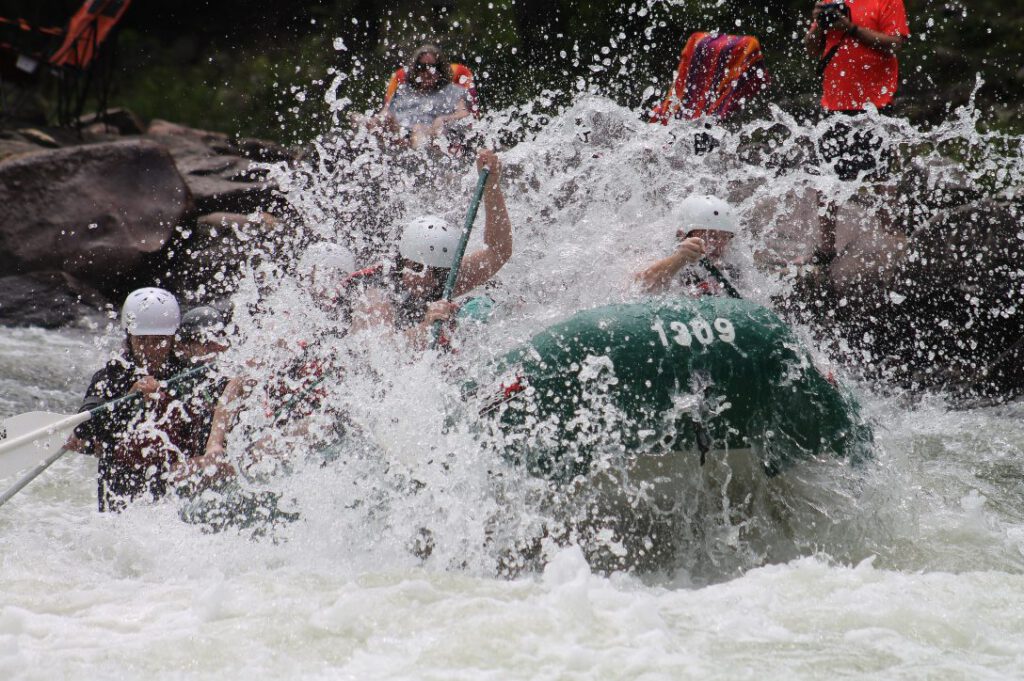
With everything from fun grade 2 and 3 rapids, right up to extreme challenges on raging river sections, Nepal offers some great opportunities for white-water rafting and kayaking. The rivers carve through the valleys and into the mountains, giving you a unique way to experience Nepal’s wilderness.
There are some famous multi-day routes you can take, such as the Karnali River or the Sun Kosi near the Tibetan border, or shorter day trips like the Trisuli River or Bhote Kosi.
The Last Resort is based a few hours from Kathmandu and offers professionally run rafting trips all across the country.
Skydiving and Bungee Jumping
If your idea of a thrill is free-falling at high speed, then Nepal has you covered. There are a few more spectacular landscapes to look down at as you’re plummeting towards the ground, and several reputable companies operate trips throughout most of the year (weather dependent, of course).
Pokhara is a popular spot for skydiving, with its vast Phewa Lake and proximity to the Annapurna range providing an unforgettable view. Intrepid (and wealthy) skydivers can also take on the Everest Skydive – a once-a-year expedition to take on two skydives over the world’s highest mountain.
Nepal also offers a couple of high-quality bungee jumps and canyon swings, with a tower bungee at Hemja near Pokhara, and a wonderfully located bridge bungee at The Last Resort to the east of Kathmandu.
Mountaineering
A different type of thrill, of course, but if reaching the summit of Mount Everest doesn’t thrill you, then nothing will! The Himalayas have long attracted explorers from all around the world, and with 8 of the highest 14 mountains on earth, Nepal is widely regarded as the mecca of mountaineering.
There are a huge number of different mountains and routes, each with its own challenges and rewards, so do your research and decide which is right for you. If it’s your first time, then we really recommend speaking to a professional local company before making any decisions. You can get in touch with our partners at Royal Mountain Travel if you’d like some recommendations and help arranging your itinerary.
Mountain Biking
The rural tracks of Nepal are a mountain biker’s dream and a great way to get away from the highways and see parts of the country that other tourists won’t. Around the Kathmandu Valley and further afield, you’ll find trails that take you to cultural sites and into remote areas.
Serious bikers often bring their own kit, but there are a few companies in Kathmandu that will hire out quality equipment, help you to plan your routes, and even run escorted tours and heli-biking. It’s always worth consulting a professional company before you set off – Nepal has wild terrain, so you need to know where you’re going and what to do if you have problems. You should also take the altitude and steepness into account, so make sure you have acclimatisation days and don’t take on more than you can handle.
For a gentler mountain biking experience, there are some good day trips suitable for most abilities, such as the community-run Panauti Bike Station, just a short drive from Kathmandu.
There are a bunch of other ways to get your kicks, too, with everything from quad biking to base jumping possible. If you need a little help planning your activities in Nepal, feel free to get in touch! Contact Us
Planning a trip during the Nepal low season allows adventurous travelers to experience the magic of the Himalayas without the massive peak-season crowds. The question of when to go to Nepal doesn’t always have a simple answer, and although trekking conditions reach near-perfection at some points of the year, Nepal’s traditional ‘low seasons’ bring their own advantages and unique opportunities.
In short, there isn’t really a bad time to head to Nepal; it just depends on what you want to do on your vacation.
When are Nepal’s low seasons?
Nepal has two low seasons: the monsoon season (June to August) and the winter season (December to February). Both are prime travel times for summer breaks or Christmas vacations, and both offer varied experiences and benefits.
Aside from your costs generally being lower whilst you’re there, you’ll also find things less crowded and even more relaxed than usual. If you like your quiet time and the feeling of being a true explorer, then the low season might be the time for you.
Travelling in the low season brings a benefit to Nepal too, as ‘overtourism’ has taken its toll on the country’s environment. If Nepal’s tourist numbers are more evenly spread through the year, it is much easier to manage the impact. It also helps the Nepali people earn income more consistently throughout the year, which will be much needed as tourism gradually reopens after the pandemic.
Best places to go in Nepal’s low seasons
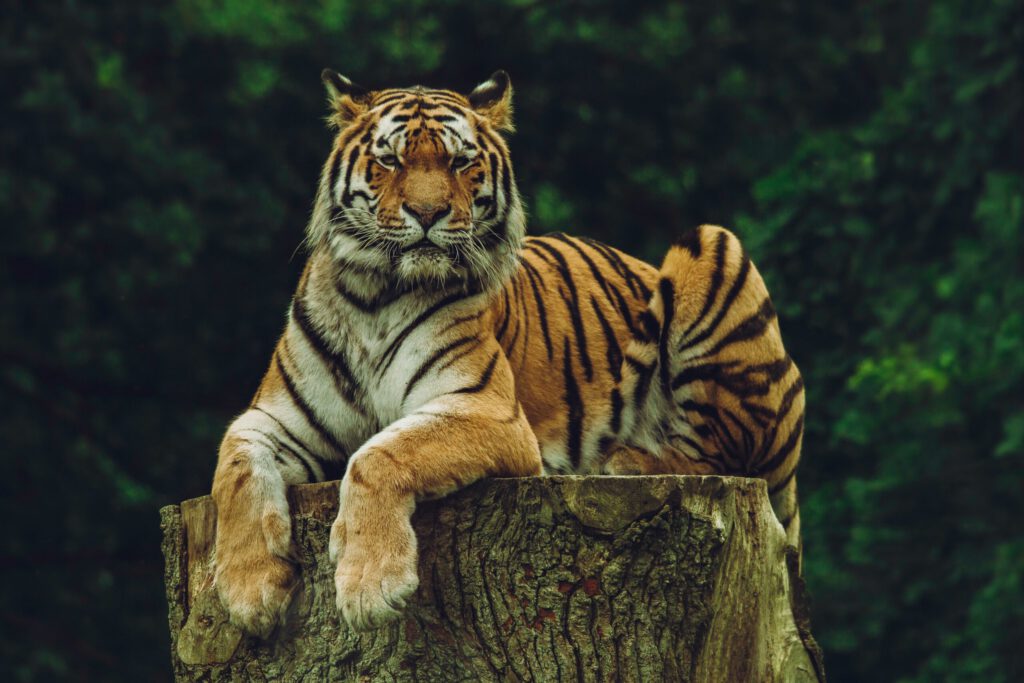
The Terai region, in the southern part of Nepal, is a wet lowland area and is home to the famous Chitwan National Park. Nepal’s first national park, Chitwan’s jungle, is a sanctuary for one-horned rhinoceroses, Bengal tigers, crocodiles, and a huge variety of rare birds, insects, and mammals.
Wildlife safaris in the park can be far more enjoyable and less humid in the winter months. Plus, with fewer tourists, you’ll have the chance for an even more intimate wildlife experience.
Just a few hours south of Kathmandu, it’s easy to reach the Terai and include a Chitwan safari in your plans.
The Mustang district, once an independent kingdom near the Tibetan border, sits in a rain shadow, protected from monsoons by the high Himalayas. Because of its high altitude and the winds that blow up the Kali Gandaki river gorge (the deepest in the world), Mustang can get extremely cold in the winter. The summer monsoon months are the optimal time for a visit to this unique part of Nepal.
While the colorful three-day Tiji Festival often falls in May (dependent on the lunar calendar), travelers can explore the Forbidden Kingdom’s monasteries, meditation caves, and villages throughout the summer.
The easiest way to reach Lower Mustang is a short domestic flight to the gateway city of Jomsom, from either Kathmandu or Pokhara. If you’re brave enough and want to save some rupees, then the bumpy journey from Pokhara by road will take at least 8 hours by shared minibus or (preferably) private jeep.
Two of Nepal’s top attractions, Everest and Annapurna, can also be ideal destinations in the winter, when there are far fewer trekkers on the trails. The weather is less predictable at this time of year, so sticking to the lower elevation trekking routes is recommended, but the panoramic views of the great mountains will be just as jaw-dropping.
For lower costs, less environmental impact, and that feeling of isolation in the mountains, trekking in the winter months can be a truly memorable experience.
The Mardi Himal Trek is a lesser-traveled, four-or five-day route in the Annapurna range, whilst the Everest Panorama Trek is a beautiful seven-day route through the Khumbu region with views of some of the Himalaya’s most impressive peaks, including Everest, Lhotse, Nuptse, and Ama Dablam.
You can visit Nepal’s dynamic cities, like Kathmandu or Pokhara, at any time of year, but the low season means better deals and fewer crowds at cultural attractions.
In Kathmandu, there’s so much to see and do, and you can tour the city markets, temples, and the UNESCO World Heritage site at Durbar Square, or even spend some time with the locals at a traditional cooking class. Meanwhile, the surrounding Kathmandu Valley has ancient towns to explore, such as Bhaktapur and Panauti, as well as several short treks and day trips to get you out into the sweeping valley countryside.
Lakeside Pokhara is a great place to relax and enjoy the serene atmosphere and local culture. It’s also a hub for adventure sports and the gateway to the Annapurna range, where trekking adventures of all lengths and difficulties are accessible throughout most of the year.
If you’re thinking of coming to Nepal during the low season, then it’s always worth having a chat with the experts. You can get in touch with Travel Nepal, and we’ll talk you through your options to help you plan your perfect trip.
Unfashionable footwear and long days spent walking up and down hills aren’t everyone’s idea of a holiday, but don’t let the thought of trekking put you off visiting Nepal.
Sure, trekking is a big deal here, but there are so many other things to see and do in this unique Himalayan nation.
We’ve put together a little list with some of the best things to do in Nepal without trekking options.
1. Spot wildlife in Chitwan National Park
Nepal’s most famous wildlife destination is widely considered to be one of the best in all of Asia. It’s home to iconic residents such as the one-horned rhino, Bengal tiger, and Asian elephant, amongst hundreds of other bird and animal species. This UNESCO World Heritage site is made up of vast forests, marshes, and grassland, covering some 932 sq km.
Safari tours here take place in a 4×4, so no trekking is required. Probably for the best when tigers and leopards are roaming the park….
Just a few hours’ drive south-west from Kathmandu, a few days in Chitwan can easily be included in your itinerary. There are also some great lodges you can stay in nearby, as well as the Barauli Community Homestay, if you prefer a more local experience.
2. Visit the ancient towns of the Kathmandu Valley
The Kathmandu Valley is at the heart of Nepal’s history and civilisation. Its fertile soils drew settlers from all parts of the country, and from further afield, creating a melting pot of cultures and faiths which still exists in modern Nepal.
The valley was once dominated by three distinct kingdoms, with their capitals in Kathmandu, Patan (Lalitpur), and Bhaktapur, and much of the ancient architecture of these places remains intact. Smaller towns such as Panauti have also changed very little in centuries, and strolling around these places is like taking a glimpse back in time.
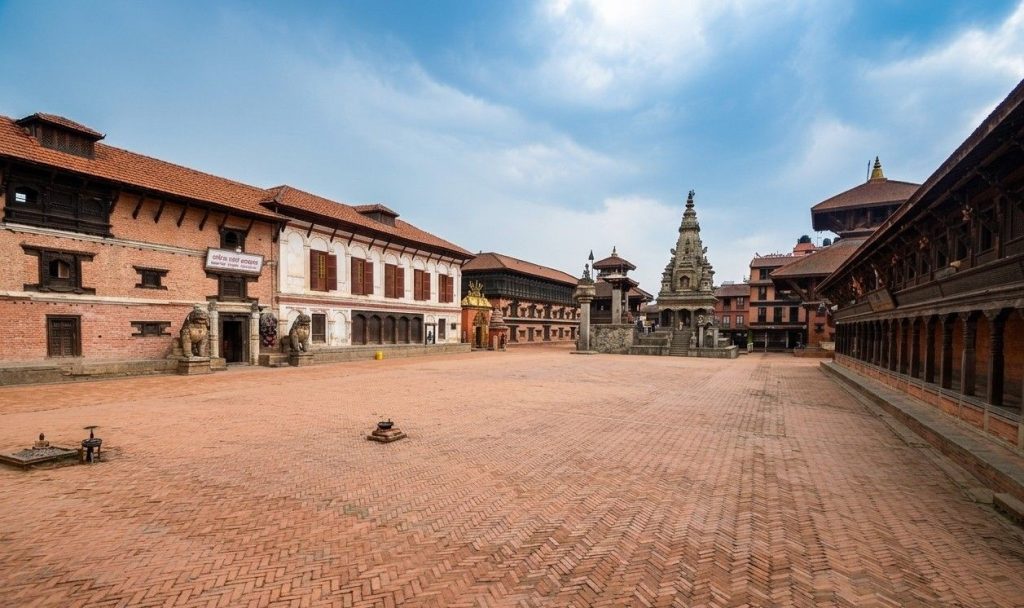
Bhaktapur
All within easy reach of modern Kathmandu, these towns can be visited as part of a day trip from the city, or you can choose to spend a night or two enjoying the peaceful and historic atmosphere.
3. See Everest from the air
You don’t need hiking boots to see the world’s tallest mountain. In fact, you can see it in just one morning if you book onto an Everest Scenic Flight from Kathmandu.
These flights run daily if the weather allows, and within a few hours, you can be soaring just above the Himalayan Range and getting a bird’s-eye view of Mount Everest, before settling back into the comfort of your hotel by lunchtime.
For something extra special, you can treat yourself to an epic helicopter ride through the mountains. It’s not cheap, but the experience of hovering almost touching distance from these giant mountains, the deserted Everest viewpoint, and a luxury breakfast at the world’s highest hotel will make it feel worthwhile.
4. Eat! (and learn to cook Nepali-style)
One of the biggest joys of visiting a new country is the food, and it plays a huge part in Nepali society and family life. Whether you’re trying out the restaurants of Kathmandu and Pokhara, or eating home-cooked food at a homestay, Nepali food can be one of the highlights of your holiday.
It’s also healthy, and there are always great vegetarian options, so you can eat Dal Bhat to your heart’s content!
If you’d like to learn a few recipes to take home, then you can take a local cooking class. Not only will you learn some recipes to take home with you, but you’ll also experience a little Nepali family life at the same time.
5. Adventure Sports
Nepal is fast becoming a leading destination for adventure sports, and with such landscapes and terrain, it is easy to see why. Bungee jumping, white-water rafting, canyon swings, and mountain biking can all be arranged just a short drive from Kathmandu.
Pokhara is perhaps Nepal’s adventure capital, with the vast Phewa Lake, rolling hills, and nearby Annapurna Range providing the perfect playground for paragliding, watersports, and ultralight Himalayan flights.
6. Relax in Pokhara
Pokhara isn’t all about adventure sports and trekking, and a few days enjoying the charms of this peaceful lakeside city can be a great addition to your time in Nepal.
The waterfront promenade buzzes with local life, bars and restaurants, whilst excursions out on the lake and to the nearby World Peace Pagoda make a great way to break up your relaxing days in the city. You’ll find some excellent hotels too, so you can treat yourself to a little extra luxury if you feel the need.
7. Go haggling in the local markets
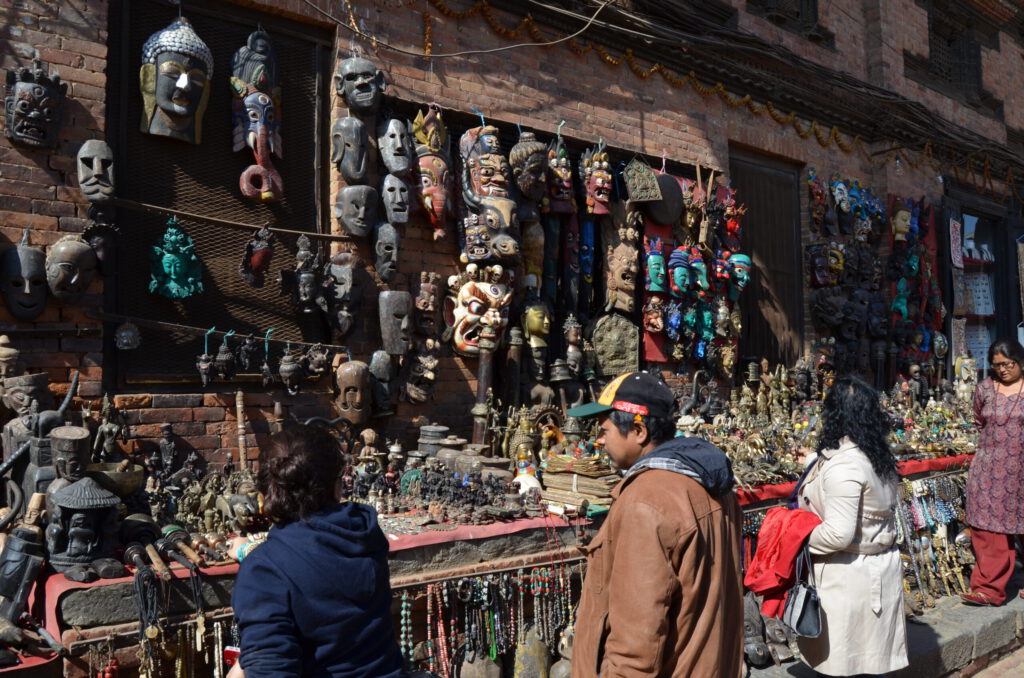
Shopping isn’t everyone’s idea of fun, but shopping in a foreign country is a different experience entirely. The markets and bazaars of Nepal can be fascinating places, full of beautifully crafted trinkets, colourful artwork, and beautiful textiles. If you’re looking for some unique souvenirs to take home to your friends or family, don’t wait until you get back to the shops of Kathmandu Airport….you’ll be very disappointed!
Visiting the markets also gives you the chance to try out your haggling skills. Haggling is almost a national sport in Nepal, and it can be good fun and a nice way to connect with the local people… so long as you don’t take it too seriously!
8. Temples everywhere!
Nepal’s history has been shaped by religion, and it’s plain to see from the wonderful architecture you’ll find throughout the country. Most of the Hindu temples and Buddhist stupas you’ll see have been lovingly preserved for centuries, and many are still used daily by the local community.
Each town or city will have its own religious buildings, often beautifully crafted and lavishly decorated by ancient kings. You’ll also find entire temple complexes such as Pashupatinath, where you can easily spend the whole day exploring the architecture and artwork of this sacred site.
You can explore these places at your own pace, or take a tour with a local guide to get a better insight into their history and meaning.
Pashupatinath
9. Enjoy an authentic homestay experience
Thanks to the pioneering work of the Community Homestay Network, it’s never been easier to experience local life and get to know the people of Nepal. From city homestays to tiny rural communities and even a Tibetan refugee camp, there are so many unique experiences you can add to your Nepal adventure.
Nepali hospitality is well-known, and to be welcomed into a family home is something quite special. You’ll often find no airs and graces here, and you’ll be treated as a friend rather than a guest. You can also get involved in daily chores and cooking, and join in with local parties and festivals too.
10. Take a hike
You don’t need to go on an epic 3-week trekking adventure to enjoy Nepal’s great outdoors, and there are several shorter, gentler hikes you can take. Many of these are day-hikes across easy terrain and take you through traditional villages and to spectacular mountain viewpoints, before dropping you back to the comfort of your hotel in the evening.
Panauti Community TrailAustralian Camp, near Pokhara
There are several shorter hiking options, mostly from Kathmandu and Pokhara. Get in touch to talk about adding one of these to your Nepal itinerary.
11. Visit the birthplace of Buddha
Lumbini is considered one of the holiest places on the continent and draws pilgrims from all over the world. Its fame comes from being the birthplace of Lord Buddha, and over the centuries, wealthy kings and nations have added shrines, stupas, and temples to demonstrate their faith.
Centred around the iconic Maya Devi Temple, the town is a complex of religious sites and artefacts, and the spiritual atmosphere is easy to get caught up in, whatever your own faith may be.
Creating a comprehensive Nepal packing list is the most important step you can take to prepare for the massive climate shifts of the Himalayas. Packing is one of the least enjoyable parts of going on holiday (although unpacking at the end is even worse!), and packing for a visit to Nepal can be especially tricky. With such a range of altitudes, temperatures, and activities, you’ll need more than just a few t-shirts and some swimwear.
Of course, you should always be aware of the season you’re travelling in since the weather can vary greatly throughout the year. However, weird weather is nothing new for Nepal, so expect the unexpected.
Through our experience and local recommendations, we’ve compiled a Nepal packing list to help you fill your luggage with useful things, so you’re not caught short during your Nepalese adventure.
P.S. Many of these things can be purchased locally in Nepal, especially in the shops of Kathmandu and Pokhara. Watch out for fakes, though, especially with trekking equipment.
First aid kit (should contain lip balm with sunscreen, sunscreen, whistle, Aspirin, Ibuprofen, bandaids/plasters, tape, anti-histamines, antibacterial gel/wipes, antiseptic cream, Imodium or similar tablets for mild cases of diarrhoea, rehydration powder, water purification tablets or drops, insect repellent, sewing kit, extra prescription drugs you may be taking)
Plug adaptors (Nepal mostly uses types C and D)
Refillable water bottle (with a filter or purification tablets)
Earplugs
Sunscreen
Eco-friendly toiletries
Money Belt
Torch
Alarm clock
Small padlocks for bags
Small towel
A pen (for filling in documents)
Personal medical items
Clothing (without trekking)
Lots of layers! Think thin long-sleeve tops and sweaters
Thermal tops and trousers, especially in winter
Warm gloves and hats
Lighter clothing for summer (nothing revealing though, you’re in Nepal!)
Sunglasses and a sun hat
Shawl or scarf (for temple visits)
Thick socks
Comfortable shoes or trainers
Windproof rain jacket
Sleeping clothes
Underwear (we probably don’t need to tell you that…)
If you’re trekking
Hiking boots (preferably worn in)
Spare laces
Wool hiking socks
Thermal layers
Warm jacket or coat
Waterproof gloves
Windproof rain gear
Sleeping bag (can be rented for 100 – 200 NPR per day)
Sleeping bag liner
Bandana
Waterproof backpack cover
First aid kit
Whistle
Compass
Trail snacks (can be bought locally)
P.S. The best clothing for trekking is either wool or synthetic materials in layers, as this is quick-drying and can keep heat in better. We suggest a base layer, then a mid-layer such as a light fleece jacket or similar, then a windproof and waterproof layer.
Book local
Up-to-date advice, an incredible range of tours and treks, and simple local prices Speak to an Expert
Some parents are more than happy to relax in a resort or beside a beach for a couple of weeks, drinking cocktails while the kids play around in the pool. There’s nothing wrong with this; of course, we all need to relax sometimes!
Other parents prefer to explore, however, showing their children a different culture and fuelling their sense of adventure. For this kind of family, there are few better destinations than Nepal.
In this guide, we’ll talk you through what to expect when you embark on your Nepal family travel.
If you have any extra questions or need some help planning your adventure, you can feel free to get in touch with our team.
The Nepalese People
Nepalis are known for their friendly nature and their humour, and are very family-oriented. If you travel to Nepal with children, you’ll be made to feel incredibly welcome and will doubtless make some new Nepali friends during your holiday.
Don’t be surprised if your hosts, hotel staff, or even waiters take a shine to your kids and start interacting with them. This is very normal in Nepal.
Safety
You don’t have too much to worry about from the Nepali people – crime rates are low in Nepal, and incidents with foreign children are very rare. The main concerns are the same as for adults, but there are steps you can take to minimise risk.
Road accidents are quite common in Nepal. Taking flights or private transfers with a reputable provider can be a safer option than the bus.
Hygiene standards are lower in Nepal, so bring hand sanitiser and use it regularly.
Bring stomach settlers and any other medicine with you, in case your kids eat something new and don’t react well to it.
Air pollution from the roads in Kathmandu is high, so bring face masks for walking around busy parts of the city.
Altitude sickness can affect kids too, so plan some time to acclimatise and read our Medical and Altitude Sickness guide. If you plan to trek, consider a shorter, lower-altitude trail.
Where to stay
Hotels are usually very accommodating for families, and will go out of their way to make sure that your sleeping arrangements are suitable. Particularly in Kathmandu and Pokhara, many hotels have triple or four-bed rooms, along with decent WiFi and enclosed gardens or terraces. Away from the big cities, facilities are a bit more limited, and you may need multiple rooms. If you book in advance, our team can request that your rooms be next to each other.
For something truly unique, we recommend spending a night or two at a Community Homestay. It’s not 5-star luxury, of course, but the experience of being welcomed into a Nepali home is something that will stay with your children forever. It’s a great way to learn about another culture and way of life, as well as to support rural communities in poorer parts of the country.
What to eat
In Nepal, children generally eat as the adults do, with curries and dal bhat playing a big part in the average diet. The tastiest food is always what the locals are eating, but a lot of restaurants in Nepal will also have more Western options like burgers or pizza on their menu. This is especially true in the cities, whilst in rural areas these options may not be available. You can always ask them to cook with fewer chillies if your child prefers milder flavours.
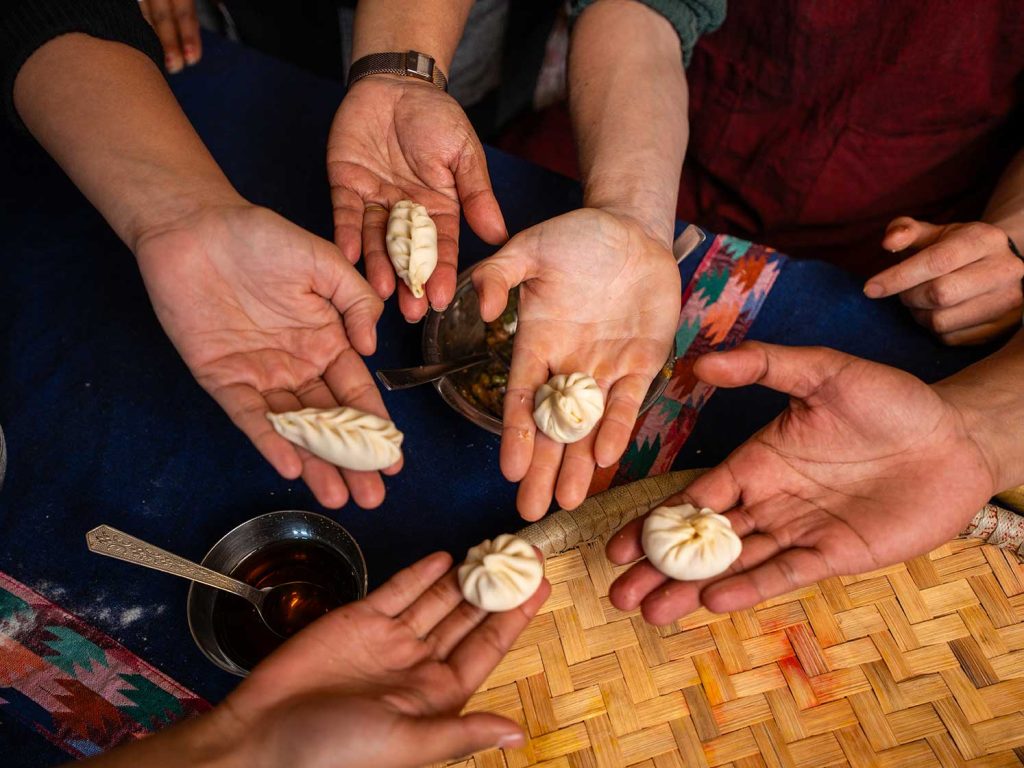
One traditional Nepalese dish that most kids will enjoy is momos. These dumplings come in various flavours and are usually a big hit with kids.
In terms of snacks, it’s safest to stick to unpeeled fruit or pre-packed goods. Just make sure you dispose of any packaging responsibly!
Activities and experiences
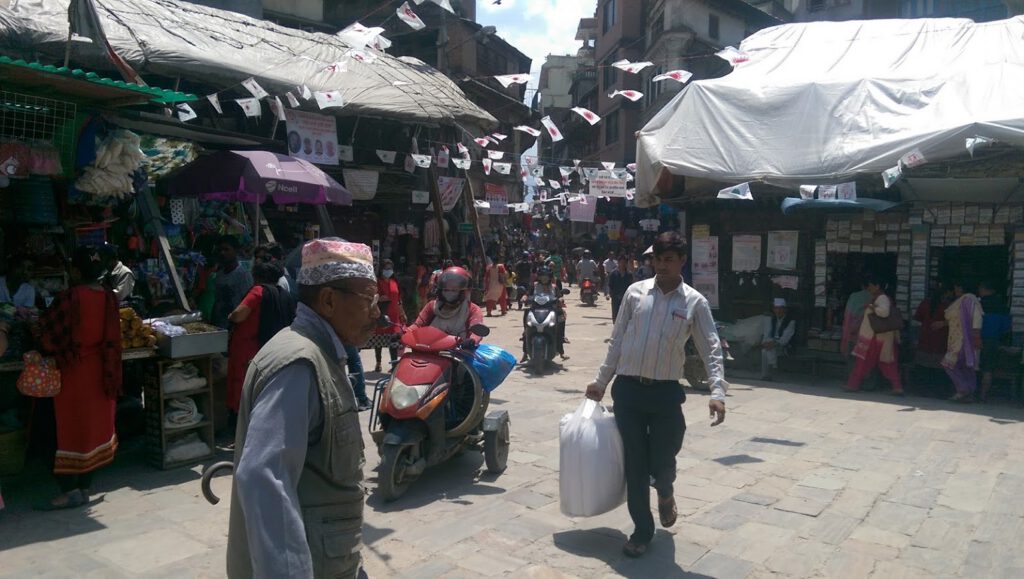
There is much for children to enjoy in Nepal, and it’s a chance to get away from their screens, connect with nature, and experience a whole new culture. Even just strolling around the bazaars of Kathmandu can be an exciting and eye-opening experience for a youngster.
Here are a few suggestions to help inspire you;
Take a rickshaw ride around Kathmandu or Pokhara. It’s a cheap and fun way to introduce yourself to a city.
Spend a night at a Community Homestay or take a cooking class. This is a great way for kids to get to know the Nepali people and culture, and they may learn something new at the same time.
If you see Nepali kids playing football or some other game, encourage your child to join in! They’ll almost always be welcome.
Chitwan National Park is very accessible and is home to species like rhinos, elephants, and tigers. Most kids love their time in Chitwan, so consider including a few days here in your itinerary.
Trekking with children
Taking your kids trekking in Nepal can be a wonderful experience for you and for them, but it’s not for everyone. Long days, sore feet, altitude sickness, and boredom can take their toll on a young trekker, and it’s not easy to quit once you’re 3 days into the mountains!
The good news is that there are hundreds of different trails in Nepal, suitable for all ages and abilities. If your kids are a little older, then even famous trails like the Everest Base Camp trek are very achievable, but several shorter trails at lower altitudes would be easier for youngsters.
Of course, you know your children better than anyone else, so it’s a good idea to discuss some options with an expert and find something suitable for your child’s interests and abilities.
Our team will be happy to help you choose a trekking experience that is right for your family, so feel free to get in touch!
Travelling to Nepal with a baby or toddler
Bringing very young children or babies to Nepal can be fun and make you a lot of friends, but you should be aware that the facilities you’re used to at home may be different or unavailable.
High-chairs in restaurants and baby-changing tables are not common in Nepal, whilst western brands of nappies or formula can be difficult to find or expensive. Make sure you bring what you need with you.
A travel cot is also a good idea, especially if you’re planning to go more basic or rural during your trip.
Breastfeeding in public is normal and acceptable in Nepal, so you can feel comfortable feeding your baby in most places.
Family Tours and Day Trips
It can be difficult to know which tours are suitable for your kids, but you can always get in touch with our team for the best local advice about what you can do with your family in Nepal.
Nepalese Family Culture
Family is at the very core of Nepalese culture, with different generations often living side-by-side and supporting each other throughout their lives.
Nepal is a very traditional country with a largely patriarchal society, although the mother also has a great deal of authority within the family. Traditionally, the father will work away from the home, whilst the mother looks after the children and the household.
Practices such as arranged marriages still exist, but attitudes are increasingly influenced by Western values, particularly amongst younger people in urban areas. Female empowerment and the freedom to choose your own partners are increasingly normal in Nepalese culture.
Book local
up-to-date advice, an incredible range of tours and treks, and simple local prices Speak to an Expert
OK, so maybe this isn’t the page that’s going to get you all excited about coming to Nepal, but how you get from place to place is important, and it can be a wonderful way to see the vast open spaces of the country.
There are many different ways to travel through Nepal, depending on your budget, route, and preferred travel style, so on this page, we’ll run through the main ones you’re likely to encounter on your journey.Figuring out Nepal transport and getting around efficiently is key to keeping your mountain itinerary running smoothly and comfortably.
Domestic Flights
If you’re on a tight schedule or just want to avoid a long and winding road journey, then Nepal has several domestic flight routes that operate daily from Kathmandu and Pokhara. Alongside Nepal Airlines, Buddha Air, and Yeti Airlines, smaller domestic operators like Saurya Airlines, Shree Airlines, Simrik Airlines, and Tara Air also cover most of the main routes. We generally use Yeti Airlines if possible, since we like their service.
You can book these airlines online, or get in touch with our team so we can arrange flights as part of your itinerary, along with transfers, etc.
Popular daily routes (available in both directions);
Kathmandu – Pokhara
Kathmandu – Lukla (Everest)
Kathmandu – Bhairawa (Western Nepal)
Kathmandu – Nepalgunj (Bardia)
Kathmandu – Bharatpur (Chitwan)
Kathmandu – Bhiratnagar (East Nepal)
Pokhara – Jomsom (Lower Mustang)
Pokhara – Bharatpur (Chitwan)
Pokhara – Nepalgunj (Bardia)
For further details about domestic and international flights in Nepal, head to our Nepal Flights page.
Luggage allowance;
Standard flight = 20-25kg + 5kg hand luggage
Mountain flight (e.g. Lukla) = 10kg + 5kg hand luggage
Check-in and delays;
You should aim to be at the airport at least 90 minutes before your departure time. Domestic flights are often delayed due to weather or other reasons, so you may have to display some patience at times.
If you’re trying to connect with an international flight, it’s wise to leave a good chunk of time between the two, just in case of delays.
Private Transfers
The most comfortable way to travel overland in Nepal is by private transfer. Our partners at Royal Mountain Travel have a fleet of modern, eco-friendly vehicles to suit various group sizes and journey types, with everything from comfortable SUVs to safari jeeps and small coaches. They’ve also invested in two electric cars as part of their drive to protect Nepal’s environment.
Royal Mountain’s drivers are professional and friendly and will make stops along the way if you’d like to use a bathroom or admire a view. Most Nepalese drivers do not speak English fluently, but they’ll understand a little and are used to communicating with smiles and sign language. Enquire with Royal Mountain Travel
How people drive in Nepal may be quite different from what you’re used to and can be a little scary at first! Cars, or even buses, will overtake on blind turns, and there is more reliance on car horns than on following road rules. Don’t be too concerned if your driver seems to be taking some ‘risks’ – it is actually much safer to drive with a little aggression in Nepal, as hesitant drivers are far more likely to have accidents.
Hiring a Car in Nepal
Whilst this is possible for foreigners, driving on Nepal’s roads is not for the faint-hearted (see above) and we’d urge you to think very carefully before choosing this option. You may be an experienced and safe driver at home, but the roads and driving culture in Nepal can take years to get used to.
Tourist buses
You can travel many routes in Nepal by either public or tourist bus – tourist buses are generally of better quality and are still very cheap by Western standards, so we’d usually recommend paying that little bit extra.
However, even on tourist buses, you’ll find that the comfort level isn’t that great, and these vehicles lack the safety features you might be used to at home.
If you don’t mind roughing it a little and are looking to save some money, Nepalese buses provide a good option for travellers. There are many bus companies you can book locally, but we’d advise doing some quick research as some are better than others. Alternatively, you can get in touch with our team for help arranging bus tickets as part of your Nepal holiday.
Roads in Nepal follow the hills and mountains, so they are rarely straight and usually quite narrow. They’re also subject to landslides, especially during the monsoon season, and to some major roadworks. Don’t be surprised if traffic grinds to a halt occasionally, sometimes for an hour or two.
Taxis
Taxis are widely available in most towns and cities – sometimes you’ll have 3 or 4 taxis trying to get your business at the same time! Make sure that your taxi is official and has a working meter, or agree on a fare before you start the journey. A normal taxi ride of 10-20 minutes shouldn’t cost much more than NRs500.
Rickshaws
A cheap, fun option to get around in cities like Kathmandu and Pokhara, allowing you to see the city at a more relaxed pace. Bring a face mask with you, especially in Kathmandu, where the air pollution around the roads can be pretty intense.
Traffic in Kathmandu can get ridiculous at times, and a 10-minute journey can easily turn into 30 minutes of boredom. Apparently, there are more cars than there is actual road space in the city, so prepare to be patient, or maybe choose to walk instead!
Feet
Of course, if you’re trekking, then your feet are going to see some serious action, but even in cities like Kathmandu and Pokhara, most of the main attractions can be easily reached on foot… just grab yourself a city map and watch out for potholes!
Choosing to combine Nepal with India, Bhutan, and Tibet creates the ultimate Himalayan travel itinerary for adventurous globetrotters. Nepal’s history has been hugely influenced by its landlocked position between India and the Tibetan region of China, whilst nearby Bhutan offers a glimpse into a culture like nowhere else on earth. If you’re planning a longer stay in this part of Asia, you can combine your time in Nepal with a visit to one of our neighbours.
Our partners at Royal Mountain Travel can give advice on planning your multi-country adventure, as well as help with tour and transport bookings to make sure you travel as smoothly as possible.
Combining Nepal with India
India and Nepal share deep historical and cultural connections, but visitors often notice clear differences as soon as they cross the border. India’s bustling cities are famous for their vibrant streets, markets, and sensory experiences, which can be exciting or overwhelming depending on your perspective. Beyond the urban areas, India offers spectacular mountains, dense jungles, and beautiful beaches in the south.
Getting there: Flights connect Kathmandu with most major Indian cities, including Delhi, Mumbai, Kolkata, and Bangalore. Overland travel is also possible via several official land border crossings, such as Bhairahawa (Sunauli), Raxaul (Birgunj), Nepalgunj, Biratnagar, Kakarvitta, and Mahendranagar.
Things to note:
Nepal visas: Most nationalities can obtain a visa on arrival at Tribhuvan International Airport or at some major land borders. To avoid delays, it is recommended to complete the online visa application in advance at Nepal Immigration.
India visas: India generally does not issue visas on arrival for most foreign travelers. You should check the requirements and apply in advance through the Indian e-Visa portal.
Combining Nepal with Bhutan
Bhutan, landlocked in the eastern Himalayas, is a unique country where traditional Buddhism shapes daily life, and national success is measured by Gross National Happiness. With protected forests covering around 70% of the country and strong environmental policies, Bhutan is one of the world’s only carbon-positive nations, offering a truly distinctive travel experience.
Getting there: Bhutan’s only international airport, Paro, has direct flights to Kathmandu and select cities across Asia, primarily via Drukair and Bhutan Airlines. You can also enter overland from India through Phuntsholing in the west or Samdrup Jongkhar in the east.
Things to note:
Tourism is strictly regulated to ensure sustainability. Foreign visitors must pay a Sustainable Development Fee (SDF) of around USD 100 per night, which typically covers accommodation, meals, transport, and a licensed guide. Independent itineraries are possible, but your visa and travel plan must be arranged in advance through a licensed Bhutanese tour operator.
Travel Nepal partners with one of Bhutan’s official tourism companies, so please get in touch if you’d like some help putting your Bhutan trip together.
Combining Nepal with Tibet (China)
Tibet has long shared cultural and historical ties with Nepal, and Tibetan heritage continues to influence Nepali traditions. The region’s remote landscapes, ancient monasteries, and largely unchanged tribal communities make it a fascinating destination for adventurous travelers.
Getting there: Daily flights operate from Kathmandu to Lhasa, and you can also enter overland via Gyirong (Kyirong) County, a scenic road crossing through the Himalayas. Other access points to Tibet are primarily from mainland China.
Things to note:
Tibet is an autonomous region of China, so all travelers must obtain a Chinese visa in advance. In addition, a Tibet Travel Permit is mandatory. Independent travel is generally not allowed, and most tours include assistance with obtaining the permit and planning your itinerary.